The Fictorian Era

Archive for November, 2011

Stocking the Shelves

30 November 2011 | 4 Comments » | Jason Michelsen

A while back, I started the second draft of a novel I’ve been working on for some time . . . close to a year by the time I opened version 2.o in Word.

I’d made it through the beginning, trudged through the sticky middle, and was well on my way to the climax when I realized some of the characters weren’t where they were supposed to be, both geographically and emotionally.

I’d strayed from my original outline–I’m more Gardener than Architect, though I do try to outline key events in my stories–and realized some changes were in order. It wasn’t until around the 160k word mark of my first draft that I finally understood some of my characters and realized there were things I needed to change in the beginning in order to get them where they needed to be by the end.

So I started over. I got about 20k words in and was really digging the revisions. My villain was more clearly defined in a shorter amount of time. The conflicts seemed more urgent. The setting was even coming to life in ways it hadn’t until much further on in my first pass.

Then, because writers aren’t immune to outside forces, Life reared its ugly head and gave me a smack in the face, bashing my inspiration into the mud and stomping it into an unrecognizable pulp. Pulling words from my head became about as difficult as pulling an entrenched boot from quicksand.

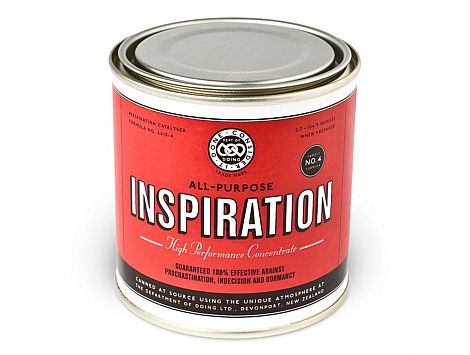
It’s no surprise we talk so often on this blog about what keeps us writing. Sometimes, nothing seems to work. There is no magical can of Inspiration we can use to grease the creative wheels, no verbal laxative to unplug our plugged minds. If there were, I’d put it in a can and stock an entire pantry. I wouldn’t sell it, I’d want it all for myself! Well, I might sell it for an exorbitant price so I could quit my day job and write full time like when I was unemployed. Oh those were the days!

So what do you do when the words won’t come? Last time I posted, I wrote about my return to reading. Indeed, it worked in the short term, coaxing a few thousand more words of my own onto the screen when I wasn’t working or reading. But the effect didn’t last long.

So I ask again, what do we do when an unfinished project turns stale? Many authors will push on, throwing down words they know they’ll delete at a later date until the levee breaks and good words start flowing again. Unfortunately, I’m not the kind of writer that can do that. I’d rather write 50 great words than 1000 bad ones. I’m a little too much of a perfectionist for my own good at times.

The answer, at least in my case, is simple:  Write something else.

I’m not giving up on the novel I’ve worked on for over a year–far from it–I’m simply taking a break to write something else. Something I can finish, because nothing is as therapeutic to an author as writing “The End”. I started working on a short story, and, lo and behold, the words began moving again. It just so happens it’s a short story I’d actually like to turn into a short, animated film . . . or perhaps an illustrated, not-quite-for-children, children’s book a la Pat Rothfuss’s The Adventures of the Princess and Mr. Whiffle: The Thing Beneath the Bed.

What we write isn’t always as important as actually writing. And the more we write, the better we get. Guaranteed. So, when your darling of a story isn’t behaving like a darling, write the ugly step-child of a story instead. Get the words flowing again, and soon you’ll have your inspiration back. Do that enough times, and you’ll have a virtual shelf–or perhaps a folder on your computer hard drive–filled with ever improving stories.

It can’t be said often enough, the only way to grow as a writer is to write.

Starting Over: A Most Exquisite Agony

28 November 2011 | 5 Comments » | Evan Braun

Just about everyone who has ever used a computer knows the gut-wrenching pain of having to cope with lost data. Ever had your computer crash in the final stretch of writing an essay, and then discover that the file is unrecoverable? Ever spend hours on a piece of work and forget to save it before disaster strikes?

Of course you have.

But this post isn’t about data recovery, a subject on which I know very little (frankly, I would be well-advised to learn more). No, today’s post is about the exquisite agony of starting over.

Over the course of the last few years, fantasy wunderkind Brandon Sanderson has released chapters on his blog from his early unpublished manuscripts. On the one hand, this is an encouraging development, since it demonstrates so well the gradual accumulation of skill as time wears on. I find myself able to identify with Sanderson’s early writings. Hopefully, given more time, I, too, can become a writer of his caliber.

But the most interesting thing to me is the way that Sanderson openly talks about rewriting, and even re-rewriting, some of his manuscripts. In other words, he wrote it once—it wasn’t good enough. So he waited a while, then wrote it again—it still wasn’t good enough. He waited some more… then wrote it again! Finally, it was ready to see the light of day.

This kind of persistence is remarkable. As far as I can tell, it’s a necessary quality if one is to become a best-selling author.

In my editing career, I frequently come into contact with books that just aren’t good enough. It’s not that they’re outright bad (well, sometimes they are), but rather that editing alone isn’t enough to elevate them to “ready” status. The unfortunate reality is that the writer probably just doesn’t have chops to pull off the story—yet. My suggestion might be to give it some time, work on other projects, then come back a few years down the road and attempt the unthinkable: a page-one rewrite.

In other words, write the entire novel over again. From scratch.

If you’ve ever spent months—honestly, probably years—on your pet project, then the notion of starting over is truly daunting. Exhausting.

In my case, I have a 175,000-word novel sitting on my shelf. I wrote it the first time back when I was in high school—well, I wrote the first half before giving up. At the tender age of sixteen, I knew I wasn’t up to the challenge.

A few years later, I resurrected the project and tried turning it into a series of teleplays (television scripts). I wrote more than ten of them! But this format was impractical in the long run, so the project fizzled out. And almost stayed fizzled.

Then, after a long break, I jumped back into the fray last year and wrote the complete novel, which took nine months. In the spring, I trimmed it down some, bringing me to that polished 175,000-word version.

Except it’s not polished. Not really.

I’ve grown tremendously over the last few years. I was able to accomplish things in my most recent draft that my high school self would never have believed possible. But after receiving a lot of honest and well-intentioned feedback, I was forced to come to an uncomfortable conclusion: it’s still not ready. And in fact, like those editing clients I mentioned, editing still isn’t enough to get it where it needs to be to really come alive.

Indeed, I’ll have to start over. One more time.

But there’s no point in attempting another rewrite so quickly. Brandon Sanderson turned some of his flawed early works into best-selling gems, but they had to percolate for years.

So, just how long will I need to wait? Unfortunately, there’s no hard and fast rule, but I do know one thing: I will accumulate more skills and grow faster as a writer if I keep producing new work.

And there’s the rub. It’s not about waiting at all… it’s about pressing on.

The Demons Within

25 November 2011 | 4 Comments » | Ace Jordyn

Are we as writers prone to melancholy? Are we prone to periods of madness so that the proverbial phoenix can rise from the ashes? Is that the true nature of the writer? Or, are we simply dis-spirited when we can’t write?

When life gets in the way and I don’t have the opportunity to write, I become a troll. An ugly self-deprecating troll. Oh, everyone sees the smiling me on the outside, but deep inside, I’m miserable and the world can just stop spinning anytime so I can get off this #@! merry go round!

Every time I find myself this way, I become more aware that the troll exists when I’m not being true to my nature, true to my spirit, true to my creativity. For me, writing isn’t like cooking (although I love to cook too) wherein something is created, everyone ooohs and aaahs their pleasure, the dishes get done and a perfectly satisfying moment has been shared by the hungry and adoring masses.  Never have I had story written, published and admired in 3 hours or less and left the office tidy. If that isn’t a realistic goal …..

Some call it a funk, others a dead muse. I wonder who clipped the darn bird’s wings so it can’t fly? Life does that when it gets in the way of my writing.  And my spirit feels like it’s died another irrevocable death.

As writers, we support each other through our dead-spirit moments, when we feel like an utter failure, like life is conspiring against our genius. Our genius which we lay, like nervous sacrifices on the alters of critiquers’, teachers’, editors’, publishers’ and readers’ unfathomable fancies. We trust that they, like us, will adore the gem we’ve created. Ooohing and aaaahing, grins of contentment adorn their admiring faces as their contagious pleasure spreads to others so that we, genius writers, may lay greater word feasts before our guests. And when this sarcastic and disheartening inner voice speaks, what can I, the melancholy writer, do?

Despair? Sometimes? Cry? Oh yes! Scream? Too polite to do that. Suffer in martyrdom? Definitely. Rise above it? Eventually. Yes, rise. Push that darn phoenix out of the fire before it gets roasted!

Why bother? you ask. Because the spirit knows no other way. You only give up if writing isn’t part of who you are. Because to give up is death for your soul and the emptiness is haunting. Denying the creativity drives me into deeper madness.

But how does one rise above the despair when the inner demons are so strong, when the melancholy is so deep?

One moment at a time.

One word at a time.

By knowing that life has to happen WITH me participating in it, with all its joys, sorrows, responsibilities, distractions and yes, with the demon of doubt.

The key to conquering the doldrums is not found solely in the act of writing. It is in the act of acknowledging that putting words together is who I am – it is an inextricable, wonderful, creative part of me. It IS my spirit.

That means that sometimes, I must be patient with life because I will need it to be patient with me.

That means I can find other ways to fill the void until life’s challenge is overcome. I can read. I can write a blog. I can research.

I can remind myself that as I emerge from the haze of the demonic funk, I will remember that I never left the path – I just couldn’t walk it for a while.

But most importantly, I can acknowledge the void and be satisfied that I know who I am, that I know what feeds my soul and most importantly, that one day soon, I will feast at the table of creativity and word-smithing. Until then, I get to do a deeper character study of the demon within.

The Number One Rule of Cons

21 November 2011 | 5 Comments » | Colette

After attending World Fantasy Convention a couple of weeks ago, I thought it fitting to do a post about such a monumental annual convention. I could talk about the workshops I attended, the interviews with Neil Gaimon, the nearly hyperventilating fans coursing around him, or the amazing information and advice I received from well-published authors. I could talk about my first public reading of my own published work; it went well and I enjoyed doing it more than I ever thought possible. Instead, I’m going to rehash a subject that I’ve seen blogged multiple times, but I don’t think it can ever be said enough. The number one rule of cons, of being in the public eye, of our dealings in our private lives, of being a human being: be nice.

There were a few notable authors/agents/editors I met or became reacquainted with who, in my opinion, handled this side of public relations exceptionally well. I hope we can all learn from their examples. Number one on my how-could-you-be-so-nice list was author David Brin. I met him for a total of, maybe, ten seconds in a bar. He walked by, I said hello, his eyes lit up, he shook my hand effusively and with a genuine smile he asked my name and said it’s nice to meet you. Then I glanced at his name tag and realized who I was talking to. I didn’t have to recognize him, say anything great about his books, or be introduced by someone he knows in order for him to be cheerful, pleasant and friendly.

Julie Wright effused the same outgoing acceptance. I almost felt like I’d found a sister after talking with her for only a couple of minutes. Amazing people. I met David B. Coe who was extremely nice even after I ran into him repeatedly within a short amount of time and probably seemed like a stalker.

Am I name-dropping? Oh, yeah. To prove a point. Because they’re so nice and willing to hang around with the new, unproven writers, I’m going to be looking for more books by them. In fact, I bought some at the convention and I’ll be paying attention to these particular writers in the future. I’m throwing their names around on our blog and making positive comments because they were nice. It’s as good for business as it is for life in general. Since I’m on a role, Mary Robinette Kowal, Jessica Day George, and Patrick Rothfuss are some other authors who made themselves available and took time to meet and talk with other attendees.

Only matters with writers? I don’t think so. Cherry Weiner, one of the best agents in the field, whom I’ve met and talked with multiple times has given me advice and help despite the fact that I have nothing for her. She doesn’t represent my genre. Still, I would bend over backward for this woman and do anything I could to help her clients if it was within my capability.

An editor from Baen, Jim Menz, remembered me from a brief meeting two years before, excitedly told me about an upcoming line of books, and mentioned some authors with great projects coming out. I will be on the lookout for those authors and projects.

On the flip side, an agent whom I met for the second time at WFC wouldn’t look at me when he talked to me, talked in clipped, annoyed tones, and literally turned his back on me. I wasn’t pitching, I wasn’t asking for anything, and all I’d attempted was to ask about upcoming projects I might be interested to read. I already knew he wasn’t a fit for my work. This unfortunate incident has made me reticent to read the authors he represents and tainted my attitude toward the ones I already liked. Do I have it in for him or anything? Of course not, and I know he’s a great agent. I won’t be pointing him out so I can make derogatory comments. That wouldn’t be nice. There were a few other authors/agents/editors who seemed to avoid people and only pasted on a smile when introduced through someone they already knew.

Now I’m not saying we should hold grudges, make judgments, or plan business decisions based on these types of interactions. I didn’t even realize I had these feelings, ultra-positive or negative, until I was thinking about writing this post and the impact the con had on me as a writer.  But I know my experiences affect my perception of the books I read and people I want to work with or support.

So, it’s been said before and I’ll say it again: number one rule, no matter how important you become, is to be nice…to EVERYONE. Seems simple, but I’m sure I’ve had my moments, too. I don’t like crowds and socializing wears me out. I wrote this blog as much for myself as anyone else.

Oh, and I have to mention the amazing illustrator, Lee Moyer, who will not only be at the top of my list for cover art because of his amazing skill, but also because he’s just such a nice guy.

And the Winner is…

19 November 2011 | 6 Comments » | KylieQ

The adjudicators

Thank you to everyone who dropped by the Fictorians over the last week to enter our Jacqueline Carey giveaway.

We have enjoyed reading about your favourite characters and I’ve added a few books to my “must buy” list. The lucky winner of a signed copy of Jacquelin’s latest book, Saints Astray, is… <drum roll> Jalen! Congratulations, Jalen. Send your mailing details to me at k.quillinan at yahoo dot com and I’ll pass them on to Jacquelin.

Thanks again to everyone who entered and a special thank you to Jacqueline Carey for making this contest possible.


Click here to read the first chapter of Saints Astray

Click here to order from Amazon.com

On the Fictorian Art

19 November 2011 | 3 Comments » | David Carrico

The truth is, writing fiction is hard.  No, correction, writing good fiction is hard.  This is borne out by the fact that the majority of new books in any given year are non-fiction.  The last statistics I remember seeing were that three out of every four new books published in the U.S. were non-fiction.  And if you removed elementary children books from the mix, the proportion would be even higher.

At first that seems counter-intuitive, doesn’t it?  I mean, when I look at a thick history of World War II, or a 500 page comparative theology book, or a multi-volume biography of someone like the Duke of Wellington, I am (reluctantly) impressed, and I think to myself that I could never do that.

Well, that may or may not be true.  But let’s look at this logically for a moment.

What is required to produce a work such as one of my three examples?

1.      The non-fiction author must do a lot of research and fact-gathering in order to lay the foundation for the book.

Does a fiction author have to do research?  If he’s any good, you betcha.  Why?  Because an author has to know the milieu/universe where his story is going to be laid, whether it’s historical, current, future, or fantasy in nature.  (See the posts about world-building.)

2.      The non-fiction author has to organize the researched material to support the thesis of the book.

Does a fiction author have to organize her material?  Yep.  She has to make sure that her story is consistent and has continuity.  Otherwise, people won’t enjoy it.

3.      The non-fiction author has to present the information well to make his case, and to tell the story he wants to tell.  (And yes, many non-fiction authors do tell stories.)

Does a fiction author have to tell . . .  Of course a fiction author has to tell a story!  That’s what writing fiction is all about, isn’t it?

So if the general skill set and methods appear to be so similar between the non-fiction author and the fiction author, what’s the difference between the two disciplines?  Getting back to the initial theme of this post, what makes writing fiction hard?  Or harder than writing non-fiction?

I would submit that it lies in the goal of the writer.

The non-fiction writer writes to impart information.  That’s pretty much it.  Oh, maybe she wants you to adopt a philosophical/political position based on her presentation, but it still comes down to imparting information.

The fiction writer writes to tell a story.  That’s the difference.  But more than that, the fiction writer writes to entertain, to enthrall, to enlist, to elicit, even to addict.  That requires something unique, something not ordinarily present in non-fiction:  the creative voice.

I’m sure there are people who will argue with me, but to me, the level of creativity required to write good fiction takes us out of the realm of craftsmanship and into the realm of art.  No matter how good our writing skills are, no matter how polished our authorial technique may be, if there is no creative voice in the story, it’s a flop.  And not everyone has the creative voice.

That’s not to say that skills and craftsmanship are not important.  They are.  After all, we really should know what the rules are before we can understand when it’s appropriate to bend or break them.  But there must be more than that in good fiction.  And it is the learning to apply the creative voice to the results of the research and the organizing of the material and the presentation of the material/case/story that makes fiction hard.

I’ve read a ridiculously large number of books in my life.  I can tell you with some assurance that I have never finished a non-fiction book, then turned back to page 1 and started over again.  I can, on the other hand, point to a number of fiction books where I have done exactly that.  I can even point you to one novel that I read cover to cover eight times in the first eight days I owned it.  Those authors’ creative voices entertained me, enticed me, drew me into their stories so profoundly that I didn’t want to let go.

That is the Fictorian Art.  And that is what we as Fictorians aspire to—are driven to, in most cases.

Welcome to the Fictorian world.

Burst Writing

18 November 2011 | 4 Comments » | frank

This is not a new term, but the concept is new to me this year.  In a nutshell, it means writing as much as possible in a concentrated burst, like a sprinter in the 100-yard dash.  You can cover a lot of ground this way really fast.  It’s a lot like the November NaNo challenge, only even more intense.

It’s extremely productive, so why don’t I do it all the time?  Two reasons:

First, it requires setting aside a block of time in which to burst-write.  This is challenging in our hectic lives and limited vacation time.

Second, we need to be prepared.  You can’t sit down at your computer at the beginning of a burst sprint and ask yourself, “Now what should I write about?”  It would be like trying to sprint through a bamboo forest.  You won’t get very far.

A successful burst sprint is the culmination of a great deal of prep work.  Just like an Olympic sprint, which may only take a few seconds, can only be successful after months of preparation by the sprinters.

I have historically written more like a long-distance runner: slow and steady.  Depending on my work schedule, I might get to write once a week for a couple of hours, or not at all.  I’ve pushed myself to write daily, and for a few months this year I managed to do it.

I tried burst-writing this year for the first time.  I set aside a week in March and physically removed myself from all of the normal day-to-day distractions and just write.  For the first time, I’d developed a detailed outline of the story I wanted to write.  I had already written the first few chapters, soI felt like I had the character voices down pretty well, and I had a plan in place.

In one week, I wrote 52,000 words.  See my full blog post about the event here

Major success.  I completed about half of my novel.  I am currently working on the second draft of that same novel.  The burst was the culmination of several months of worldbuilding, brainstorming, planning, and outlining.

Lessons learned from the writing burst:

  1. Plan well.  I did have a pretty good outline, but I hadn’t addressed a few key concepts in the book, and I’ve had to go back in the second draft and revise.
  2. Don’t need an entire week.  Out of that week, I was most productive over a four-day period, averaging over 10,000 words per day.  It was hard to set aside an entire week, but it would be a lot easier to take a weekend and hide away somewhere for two or three days.  I could reasonably expect to complete at least 25,000 words in that timeframe.  That’s pretty good.  Outside of a burst-sprint, it can take weeks or even months to write that much, depending on my schedule.
  3. Don’t edit while writing.  To crank out that many words, you have to trust the plan and let your fingers fly.  Just write and keep pushing through the story.  This is where a weak outline will kill you because if you hit a snag or don’t know what happens next, you’ll totally lose your momentum.

One of the greatest benefits of burst-writing is seeing solid progress in a short period of time.  It’s exciting.  Sometimes the slow, plodding pace I’m forced into can be a little discouraging.  I start wondering if I’m ever going to finish.  Burst sprints help re-vitalize my enthusiasm and keeps me focused on the project.

I am gearing up for another burst-writing session, probably 3 or 4 days in length.  I was hoping to do it in November as part of the NaNo challenge, but the timing didn’t work out.  I’m still editing this story, and my outline of the next novel is only about 70% complete.  I’m hoping for a small burst sprint in December, with a longer one in January.

Until then, I look for one day a week where I can mini-burst:  at least 3 hours of dedicated, focused time.  Sometimes all I get is an hour, but longer periods are so much more productive because I can get in ‘the zone’ and stay there, cranking out the words.

For me, a two-hour minimum block of time is most productive.   What have other people found works best for them?  Have you tried burst-writing?  Has it worked for you?

The Invisible Library

18 November 2011 | 3 Comments » | psdemian

I love collecting digital bits.

And I am considered an early adopter by friends.

As disorganized as I may be with files littering my virtual and actual desktops, I have an excellent track record of not losing digital data. Misplacing, yes, but my backup processes are fairly secure.

I hit the save key reflexively every few seconds or whenever I stop typing. I email copies of documents to myself to ensure they’re backed up in the cloud. I have onsite and offsite physical backups of all my files.

Ever since the advent of the Kindle and the iPad, I’ve been delighted. There are so many ways to access the rich library of documents I’ve been squirreling away for all these years. And with tools like Dropbox and various PDF viewers on the iPad, I’ve been able to have useful subsets of my digital library with me wherever I go.

Recently I’ve even begun backing up bits of my library. I’ve taken a number of big tomes and sent them to Blue Leaf Bookscanning to get turned into PDFs and word documents and even robot-read audiobooks.

But there’s a cost for me to digitization.

Serendipity.

In my home I have bookshelves. Many of them. And I have an area where I keep all my language books. And sometimes, when I walk over to that part of the shelf, I feel compelled to learn some more Portuguese verbs. Or another Latin phrase. It’s not planned.

I have another shelf full of mid 1800s American “Cyclopediae”. Had I planned to look up something in that? Not really. Was I enriched by it? Yes.

I have a shelf next to my bed, supposed to be a nightstand. It’s actually a two foot wide, 5 foot tall shelf. It has possibly 50 books I’m in the middle of browsing or reading. My “nightstand” gives me that same feeling I get when I stand in front of the magazine stand at a good bookstore. “Oooh – what am I going to choose?” There are too many good choices.

To be fair, I have experienced some form of this on my iPad. I’ve loaded up a ton of PDFs into the Apple iBooks app. Sadly (for Apple), I have to say that iBooks is only used store PDFs; Amazon has my eBook business and will keep it until I can read iBooks on my computer. (But that’s a separate rant.)

And so occasionally, I have said “why look there, there’s a book on programming Ruby on Rails, I should browse through that.”

“Oh theres that manual I downloaded on Intellectual Property and patent drafting, I’ll read it. ”

But the point is, I think it will be a while before I have the scant 64Gb of my iPad chock full of ALL my digital documents. Years in fact. I just don’t see it. First theres the scanning, or re-acquiring the book in digital form. Then there’s the filling the space, or hoping that “cloud books” comes out when “cloud music” is just getting started.

There’s no question that eBooks are rising fast. So much so that they will be the most significant part of the Western reading market soon. Ebook sales will be the driver, not just a growing segment, of book sales.

Books will go down fighting. It will probably take generations to fully marginalize books, even though digital formats are eclipsed within two decades. VHS. Tape. CDs. DVDs. Blu-Ray. These are all formats-come-lately. They have not persisted. Photographs and phonograph records are a bit longer lasting. But printed word has millennia of success.

So what of the browse? What of the bookstore? What of the random luck that comes from browsing not just a corner bookstore but of rediscovering one’s own library? Or of putting a reminder to one’s self to read a book, by leaving it in your bag?

When all books are equally accessible in a huge digital bookstore on your iPad, and when new books are constantly marketed to you, invading the privacy of your own tablet, what will this do to undirected reading? How will one continue to enjoy these essential and random encounters with books?

I don’t know. What I do know is that my family is shopping for a house right now. And after digging through probably a hundred houses on the multiple listing service, I remember just two have really stood out to me. I may make an offer on one next week. And only when I was finishing writing this article did I realize something.

Both of those homes have a library.


Charles Euchner’s “The Writing Code”

14 November 2011 | 6 Comments » | clancy

The Writing Code

Recently I attended a half-day workshop by Charles Euchner on using his Writing Code system.  Charlie is charming, funny, über-intelligent and his list of achievements will knock your socks off.  I know I was intimidated, but only a little because he is so easy to talk to.  Anyway, I really liked his approach.

 He utilizes the latest research on the brain and how we learn to make writing more intuitive.  His book, which I am currently reading, explains everything fully.  The Writing Code covers Storytelling, Construction and Analysis and is applicable to every kind of writing – from an email to a blog to an article to a novel.   And though I will do my best here to give you a brief idea of what his system is about, he says it far better than me on his website (listed at bottom).

 One of his techniques is to write everything in landscape mode versus portrait, to put only one sentence per line and to do it single space with a double space between paragraphs.  Okay – I wanted to show you how I wrote this post this way but it doesn’t display correctly, so you’ll have to take my word for it…I wrote it landscape, one sentence per line.  I do not, however, attest to my ability to write great sentences.  

You should start every piece (sentences, paragraphs, sections or chapters, and novels) strong and end every piece strong.  The technique gives you an opportunity to easily see if you are starting and ending strong.  It has other editing advantages as well.  It takes some getting used to, but I’m getting better.

 Another thing Euchner has you do is a Character Dossier.  And, this is not just the standard name, physical description and surface background.  It asks you to go in depth and answer questions with some real thought.  One might be who is that character’s foe in their youth.  You don’t just say, “Bob.”  You’d answer, “Bob used to torment Hero when they were in 5th grade because Hero had a slight lisp.”  Or something like it. 

In this way, you really begin to see the motivations that drive our characters.  Not just in the ways immediately apparent to the current plot, but in ways that could subtly effect the way they react to minor things you hadn’t planned for in the story.

 As I said, I’m reading the book now and trying the techniques he advocates.   I’ve already learned things about my characters I didn’t know.  That was cool.

I found a lot of merit in his methods which is why I’m not only trying his approach, but also blogging about it.  Check it out if you need some fresh ideas or a new method to bolster your writing.

Here’s Charles Euchner’s website:  http://www.thewritingcodesystem.com

Let me know what you think.

NaNoWriMo: Writing for the goal.

13 November 2011 | 3 Comments » | Matt Jones

Following in the line of writers who are giving encouragement to the millions who are taking part in National Novel Writing Month, I would like to throw my encouragement at you.  I understand the rigors of life are time consuming, even on the best days, but the greater the challenge the sweeter the reward, right?  Take a moment to envision this:  You’ve given up time to play the new epic video games that were released this month.  You’ve ignored the new Brandon Sanderson novel that everyone is raving about.  You woke up early on thanksgiving to write before succumbing to the food induced coma.  You apologized profusely to friends and family for ignoring or flat out hiding from them.  But the end is near.  On that last day, you find a secluded place and write.  You’re focused on the scene, not even looking at the word count.  All the hints and threads you wove throughout the book are coming together to form an awesome conclusion.  The battle rages and the protagonist, against all odds, succeeds!  You look at your word count and, like a second victory, it’s over 50,000 words!  Success is yours!

It may seem far away, but it’s within your grasp.  The friends and family you abandoned will welcome you back and will be proud of you.  Most will probably be jealous at your ability to do something so amazing as writing your own novel.  It doesn’t have to be good, it doesn’t even have to be coherent, it just has to be 50,000 words.  Simple as that.  Once you reach that goal, the rest will be easy.  It’s the proof that you have it within you to write.  Afterwards you can edit or even start on your next project.  You’ll be able to take your time and make a masterpiece.

For those of you who are finding they’re behind, look at this as an opportunity.  I’ve talked to people who went on mad rushes to finish before the deadline.  They start writing down anything that comes into their mind.  Random scenes.  Conversations that they’re half hearing around them.  Anything at all.  In these moments, they seem to tap into their inner muse and pure magic flows out of them.  I’ve heard a few say that during the last mad rush, some of the scenes they wrote became their favorite pieces they’ve ever written.  A couple say that the scenes written during that last week were what made their novel great.

Just remember that you have it within you to be great!  Just being one of our readers guarantees that. :)

Best of luck and I’ll see you at the finish line!

Life, Inspiration, and . . . a Red Sheep?

11 November 2011 | 3 Comments » | Jason Michelsen

What a week to have to write a post for this wonderful blog (authored by some of the greatest human beings I know!).  Somehow, I’ve got to write a post that follows David Farland–arguably one of the most successful writers of just about anything and everything speculative fiction–a book give away, and an insightful and scary look into the functioning of the brain?

What if I just put a cool picture of a red sheep out there and call it a day?  No?

To be honest, the picture has nothing at all to do with this post.  I just liked it and wanted to use it in a blog post.  I probably should have saved it, using it when I had an idea for a post that would actually work with a picture of a red sheep.

And if I’m honest once again, this is about the most I’ve written in the last three weeks.  And in November of all months!  I competed in NaNoWriMo last year and won, finishing before Thanksgiving, but this year, nothing.  So, what happened?  Life happened.

And just so I don’t give the wrong impression, nobody died.   But neither do I want to talk about what it was here on a public blog.  What it was isn’t the issue.  The issue is the lack of writing.  Nay, the lack of desire to write.

For three weeks, I’ve tried on occasion to sit at the computer–butt in chair, hands on keyboard and all that–but nothing has happened.  It seemed there was little I could do to will the words from my brain out onto the screen.  It was a little like trying to wring water from a dry sponge.

I was empty.

Being an aspiring author, the prospect that there were no more words inside was a little frightening.  A literary suffocation.

It didn’t take me long, however, to realize the only way to fill something up with whatever it is it needs–words in the case of this writer’s mind–is to feed it what it needs.  For over two years, I’ve been so focused on my own writing that I’ve neglected my reading.  Oh, I read a book here or there, usually new releases by certain authors I simply can’t wait to read.  But my pace of a book every 3-4 weeks (I’m a slow reader with a day job, what can I say?) had slowed dramatically.  I’d been on the same book for over four months.

So I read.

In three weeks, I finished the last 300+ pages of the book I was stuck in, read another hefty fantasy book–The Heroes, by Joe Abercrombie–and started A Wise Man’s Fear, by Patrick Rothfuss.  Yeah, I’m a little behind.  My list of books that I’ve bought and need to read is over 25 books long.

Some people might gasp to know I haven’t even cracked A Dance With Dragons.  I know, I’m ashamed.  I deserve to be punished.

But in reading Abercrombie, Rothfuss, and the unnamed author in whose awesome book I’d been stalled for months, I remembered why I’ve wanted to be a writer since elementary school, and why I came to the conclusion that I had to write fantasy after reading Robert Jordan’s The Eye of the World for the first time.

The sheer joy of the story.  The careful selection and placement of words, and the emotions they invoke.  The characters who seem more like good friends than ink on paper.  The anticipation of what waits on the other side of the page.  These are the reasons I’ve always wanted to be a writer, all the things that made me love being a reader.

Some successful authors will tell you they don’t read in the genre they themselves write.  Others will say they read a wide range of literature.  Personally, I read a fairly wide range of books, though admittedly, the vast majority is speculative fiction.  Namely fantasy.  It’s just what I’ve always loved reading; deciding to write it hasn’t changed that fact.

So, um, yeah.  Read.  That’s my advice.  To anyone, but especially aspiring writers.  Not every reader is a writer, but every writer was a reader first.

And you have to admit, the sheep picture is sweet.

Characters We Love (with Jacqueline Carey giveaway!)

11 November 2011 | 39 Comments » | KylieQ

It’s been a big week here at Fictorians. Just a few days ago, we had our very first superstar guest post with David Farland talking about the future of publishing. We have more excitement today with a giveaway by the very excellent Jacqueline Carey.  More about that soon…

I’ve been thinking this week about what makes a memorable character. Every now and again, along comes a character who is so alive, they seem to jump right off the page. This is the character who climbs into your head with you and comes along for the ride as you read their story and then lingers in your memory long after the book is closed. This is the character you want to be or, at least, to hang out with.

I didn’t discover fantasy until my early 20s (unless we’re counting Enid Blyton) and one of the first memorable characters I encountered was Phedre no Delaunay from Jacqueline Carey’s Kushiel’s Dart. Phedre is a vibrant and beautifully-drawn character, sold into indentured servitude as a child and then raised as a spy and a very special type of courtesan. She’s intelligent, poised, determined, and just a little bit devious. She faces heartbreak, treachery and murderous plots, all while seemingly never getting a hair out of place.

Jacqueline Carey’s most recent novel, Saints Astray, which continues the adventures of Loup and Pilar from Santa Olivia, will be on the bookstore shelves any day now. To celebrate, Jacqueline is offering a signed copy of Saints Astray for one lucky Fictorians reader. To enter, leave a comment below telling us in 25 words or less who your favourite book character is.

Want more than one entry? Post a link to the Fictorians blog on your facebook page or your own blog, or tweet the details of our contest. If you do any of these things, leave the details (including your web address and twitter handle) with your comment. There’s a maximum of 4 entries per person (one for each method of entry).

Entries will be accepted until 9pm PST on Thursday, 17 November. All entries will be transferred to our special winner selection machine (ie a baseball cap) and a random entry drawn. The winner will be announced on Saturday, 19 November.

Sorry, this offer is available to US residents only.

Jacqueline Carey - Saints Astray Image

 Click here to read the first chapter of Saints Astray

Click here to order from Amazon.com

Aphasia

8 November 2011 | 4 Comments » | Dylan Blacquiere

The clinical case that made me become a neurologist was a patient with one of those weird clinical syndromes that are usually seen only in a textbook. I was a second year medical student on the stroke ward for the first time; there I met a woman who’d had a stroke in one of those strategic sweet spots that we sometimes see. She’d hit a part of the brain that affected her right visual field, meaning she couldn’t see the right half of the world, but she’d also hit a part of the corpus collosum, the huge tract of white matter that allows neurons in the left and the right hand to talk to each other.

The implications of this were clear as soon as my supervisor asked her to write a sentence. She did so, making a fully legible statement about the sky being blue on a piece of scrap paper.

My supervisor looked at me, as if to brace me for what was coming. “Can you read that, please?” he asked.

She couldn’t. For the life of her, she could not read the phrase she had written down not ten seconds before.

I’m a neurologist, so I know the substrate – her left visual field could see the letters, meaning her right brain could process the images, but because the corpus collosum was knocked out, the visual information couldn’t get to the language centre. The letters she herself had written could not be interpreted; with a blood clot to the brain and a stroke of bad luck, this high-functioning woman had become completely and utterly unable to read. The fact that she could still write seems an especially cruel irony, but that’s the way the brain works.

I write this because it makes me think of the importance of language – as a writer, it seems such a struggle to get the right word on the page, to make the plot flow and the dialogue natural and the characters believable. As a neurologist, I see the things that can happen to our language on a daily basis. The words stop coming out, or a word gets substituted for another, or a person’s speech and comprehension dissolves into gibberish. We have our terms for it – aphasia, alexia, agraphia – but the bottom line is that they all rob people of that ability to communicate, the very medium that those of us who write depend on.

It’s a sobering thing to think, that all of our stories and plots could be lost forever with just the right blow to the right neurons. Our writing, our words, are such impossible and fragile things, and that’s all the more reason to treasure them while we have them. I think about that a lot when I hear of people with language complaints at work – how I would cope, what I would do, if the ability to read or write or speak were suddenly robbed from me.

So, to be a bit of the nagging health advocate, stop smoking, watch your blood pressure, get exercise, treat your heart and blood vessels right. These things usually happen because of a lifetime of bad habits and it’s never too late to turn that around. And appreciate what you read, and what you write – because there may come a time, someday, when it becomes a lot harder to do so.

David Farland: The Future of Publishing is Self-Publishing

7 November 2011 | 20 Comments » | fictorians

By David Farland

In the past month, I’ve talked to dozens of new writers who are publishing their own books electronically.  Everyone is doing it.  In fact, I just put up six of my early novels along with several short stories.  Within the next three weeks I hope to post the last of my novels and short stories, along with a couple of textbooks from my seminars (Write that Novel and Million Dollar Outlines).

Of course, that’s the problem.  Everyone is self-publishing e-books.  Bowker Identifier Services said that a million people bought ISBN’s last year, and another three million will be purchased this year.  I spoke to one bestselling author recently who groused, “My neighbor came by last week and told me that he was a published author.  He put up an e-book and sold seven copies.  Then my paperboy told me that he was published, and he’s only fourteen!  If anyone can publish, does it really mean anything anymore to be a published author?”

Well, it means something.  It takes a lot of ambition and work even to self-publish, and as publishers keep cutting back on their own buying, it forces even known writers to move into that arena.

As an author, right now I have one foot in self-publishing, and one in the traditional markets.  That’s an awkward position to be in.

With my latest novel, Nightingale, I’m going Indie.  The standard contracts being offered by major publishers demand far too much from authors on electronic rights, and they really don’t give you anything in return.  It’s a money grab.

So I had the best YA agents in New York offer to take the book to major publishers, and I told them “No.”  I can’t in good conscience go that route.

So I decided to go indie.   But there’s a rub.  When you see an e-book from a self-published author, of course, you have to wonder if it’s any good.  Is there a reason that the author couldn’t sell to mainstream publishers?  Maybe, maybe not.

Sometimes publishers don’t take books that are perfectly good because the books don’t stand out.  Sometimes the books have major flaws.  Sometimes, though, the world’s just not ready for the author.

Tales are legendary of huge novels that had a hard time selling.  Gone with the Wind, Lord of the Rings, Dune, and Jonathan Livingston Seagull are just a few of the classics that couldn’t get in print.  More recently, The Help did the same before becoming a bestseller and a film.  One can look back and find Nobel Prize Winners that couldn’t get published.

Years ago, I had one publisher ask me to look at their recent books and help decide which one to give the big “push” to.  I surveyed about forty recent novels and picked a book called Harry Potter.  The marketing department disagreed.  The book was considered “too long” for its intended audience.  I pointed out that it was written three or four grade levels too high, too, and said that they should push it anyway.  The publisher took my advice, and the rest is history.

But there’s a lesson here.  You as an author have to believe in yourself, and that’s what indie authors are demonstrating.

So I’m sure that great books will be coming from self-published authors.  In fact, a year ago in April, I predicted that the first self-published author would become a millionaire within a year.  It took about nine months before it happened.

But of course as book buyers, we have to worry that such books might have major flaws.  We need to find a way of making sure that the quality is kept high.  One way to do that is to join with other authors who vet the books.  You can also hire editors like Joshua Essoe to suggest improvements, and so on.

With so many indie authors coming out, the markets will be flooded this year, and this leads to a new problem.  Soon it will become harder and harder to stand out from the crowd.  Readers looking for great content will realize that too often they’re paying to read from the slush piles, and they’ll probably start turning back to their favorite authors and to bestsellers in an effort to find works that they like.

In other words, they’ll realize that the gatekeepers—the editors and agents—served a purpose.  Sure the gatekeepers weren’t perfect, but at least there was someone manning the guardhouse.  The readers might even want to hire them back.

But New York publishing is a mess, and it won’t ever be the same.  The big publishers are demanding so much of the profit from electronic rights that many of the best authors are leaving for good.

So readers will be looking for other ways to gauge novels.  I think that writing awards, bestseller status, and positive reviews will gain more importance for buyers.

With this in mind, it seems to me that authors need a way to show that they stand out from the crowd.

We can’t return to the past.  The overhead for paper publishing is tremendous—printing, storing and transporting the books is expensive.  Most of the profit goes to the bookstores.

As the price for good electronic readers continues to drop, everyone will soon have them.  School children will get them for school instead of books.  Frequent readers will recognize that with the low prices of e-books, it will be far cheaper to buy novels electronically.  Just as the whole country has switched to digital cameras, within five years nearly all of us will switch to e-readers.

So how will an author stand out in the electronic age?  The answer is with “enhanced novels.”  These are books that deliver text, but they can also deliver full-color illustrations, audio, film, games, and other components.  In short, we’ll have editors who make the books into a major production.

We won’t spend huge amounts on printing, we’ll spend it on creating a great product.

With my partner Miles Romney, I’ve just completed my first enhanced novel as part of launching a new publishing company.  It was an interesting and informative experience.

The novel is called Nightingale, and it tells the story of a young man named Bron Jones, who is abandoned at birth.  Raised in foster care, he’s shuffled from home to home.  At age 16, he’s kind of the ultimate loner, until he’s sent to a new foster home and meets Olivia, a marvelous teacher, who recognizes that Bron is something special, something that her people call a “Nightingale,” a creature that is not quite human.

Suddenly epic forces combine to claim Bron, and he must fight to keep from getting ripped away from the only home, family, and friends that he has ever known.  In fact, he must risk his life to learn the answers to the mysteries of his birth: “What am I?  Where did I come from?  Who am I?”

So this is a young adult novel, and we decided to go with interior art.  I didn’t want the art to be too much like something from a comic book, so we chose a more sophisticated style, similar to the art deco pieces that you might find in the New Yorker.  Of course we looked at the work of dozens of artists before selecting our people.  I didn’t want it to look like a novel that an amateur might put together.

We considered using a single artist, but we felt that that would take a long time, creating a bottleneck for production.  It would also limit us to a single style, which might define the novel too much in the reader’s minds.  So we opted to use several artists so that readers would be able to decide for themselves which ones came closest to their own personal visions.

We also wanted motion, and we considered some cool new styles of animation.  I very much liked a minimalist approach, where only a single element in a still is animated.  These are called “cinemagraphs,” and we could have made them with still photos, but instead opted to do it with illustrations.  The idea here was that we found that if we put film at the beginning of a chapter, it competed for the reader’s attention, pulled them out of the book.  So we made a game of having cinemagraphs in each chapter.

Now, it would have probably been easier and cheaper to film chapter headings, sort of mini-commercials for each chapter, in the long run, but we aren’t necessarily looking for the “easiest and cheapest” way to make a book.  That’s been done for centuries.  We wanted to “enhance” the novel, help bring it to life for readers who might find that visuals are helpful.  We thought that hiring half a dozen fine artists would be fun.

We also wanted music to enhance the mood and tone of the novel, so we considered how to do that.  Miles happened to know the head of the American Composer’s Guild, James Guymon, and so James came in to compose a 45-minute soundtrack.  He called upon some smoking-hot professionals for help, including guitarists, lyricists, drummers, and so on.  Since this is a story about a young man who dreams of becoming the world’s greatest guitarist, it inspired the musicians to put their best work out there.  I had hoped to get some music in the style of guitar great Joe Satriani, and the album really blew me away.  It’s much like the theme albums created by Pink Floyd or Joe Satriani himself.  Portions of the songs are played as intros to chapters, but one can buy the album, too, from places like iTunes.

Of course, an enhanced novel can do more than just show animations and give us music, so we did put in some film clips, but we restricted them to author interviews, which we inserted along with notes and photographs on the making of the book.  These are only visible if one reads the book in landscape mode.

Last of all we created the audiobook, hiring an actor to read it, inserting sound-effects and background music.  So that the vision impaired, busy moms, and long-haul truckers can enjoy the book.

Then we’re also printing the novel in hardcover, since a lot of people still actually buy paper novels, and we lined up national distribution with an existing publisher so that we can get the books in stores.

The idea with our company is to push the novel in every possible format.

It has been a lot of work, and I’m feeling wiped.  But our goal is to become an industry leader, to pioneer the next wave in publishing.  We don’t have unlimited multi-million dollar budgets, but that will come.

I know for certain that I could have sold this novel to a major publisher.  I did have the top agency for the genre ask to take it out to the big houses.  But I didn’t want to go that route.  This book is special to me, and I wanted to showcase it.

So the novel is out now, and Miles did one last cool thing.  The enhanced book was made for the iPad, though you will also be able to read it on just about any other pad or smartphone.  But Miles had his people create a web app so that you can enjoy the book on your computer—read a few chapters, take it for a test drive, or simply buy it for reading online.  You’re free to go check out the results at www.nightingalenovel.com.  If you like it, remember to “Like” us on Facebook.  Better yet, re-post our site info and tell your friends on Facebook.

Oh, and while you’re there, check out our short-story contest, where you can win $1000.

Guest Writer Bio:
David Farland is an award-winning, New York Times bestselling author who has penned nearly fifty science fiction and fantasy novels for both adults and children. Along the way, he has also worked as the head judge for one of the world’s largest writing contests, as a creative writing instructor, as a videogame designer, as a screenwriter, and as a movie producer. You can find out more about him at his homepage at http://www.davidfarland.net/.

My love/hate relationship with roleplaying

2 November 2011 | 2 Comments » | mary


Roleplaying has been one of my favourite pastimes ever since I went to university and discovered the internet (after growing up in a small town, ignorant of Dungeons and Dragons or World of Darkness).  I was thrilled to discover busy sites dedicated to people getting together and playing pretend, much like the games I’d played at recess in elementary school, only with adult levels of complexity and characterization.  The old World of Darkness sourcebooks describe their game as cooperative storytelling, and looking back, it’s not surprising to me that I resumed story writing—something else I’d done in elementary school and faded away from in high school—around the same time I began roleplaying.

Some people say that roleplaying is a good rehearsal for writing, and to a degree that’s true; a player is creating characters, worldbuilding, practicing description and dialogue, and crafting sentences to convey ideas and emotion.

But roleplaying’s easier than writing.

It’s easier because I have other people contributing to my story, inspiring me, steering the narrative in directions I’d have never imagined on my own.  Dice rolls throw elements of randomness into the tale.  I, through my character, am an active participant in the story, and I don’t know where the game will end up taking me.  This means I don’t have to script too far in advance—if I do, the game’s almost guaranteed to veer in an entirely different direction.

It’s easier because the only people who are likely to read my roleplaying posts are the folks I’m playing with.  They don’t care if I’m tired and making typos, or using the same phrase too often, or being less than precise about semicolons versus dashes versus ellipses.

It’s easier because I don’t care how long, or how short, a story thread will be by the time we reach the end; it doesn’t need to fit into short story/novella/novel format.  It doesn’t matter if the pacing’s off.  It doesn’t matter if the plot meanders about.  It doesn’t matter if the story doesn’t meet a satisfying resolution; there’s always another game in the future.

I have a friend who used to make a fanzine; she included roleplaying logs as well as fan fiction, art, and poetry.  I never found the logs as satisfying to read as the fiction—because pacing and structure and style and resolution matter to a reader.  It’s the difference between the reader as observer of the story, and the gamer as participant.

The biggest challenge, of course, is that the time I spend roleplaying is time not spent writing something I could sell.  I’ve deliberately chosen not to seek out roleplaying groups in my new city, but I do still play on a message-board style game; in the ten or fifteen minutes before work or between wash loads, it’s easy to pop on, contribute a post to a game in progress, and pop out again.  A fair concession, if you don’t count those Saturday mornings when several of my friends are all on at the same time and the next thing I know, it’s Saturday afternoon.

I love roleplaying, and I don’t want to quit completely.  I’ve made a lot of long-term friends via online games, and when writing’s coming hard, it’s good to go somewhere that makes wordcrafting fun again.  But I also need to remind myself that roleplaying is personal entertainment, not professional writing, and budget my time accordingly.