The Fictorian Era

Archive for December, 2011

Road Maps Help Get You There

30 December 2011 | 7 Comments » | clancy

I have found in my writing and in my life, that if I make a list, take notes, outline, plan – I will get whatever it is needs done just that much easier and quicker.

I’m talking about making a six month, one year, five year plan for your writing and for your life.  They aren’t the same, although sometimes it may feel that way.  As a sidebar – life is what feeds our writing, so don’t ignore it or you may find your writing drying up and getting stale from lack of fresh inspiration.

Family, friends, classes, the bowling league, hobbies, reading and the latest movie are not only food for your soul but food for your writing.  Do you know how high a priority they are?  Will you have that on your list in a year or five?  Think about it…

My friends know my schedule is hectic, so if they want to have time with me, it has to be scheduled.  I make time for my friends because they are important to me, but I also have to literally make time for them or they get lost in the craziness of my schedule.  They are a high priority and on my master plan, so that is covered. 

I recently had to turn down helping on an event in 2012 I really wanted to do because I didn’t have the time to commit to it.  Is it now on my plan for 2013? You bet it is.  I have a plan for it and other things will have to get sacrificed so I can participate, but that’s ok.  I’m planning ahead so I know what’s coming up, what needs done, and when.

What about your writing?  Will you have one book done a year, two a year, one epic and one novella?  What’s your goal?  What’s the plan to get there?  How are you going to accomplish it?  Do you write intently one weekend a month, a page a day, an hour a day?  All this planning helps you accomplish your goals. It really does. 

This is Clancy Lost

If you spend a little time planning ahead, you don’t have to think about it, you can just get on with what needs done.  An hour of planning on Monday for the week can save you several hours wasted while you figure out what you needed to do each day.

In my writing, I’m a plotter not a pantser, but I recently tried pantsing a novel.  I got a good start on it, about 30K and then I had no idea where I was going.  I knew how it ended but I had no idea the route to get there.  I was completely lost.  Now, I’m having to map my course so I can finish my story’s journey. 

I may be a little over-zealous on this planning issue, as I am the person who had a 47-page itinerary for a ten-day road trip from coast to coast, but maybe that’s just how I need to operate in order to get to my destination.  Some of you may be able to jump in the car and drive with no plan, but I suspect most will fall in between the two extremes. 

I’m just suggesting that you consider planning.  See if it doesn’t make things run smoother.  If you aren’t already a planner, try it as an experiment.  Figure out the goal for the week, day by day, and follow it.  Let me know if it helps. 

My goals for the next year?

Writing – Do my regularly schedule blog posts on all three of my sites, write at least 4 hours a day/4 times a week with a goal of finishing two books during the year, and actively submitting.

Life – Do not take on any more commitments, schedule time at least once a month with my “best-y”, schedule my days so they are more productive, and ensure my writing time is held sacred.

 Go forth and plan…Be ‘Fictorious!’


In Praise of the Queen’s English

28 December 2011 | 7 Comments » | David Carrico

First, a PSA:  Grantville Gazette VI, edited by Eric Flint and published by Baen Books, is on the stands now.  It contains my story Suite for Four Hands, which is part of a series of stories exploring how musicians of the early 17th century might react if the music of the late 20th century was dropped in their laps.  Check it out.

Now, on with today’s post.

What do the following words have in common?

Slept, dreamt, leapt, burnt, dwellt, swept.

They are all representatives of a class of irregular verbs.  Four of them are also examples of a trend by American publishers to ‘regularize’ many irregular verbs in American usage.  You’ve seen it, even though it may not have registered with you.  Dreamed instead of dreamt, burned instead of burnt, dwelled instead of dwellt.  (Slept and swept have somehow managed to avoid being replaced with sleeped and sweeped.)

This is apparently an American movement.  The rest of the English-speaking world seems to be doing fine being irregular with irregular verbs.  Now, I am not particularly an Anglophile.  (But I’m not an Anglophobe, either.)  Outside of Charles Dickens, C.S. Lewis, and J.R.R. Tolkien, I’m not especially fond of English writers per se.  (And I’m not sure why I like Dickens—I just do.)  Most of the ‘classics’ of English Literature leave me in a state of vast ennui.  I will even admit to having successfully managed to avoid reading Shakespeare throughout my high school and college careers.

That said, I must stand up and shout against this trend in American publishing.  Author C. J. Cherryh probably described the background and circumstances better than I can in a post a number of years ago.  But regardless of the whys and wherefores of the trend, the fact remains that by removing the usage of these irregular verbs, publishers and copy-editors are removing tools from our writers’ tool chests.  They are removing richness and flavor from our writing.  They are, in fact, reducing our ability to write in distinctive styles.  And I find that deplorable.

When I write, I quite frequently use particular words to create specific effects in the reader; ‘aural’ effects, for lack of a better term.  In my mind, and to my ear, ‘dreamed’ has a different effect than ‘dreamt’.  And I’m not rigidly locked in to one form or the other, although I have noticed that I tend to use ‘dreamed’ forms more in science fiction and ‘dreamt’ forms more in fantasy.  But regardless of the genre, if I use one over the other, it’s because I want the effect of that specific word in the passage at hand.

I guess I’m funny that way.  People can criticize my plots or my characterizations and I’ll listen with an open mind.  And most of the time I’ll take criticism of my narrative and dialogue without getting particularly upset.  But for some reason, if after due consideration I choose a specific word to create a particular effect, to have someone object to the use of that word really rubs my fur the wrong way.  Of course, as a new author, the state of my fur may not be the copy-editor’s highest priority. Which, while probably appropriate from the consideration of publishing as a business, is unfortunate from the consideration of the craft and art of writing.

But today, the rise of e-publishing and the freedom it provides for self-publishing is creating changes in the traditional publishing models, and some of these arbitrary rules may not be a factor much longer.  One can only hope.

So I sing the praise of irregular verbs!  Join the chorus when it comes around.

Fictional Holidays

26 December 2011 | 2 Comments » | Matt Jones

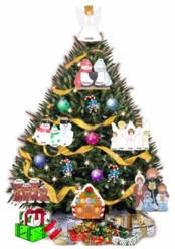
Christmas tree

Christmas Tree


With the holiday season passing us, I think it is a good time to look around us and figure out how we can put this in a fiction world. Looking at our own holidays is a great way to help world-build and create believable celebrations in your own world. A well designed world that includes holidays may also provide a look into the history and cultures that exist in the world.

Looking at Christmas, we can see different elements coming from different cultures with different priorities, the two that jump to the front being religion and harvest. Religion has been with us since the first cognizant person witnessed the first lightning storm or felt his first earthquake. To their primitive culture, such acts could only be accomplished via a supreme being. It’s not surprising then that many of the holidays surround the worship or appeasement of a god. Even the name holidays comes from Holy Days.

The date is centered around the Winter Solstace, or December 21st. The Norse celebrated Yule, which focused on the return of the sun. If you watched the sun in the sky, each day it would drop lower and lower as the days got shorter. On solstice, the sun would stop its movement and start rising as the days got longer. To celebrate, they would get large logs and light them on fire and feast until the flames went out. The Norse believed that each spark from these Yule logs, which could burn for around 12 days, symbolized a new life that would be born in the forthcoming year.

The Romans celebrated Saturnalia in honor of Saturn, the god of Agriculture. Since farming and agriculture paused for the passing of winter, it provided time for celebration and feasts. Saturnalia also centered on the rebirth of the sun and the hopes of a good new year. One big part of the celebration was the day of Gift-giving on December 23rd. On this day, people gathered to give gifts to friends, family, and patrons.

Finally, with the coming of Christianity, many of these celebrations were converted in an effort to bring more people into the religion. As society progressed and became industrialized, the rebirth of the sun and the worry about growing crops for the next year subsided. Despite this, the history and concerns of our people in the past is still evident in how we celebrate now.

Looking back at fiction, you can put these same ideas into your holidays. If the people of your world never had to worry about food or the loss of the sun, then having them celebrate a Christmas like celebration wouldn’t make sense. Also, in a world where Gods are not only worshiped but actively walk and affect the lives of their followers, certain requirements may be demanded upon them. Think of how these requirements would change through the years. Perhaps a past god required one thing and was replaced with the current god who actively protested the celebrations. How would this effect the world and those living in it?

Even if you don’t tell the world of all the history, it can help give ideas and really give color to the world. If nothing else, it will give you, the author, a deeper understanding of your world and the people who live there. And that can only help improve a novel.

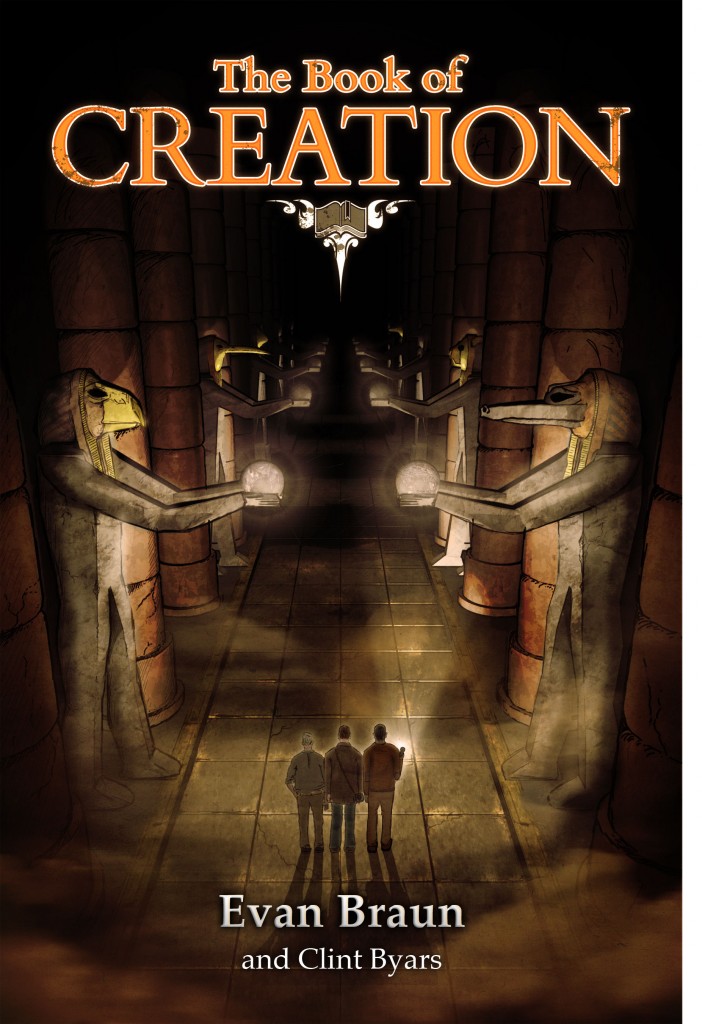
ANNOUNCING: The Book of Creation

22 December 2011 | 3 Comments » | Evan Braun

In the wake of a discovery that rocks the archaeological world, three strangers meet for the first time in the mountains of central Switzerland. Under a cloak of secrecy, they’ve been gathered together by a ruthless billionaire whose goal is to harness unspeakable power by unearthing an artifact more ancient than civilization itself.

Their mission soon finds them on the chase of a lifetime. From the Great Pyramids of Egypt through the wilds of Antarctica, they circle the globe on the heels of a mystery thousands of years in the making, pursued by forces intent on their destruction, proving once and for all that there are some mysteries in this world too dangerous to be solved…

For in the dark waits a terrifying menace.

*            *            *

As a regular contributor to The Fictorian Era, over the last year I have shared with you my views on writing, publishing, and my general sanity. Well, obviously the goal of all that blood and sweat is to achieve the dream of being a published author. Slowly but surely, a lot of us Fictorians are starting to see the fruits of our labor pay off. As each of us comes out with a new book, we’re excited to share the news with you, our readers. Today, I have just such a piece of good news!

Authors can often trace their labors of love back through the years. Well, this week, after more than five years of hard work and tireless research, I am pleased to announce the release of the writing project I am most proud of.

The Book of Creation, a novel written by myself and Clint Byars, will be published in print this upcoming March from Word Alive Press. However, for those of you who own Kindles and other ebook reading devices, the book is being made available early. It is now available for purchase from the Kindle Store, and in the coming weeks it will pop up in all the major ebook venues. It’s priced at just $2.99. Even if you’re not a Kindle owner, there’s an option to purchase the book as a gift for friends and family who are Kindle owners. The book would make a great, inexpensive Christmas gift. Think of it as a digital stocking stuffer!

The novel is an exploration of the premise that our ancient history is fundamentally different from the prevailing historical views of our times. Similar in vein and style to Indiana Jones and The DaVinci Code, this novel presupposes that elements of the world’s greatest mythologies have a kernel (perhaps a large kernel) of truth… a truth which is finally coming to light after thousands of years hidden in the dark.

And now, without further ado, here is an exclusive preview of The Book of Creation:

*            *            *

Emery Wörtlich was disappointed. At this point in his career, he would have expected more than a half-empty lecture hall. And if this class went anything like the ones preceding it, the numbers would dwindle to a mere handful by the time he presented his more controversial theories. If he had learned anything as a professor, it was that students couldn’t be bothered to think for themselves anymore.

If I change even one mind, it will be worth it. Of course, he would have preferred to change several hundred at a time.

“Good evening,” Wörtlich said, a slight German accent clipping the edges of his words. He unzipped his bag and pulled out a laptop, placing it softly on the lectern. He double-clicked on his presentation file and turned back to the class as the screen lit up.

Sadness once again took hold as he counted the number of empty seats between filled ones.

“Today we look at the Giza pyramids,” he said. “You are all graduate students, so you think you know everything there is to know, but there is probably a lot you do not… things other instructors will not tell you because they do not think they are important. But they are. Vastly important.”

He opened the first slide, an overhead view of the pyramids. “But before we get to that, I want you to pay particular attention to the Queen’s Pyramids. These smaller structures surrounding the Pyramid of Khufu are like remoras on sharks. In and of themselves they are nothing special, at least not in comparison to the pyramids, and yet their proximity alone makes them worthy of study.”

He brought up a view that accentuated the difference in size between the Queen’s Pyramids and the Great Pyramid. “As you can see, these were not built by the same people, certainly not contemporaries of each other. The construction of the Queen’s Pyramids is so shoddy that it requires a staggering absence of intelligence to make such a leap. No joke, you must have borderline dementia to accept such a ridiculous hypothesis.”

Already three people in the back were gathering their stuff. Wörtlich wasn’t going to stop them. If their minds couldn’t take such a basic challenge, they weren’t worth his time.

“These minor pyramids all contain mummies—or rather, they did before grave robbers got to them. What I find most interesting, though, is that the main pyramids did not. Contain mummies, that is. There is very little evidence to suggest that.”

He changed slides again, but before he could return to his notes, he heard a voice from the front row.

“But isn’t that why the Egyptians built the pyramids in the first place? For burial?”

Surprised, Wörtlich glanced over the lectern and eyed the few students staring back at him. One of them raised her hand. She was an American; her look and accent was unmistakable.

“For one thing,” Wörtlich mused, “I do not accept the premise of your question.”

“That the pyramids were intended for burial?”

“Obviously. But what I mean is, the Egyptians did not build the pyramids.”

Skepticism blanketed the room in an uncomfortable silence, but it was nothing he hadn’t experienced a hundred times before.

Once again, the student put in her two cents. “Forgive me, sir, but that’s… well, that’s preposterous.”

“You are forgiven.”

“What he means,” said another student, a man, “is that the Egyptians made the Jews build them.”

Wörtlich furrowed his brow. “No, that is not what I mean, but I appreciate you putting words in my mouth. Now, I am sorry to contradict your eighth grade history textbooks, but this is a center for higher learning. If you want me to stand here and contribute to one of the longest lasting and most ridiculous lies perpetrated by modern academia—well, I regret you will have to go somewhere else for that. I hear Professor Gingrich hosts an excellent class on Fridays. If, however, you are interested in expanding your minds and hearing what I have to say, then by all means, pay attention.”

He replaced the slide with a profile shot of the Great Pyramid. In the margins, he had scribbled dimensions and proportions.

“In case none of you have seen it for yourselves—and I suggest you get around to it—the Great Pyramid is monstrous. Its base alone covers thirteen acres. It contains 2.3 million stone blocks, each weighing about two and a half tons. In fact, there are a few granite blocks higher in the pyramid structure that weigh over a hundred tons. Do not ask me how they got them up there; that is a question for much later. In any event, it is a hell of a lot of stone.”

He looked squarely at the American student. “If you need a point of reference, that’s enough stone to build a six-foot wall all the way from New York to Los Angeles.”

The student shrugged. “Couldn’t they have built ramps to get the blocks up?”

“Or a pulley system,” another suggested. “One of our professors even theorized that they might have built it from the inside out.”

Wörtlich nodded to the second student for at least doing her homework. “Well, certainly. I suppose those theories might be possible. But what traditional sources do not often admit is that for the Great Pyramid to have been built and completed during the timeframe suggested, the reign of Pharaoh Khufu, workers would have had to move one and half stone blocks into place every hour for twenty-three years, without stopping for nights, weekends, or bathroom breaks. And remember just how heavy they were. Still are, actually.”

“It could have happened. There were thousands of slaves.”

“Sure! Absolutely it could have happened. Let us consider for a moment that you are right. Also consider that the pyramids embody such a wealth of mathematical know-how and precision that its builders would have needed wisdom akin to the knowledge we have today.”

“The Egyptians of that period operated at the height of ancient civilization, didn’t they?” someone asked.

“That is highly arguable. But it is good of you to give them the benefit of the doubt. Let us look at some specifics now, so that you, all of you, can judge for yourselves. Begin with the impressive fact that the pyramid’s base is a perfect square with right angles accurate to one-twentieth of a degree. That is very precise. Also bear in mind that the sides of the pyramid, perfect equilateral triangles, face exactly north, south, east, and west. And I mean exactly. Now, if we take the Hebrew cubit to be 25.025 inches, then astonishingly we find that the length of each side of the base is 365.2422 cubits. Does that number sound familiar to anyone?”

Wörtlich gave them a chance to weigh in. Truth be told, he was delighted that this group at least had the gumption to speak up.

“That’s about the same number of days in a year,” someone ans­wer­­ed.

“No,” Wörtlich said forcefully. “It is the precise number of days in a year, including the fraction that accounts for leap years. These builders placed a premium on precision, no? Is any of this starting to sound unlikely? In case there are any skeptics left in the room, and there always are, the numbers get even more interesting. Very juicy. If we multiply twice the length of a side, at the base, by the total height, at the apex—which is 232.52 cubits—we get pi. To within five decimal places! I must say, that is not bad for six-thousand-year-old Egyptians.”

“Okay, I get it,” the first student admitted. “It’s weird.”

Wörtlich rubbed his hands together excitedly. “And just to, how do you say, ‘make the deal sweet,’ bear in mind that the Great Pyramid stands at the precise center of the world, longitudinally between the west coast of Mexico and the east coast of China, and latitudinally between the northernmost coast of Norway and the Cape of Good Hope in South Africa. The Egyptians could not possibly have made such a calculation, what with not having discovered the existence of the Far East or the Americas. You cannot make this stuff up. If the Egyptians were so damned precise, why did the Queen’s Pyramids cave in on themselves after a few centuries while the greater pyramids continue to stand after several millennia?

“Now, Professor Gingrich and most of his peers would chalk all this up to coincidence, one piled upon another. But since I actually understand a thing or two about math, I know better. The odds of that happening are astronomical. I mean, truly and unfathomably massive.”

When he paused, the class was silent. Wörtlich was pleased to note that he hadn’t lost any more people since the beginning of his tirade. He couldn’t help but smile. He hid it by looking down and changing the slide again.

“So, to summarize what you have just heard, these builders had access to knowledge beyond the scope of their worldview. They somehow intuited that the planet was a globe, flattened at the poles, and also seemed to know its rate of rotation, not to mention the 23.5 degree tilt of its axis. And of course, they knew the precise number of days required for the Earth to orbit the sun. But I am sure all that is coincidental. After all, the Egyptians just barely had a firm grasp on the wheel.”

He returned the slide to the opening photo and waited for the inevitable response. Sure enough, they didn’t disappoint.

“So who did build the pyramids?”

Wörtlich smiled crookedly and closed the lid of his laptop.

“Finally, a good question.”

*            *            *

If you like what you’ve read so far, please visit our Amazon page and pick up a copy today (click here). You can also visit our official website. Happy holidays to all!
Media Tie-In Writing

21 December 2011 | 2 Comments » | mary


After over a decade of involvement in various fan communities, I’ve noticed certain misconceptions about writing tie-ins (books based on other intellectual properties, such as movies, video games, and TV shows) that seem to repeat themselves on every message board and convention question and answer panel.

Plenty of fan fiction writers think it would be great to spend all day telling stories about their beloved characters and getting paid for it.  The most junior mistake is to find addresses for people already involved in the franchise, and send them the fan fiction so they can see how good it is.  Unfortunately, even the best fan fiction won’t get read—and not because the recipient is “mean” or even just too busy.  For legal reasons, professionals working on an IP avoid reading fan fiction.  Otherwise, they open themselves to lawsuits from fans claiming that ideas or concepts were “stolen” from fan works.  True or not, these allegations require costly legal support and can delay production.  For professionals, reading fan fiction isn’t worth the risk.

Intellectual property companies don’t go to fanfiction.net when they’re looking for a new writer for a tie-in novel.  They go to published authors who are already writing in the genre and style they’re looking for, and ask if they’d be interested.  They want to work with professionals:  people who’ve already proven that they can produce a novel with both the quality and the appeal to be accepted for publication.

So, setting out with a dream to write tie-in fiction for a particular beloved franchise is a challenging prospect.  You would first have to write an original novel, get it published, and then—through circumstances largely outside your control—wait in the hope that someone working for that franchise would invite you to write for them.  The important quality for a fan is loving the franchise; the important quality for being a tie-in writer is being a professional writer.  If you are working to be a professional writer anyway, tie-ins can provide good income and mass exposure; but you don’t know what jobs might come along.  If all you want is to write about your favourite series/movie/comic for a living, think again.

Professional tie-in fiction isn’t fanfic.

In fan fiction, you’re free to do whatever you want.  You can kill off the main character.  You can break up canon couples and create new romances.  You can introduce new story elements, such as magic, or time travel.  You can make gay characters straight and straight characters gay.  You can do crossovers with other series.  You can cheerfully overlook any characters or storylines that don’t hold your interest.  When you’re writing for your own entertainment, there are no restraints.

Professional tie-in fiction, on the other hand, is overseen by the intellectual property company who needs to approve everything you write.  How much freedom you will have to tell your story will depend on many factors:  how much pre-existing canon there is; how flexible that canon is; the tone, themes and setting of the franchise; the needs of other authors writing in the same franchise.  Your freedom will also depend on whether the company has a particular idea in mind (ie. “write a novelization of our video game”) , a specific goal for the book (ie. “write a prequel for our movie to show how the characters met each other”), or something more open-ended (ie. “write a story about the Were-rats in the Shifting Breeds universe”—or perhaps even just “Write a Shifting Breeds story).”  Companies know that killing off a main character in a tie-in novel can have a major effect on their fan base; it’s done rarely, and with careful thought, for a reason.  Your “unrequited romance between the hero and the villain” might be your favourite daydream for the franchise, but unless it’s already part of canon, it’s unlikely that it would ever become sanctioned by the intellectual property owners.  The company wants to create a tie-in novel that will cause as many fans as possible to buy it, enjoy it, and come back for more.  It doesn’t want to publish a book just to cater to one person’s private fantasies—that’s what fan fiction is for.

Tie-in writing is hard work, often with tight deadlines, writing in a shared universe where the writer is only one of many contributors.  Because of those tight deadlines and mandatory cooperation, intellectual property companies look for established writers with reputations for professionalism and teamwork; people they can count on to get their work in on time and done with the best interests of the franchise as a whole in mind.

For those of you who think Star Wars would be better without Luke Skywalker, or if the prequel movies never happened, or if Leia and Lando got together, or if the Millennium Falcon took on the Starship Enterprise, or if Darth Vader were a dragon—rejoice!  Fan fiction is, and always will be, yours.  For those of you who would like to write tie-in fiction as part of your career—keep working on that original novel.


Managed Expectations

19 December 2011 | 6 Comments » | Dylan Blacquiere

One of the things that the contributors to this blog do, as part of a larger community of writers, is to set goals for the coming week that we broadcast to each other. The things that we need to do, or aspire to do, written there and stated plainly to the others in our writing group. The following week, we not only make new goals, but we account for our progress on the old ones. It’s been a way that we can keep in touch with the goals of others, and act as encouragement for those who need it, or to celebrate in each other’s accomplishments. Sometimes we’ve cheered as someone gets a publication, and sometimes it’s been something as simple as praising someone meeting their quota of words for the week. It’s been a great way to keep in touch with what people are doing, and what people are hoping to achieve.

In another sense, it’s a way to keep each other accountable to our goals, even if the only sanction is a sense of shame at not having lived up to the standard you’ve set for yourself. There have been times where I have cheerfully and earnestly placed a goal – say something modest, like writing a few thousand words – only to fail at it, and then have to face up to writing that accounting the following week.

Sometimes I write my rationalizations – oh, what the hell, excuses. I was busy. I did this instead. I did that instead. Et cetera. Sometimes – the times when I really didn’t have an excuse – I just didn’t say anything. A flat, inflectionless statement of the coming week’s goals, as though last week’s mark had been completely forgotten.

Inevitably that leads to a sense of frustration and failure. Wracking up week after week of missed bars is not a good feeling, and there have been times when I have felt that keen frustration that comes achingly close to just calling the whole thing off, taking a hiatus, not bothering to keep up with the accounting.

This is the wrong way to go about it. If you’re at all like me – someone who has a desire to write, but has a whole lot of life in the way of it – it’s important to keep those goals, and those reckonings. But maybe they have to be shifted. Maybe this won’t be the year that the blockbuster gets written or the screenplay gets done. But maybe, if you can block off some time, hit your small achievable goals, well, that well keep the whole thing from turning into an inescapable morass of shame and failure.

For me, I have my final licensing exam for my medical boards in May. I will not have time to do much writing in these last five months – I just wont. Afterward, we’ll see. In the meantime, what goals can I achieve? How can I do enough to justify to myself that I am a writer, as opposed to some hobbyist with an unused laptop in the corner? Maybe for the next five months it will be blog posts, and small submissions to journals that carry prose and poetry in the medical humanities field. Maybe token goals – a scene a week, or a couple of hundred words. Something that won’t detract from the very real need to study for this exam, but will make me feel as though I’m still actively engaged in this equally important passion. A managed expectation, if realistic and still aimed toward the future, can still be an important one, and one that keeps you on the path forward until you can raise the bar higher once again.

Contest Time: Gini Koch!

16 December 2011 | 11 Comments » | Colette

What do we all need at the beginning of a New Year? What else, but a calendar! And what could be better than a calendar featuring the amazing artwork of Dan dos Santos as seen on Gini Koch’s sci-fi romance Alien Series covers.

Enter our latest drawing to win this 2012 calendar plus a copy of her latest book, released December 2011, Alien Proliferation.

Want more than one entry? Post a link to the Fictorians blog on your facebook page or your own blog, or tweet the details of our contest. If you do any of these things, leave the details (including your web address and twitter handle) with your comment. There’s a maximum of 4 entries per person (one for each method of entry). Leave a comment  telling us in 25 words or less who your favorite book character is and why. See our examples below.

If you’re not yet familiar with the series, but would like to be, then just say so or make something up. It’s all good. Just make sure you let us know, and let me know you’d rather have the first book in the series rather than the fourth.

Entries will be accepted until 9pm PST on Friday, 30 December.  We’ll announce the winner on January 6th, and send the prize the same day. Is the whole contest too spread out? A bit. But hey, it’s the holidays. Cut me some slack, here.

Oh, and those examples; here’s Gini’s comment on her favorite hunk in the series. “I go for Martini, of course, because he’s pretty much the perfect man — intelligent, handsome, caring, brave, understanding, sensitive, but willing and able to kick butt as needed. However, I also go for Chuckie. Because he’s the same, with extras on intelligent. Sure, he’s not A-C handsome, but he’s still hot for a human, and he has all the rest of Martini’s qualities, including being sensitive and caring, without being empathically talented. Chuckie is the epitome of every nerd guy who’s made good. I don’t know that Martini could exist in the real world, but I know Chuckie can and does.”

Of slightly less interest…okay, maybe of much less interest, here’s mine: I go for Chuckie, too, but Gini pretty much summed up the reasons why, so I’m going to take a slightly different direction. My second-favorite character was the poofs. Yeah, they’re cute, cuddly, etc….but they turn into vicious, uber-doberman-type, guard-bears. What could be cooler than that? I want a gray one with black spots and I’ll name her Frill.

It’s that easy. Let us know what you think; fb, blog and twitter the contest location to others; and win a calendar and a free book. You can buy Gini’s books at Barnes and Noble,  Amazon, Mysterious Galaxy or your local bookseller.

The Meaning of Words – Editing Tips

14 December 2011 | 4 Comments » | Nancy

The beautiful part of writing is that you don’t have to get it right the first time, unlike, say, a brain surgeon. You can always do it better, find the exact word, the apt phrase, the leaping simile.
- Robert Cormier

Writing is story telling. Writers, regardless of our discipline, need to pick not a correct word but the best possible one. In the legal profession, there’s a growing trend calling for plain writing. Courts have held that the word “solicit” is ambiguous because it has more than one meaning. “Exclusive” can mean “concurrent.” No wonder the English language is so hard. My writing must express what I mean clearly and effectively regardless of who reads it. Making my meaning clear is part of the editing process.

So how does the word “shall” end up meaning “may”? Context. When a sentence read as a whole expresses an option rather than a directive, “shall” means “may”. What does this quirk of the courts have to do with editing? Everything. Word choices matter.

When talking about writing and editing, Lisa Scottoline,, says to give yourself permission to write a crappy first draft. Do this. It’s easier to finish a story if you’re not worrying about “perfect.” Errors are fixed when you finish the first draft. Editing transforms that crappy first draft into a polished project. So how do I edit to take a diamond in the rough to a polished gem? I usually follow this line-editing procedure:

(1) Spell check

An obvious step, but people forget to do this.

(2) Search for :

a. common homonyms to ensure I used the proper word;

b. the verb “to be” in all its forms and passive voice;

Passive voice is when the subject of the sentence is acted upon rather than acting. Passive voice will often use a “to be” verb. Examples:

The ball was thrown – passive voice with a “to be” verb
Pete threw the ball – active voice

c. words ending in “-ly”.

I don’t have any objection to “–ly” words, but often a stronger word can be used. “He slunk around the corner” is a stronger sentence than “he walked stealthily around the corner.”

d. pronouns to ensure who or what they refer to is clear;

Be careful with pronouns. Writing clearly means ensuring the reader knows what each pronoun refers to. When two same-gendered characters. or characters with unisex names interact, you will need to be mindful that your pronouns refer to the character you intend them to.

(3) similes.

A common writing “rule” is to avoid similes or clichés. There’s nothing wrong with a good simile. But good is the key word. Entrenched similes become clichés. “In for a penny, in for a pound” is one.

Using a cliché can help you if you turn the saying on its head. Instead of saying that “every cloud has a silver lining,” you could say, “every cloud has a lightning bolt with my name on it.” By changing the meaning of this tired expression, I’ve added interest to the writing.

(4) Read for description enhancement by word choice, and context to ensure I haven’t inadvertently changed meaning.

The sentence “Pete walked into the room” conveys a different image than “Pete stumbled into the boardroom.”

Specifics matter. The first example – Pete walked – gives the reader no additional information. The sentence paints with just a pencil.

“Pete stumbled into the boardroom,” on the other hand, triggers associations. It’s painting with oils. He stumbles and the reader wonders if Pete’s drunk, injured or been pushed. By placing Pete in a “boardroom”, I can see Pete in his a suit, and imagine the large mahogany table surrounded by a dozen black chairs and dark paneling on the walls. I can add a twist by changing the ordinary images the words convey. I can grab the reader’s attention if Pete is wearing rags when he stumbles into the boardroom. Similarly, if the room is a “board room” full of surf boards, the words convey different images. The subtle differences in meaning we can convey with the right word is why writers are always told to “show, not tell.”

(5) Grammar check.

I know it seems like a lot of work, and it is, but the finished product will be better for the effort. Once I’ve line-edited, I can strengthen the story by context editing for plot holes, character inconsistencies, tension and other craft issues.
Plain writing doesn’t mean boring. It means using each word to its maximum advantage to produce clean, clear and professional prose.

Making Time to Write During the Holiday Season

12 December 2011 | 8 Comments » | KylieQ

It’s that time of year again: Christmas.  I have a million deadlines at work, presents to buy (and wrap) and a ham to order.  I have to decide whether to risk putting up a Christmas tree or to avoid it in the interests of not giving the cat an enormous plaything with removable parts.  The rainy season is about to begin so I need to get the gutters cleaned.  I have to find a new dog groomer, buy printer toner, get the carpets cleaned…  If you have kids, they’re probably already on holidays and you’re now a fulltime taxi driver, money distributor and all-around entertainment machine.  And, somehow, we’re also trying to write.  Insane?  Perhaps.  Achievable?  Yes, but only with the right plan in place.

Step 1: Decide your priorities

Are you going to commit to writing during the Christmas season?  If not, don’t feel guilty – perhaps this is a time when other things need to take priority.  But either way, make a decision up front.  If you’re choosing not to write right now, set a date when your normal routines will resume.

Step 2: Check the schedule

Look at your schedule and find the days or times when you can most realistically expect to get in some writing time.  Block out that time in your schedule and treat it the same as any other appointment.  Don’t forget about those little pockets of time which are so easy to fritter away without noticing: waiting for guests to arrive, those precious minutes in the early morning before the household awakes, time spent waiting for dinner to cook.  If twenty or thirty minutes a day is all you can find, then lock that time in and protect it.

Step 3: Set goals

This is a crazy time of year so set smaller goals than usual.  There’s no point aiming for 3,000 words a day if you know you will be lucky to find half an hour to yourself.  Be realistic: aim for half a page, 500 words, one scene.  Whatever you can reasonably achieve in the time you’ve blocked out in your schedule.  Alternatively, work on small editing tasks so that you can cross individual items off your “to do” list.

Step 4: Enlist the troops

Make sure your family knows what your goals are.  Add your writing time to the family calendar and then consider how your family can contribute.  Can someone else put on a load of washing?  Who can be appointed Chief Fixer of the Leftovers, responsible for finding all of the half-eaten stuff in the fridge and setting it out for dinner?

Step 5: Make time to relax

If you’re running around in a panic because you have three million things to do and you can’t stop going over your mental “to do” list, you can hardly expect to be able to focus on your writing.  So take some time out.  Write down all of those things in your head so you don’t have to remember them.  Give yourself time for a long soak in the bath or to read a book or go for a massage.  We’re all stressed to the hilt at this time of year so find some time for you, not just your writing.

Step 6: Don’t forget Christmas

Don’t let yourself get so caught up in trying to meet your goals that you forget what time of year it is: Christmas.  This is a time for friends and family, a time to take stock and look forward, a time to be thankful for what we have.

This is my final scheduled post for this year so I wanted to wish all of our Fictorians readers a very merry Christmas.  We have big plans for our little blog next year, including regular guest posts and a new regular feature dedicated to the art of storytelling.  See you in 2012!

Failing with Grace

9 December 2011 | 6 Comments » | KDAlex

…Wow. Words I never thought I’d type. Ever.

“I Suck.”

We’ve all been there. You probably deleted something you spent hours on and replaced it with those two simple words.

Ugh.

So yeah. I failed NaNoWriMo for the first time in like five years. And that hurt worse than breaking bones, burned more than the fire in my hearth, and all around just made me feel like a total and incomplete waste.

But I shouldn’t feel this way. I know. You tried your best, you gave it your all. Better luck next time, champ.

Even in my failure though, I accomplished something that many people never thought they could do. And for 30 days I was a champ.

My total writing output for the month was a little over 60,000 words. But that’s winning, isn’t it? You’re supposed to write only 50,000!

My NaNo this year was to finish my novella and write the first half of a standalone novel all the while outlining and index carding two other books.

Way too much on my plate. In the end, I charted 37,258 on my standalone and mixed the rest up with my novella and a couple of index cards and a sample chapter or two for Night Watch. And redesigned my webpage. That was excruciating.

If writers are gluttons for punishment, and even a tad sadistic with what they do to these poor little characters on paper, than web designers are masochists. And my heart goes out to them.

Seriously. That stuff is hard.

But, now my grand total on the standalone is 25,111. Don’t ask. The pruning sheers were excellent. And justifiable.

Given all the freak accidents and bad luck that befell me this month, 25,111 is something to be proud of.

Then why don’t I feel like such a hero?

Because I don’t have anything to show for it.

Except for 25,111 words?! That’s more than most people write in their lifetime.

I think part of it stems from my reckless abandon as I chased the finish line and impulsively checked my word count every five minutes.

I wrote scenes that were 1,000 words long because they needed to be 1,000 words long. I didn’t force myself to stretch a paper thin premise for an extra 600 words that I knew it didn’t need.

Because what would that accomplish? A little check mark on my daily planner.

Big stinkin’ deal.

I can’t help but prune as I go along. Even when I turn spell check off, I still see that tiny little oopsie and I go crazy. Out, damned spot!

Were they distractions? Yup. Were the necessary distractions. You’re damn right.

I’ve never “not finished” a book because I got hemmed up on the distractions of the craft. I’m the type of person that would prefer to do something write (yes!) the first time rather than go about and redo it six times when it could have been perfect on the first.

I know this NaNo will get finished. It just won’t be done for the month of November.

Because you can’t microwave dinner and call it a gourmet meal, no matter what the pretty packaging will try to convince you of.

And even though I spent a good three hours designing a pretty cover that I hoped to have on a printed ARC for next week, it’s okay. Because I know something that pretty deserves to be on something that twisted.

But, when it’s done and I approve, I know it will go next to all my other books. If I’m going to put my little pile of dreck next to Stephen King and Jeff Abercrombie, then you can bet I’m going to do the best I can to make it FIT on that shelf.

You can’t dress up a rusted out Beetle to make it look like a brand new Benz.

And my little books keep company in high society on my shelf.

So, I won, even though I failed. But I won. I know, it doesn’t make sense, but it does. The point is, you don’t need one month out of the year to prove you can write. You can do that every month. And every day. Even if you failed, you still accomplished something.

And something is better than nothing.

So, did you guys win NaNo this year? What beat you down? Did you celebrate your success?


Filtering Out the White Noise

7 December 2011 | 4 Comments » | Kevin Cioffi

All artists borrow –or, let us be honest: steal – from other creative types.  A pleasant word for it is inspiration.  It simply cannot be helped.  As creative types ourselves watching, reading, listening; it can be like flipping on a switch.  Other artists become our mentors.  We may like the prose or world building of a specific author, the cinematography of an esteemed director, or the mood of a certain song.  For us, this becomes creative fodder.  We may seek to emulate the prose of the author or the complexity of her imaginary world, frame a written scene like a director’s shot, or set the same mood as the songwriter.  Oftentimes, these stimuli even act as the beginning spark of a fabulous idea and kindle passion within us.

But, to me at least, there comes a time when enough is enough; I’ve taken all of the “inspiration” I can for a certain project and I need to filter out the external stimulus.  At this point, anything further just becomes an extreme distraction – buzzing static or white noise.

For example, a few months ago I had the opportunity to play through some of Dark Souls on the PS3.  The game was so uniquely somber and spooky that I couldn’t help but find inspiration.  By the time I put down the controller, I had already begun fleshing out a new world and a short story to take place within it.  This wasn’t a piece of fan fiction or anything related to the game itself, more a siphoning of the game’s mood into something wholly my own.

But as sometimes happens with new ideas, I didn’t get to it right away.  A week or so went by and with it, work and responsibilities.  If the game wasn’t necessarily fresh in my mind it was still there and the siphoned mood along with it, but it was fading day by day.  What is worse, new experiences and new stimuli were gradually creeping in around the edges, tainting the original experience, spoiling the mood.  I had started watching Doctor Who and the light hearted zaniness of that program was a stark contrast to the silent spookiness of Dark Souls.

My point is, I don’t think new experiences or new stimuli will altogether kill a previous idea that I liked, but if I am not carefully it can gradually erode the integrity.  I think it is the same exact reason that I cannot write while listening to music with lyrics or with the television on.  The distraction is too much and my train of thought is completely altered.

I suppose the trick is to be careful.  It is great to be open to artistic stimuli, but at some point it might be best to shut it all off, at least until you can get a significant amount on paper.

My Alien Being

6 December 2011 | 2 Comments » | Ace Jordyn

I’m sitting on the beach in Essouira, Morocco. No bikinis dot the Sahara-red sand. There’s just kids playing soccer, tourists declining barkers carrying silver trays of delicate sweets rebaked in the afternoon sun and camels carrying giddy riders through sea side dunes. Surf’s high – so high the pulsing ocean is blood red with a ribbon of frothing foam and the sea monster’s mouth snaps shut on the shore. A shard of light spears roiling storm clouds. Awestruck, I gape, ignoring the stinging sand in my eyes and the salty spray turning my hair prematurely white. I want to fall to my knees in reverence knowing that if I wasn’t a child of science, this moment would be my moment of truth because I’ve seen the Angel. From this point forward, my writing would no longer be of fantasy but of prophecy and revelation.

Walking through the Medina, with store keepers cooing enticements of shared tea or special deals for pretty women or special Berber massages, I’m reminded that I’m not simply the observer, I’m the alien being observed. No matter how modestly I’m dressed, how respectful I’m being, I’m still a foreigner in a country where I don’t speak the main language. And I love it. I laugh at the offers, banter with the best all the while noting my reactions and theirs.  But then I’ve had enough. Enough of the smells of sweet spices teasing my nostrils which have just been assaulted by heaps of raw fish. Enough of chickens squawking while docile rabbits nibble grass in the butcher’s stall. Enough of brightly colored linens carefully displayed, leather goods spilling into the street, metal workers hammering out bowls. Enough of watching the ebb and flow of tourists pushing, vendors enticing and arms desperately flailing about to secure a good deal.

Alienness overload. That’s what this is.  

Somewhere deep inside, we all try to understand the alien within ourselves otherwise, we wouldn’t be writing fantasy. But writing is a safe way to practice the alien experience vicariously through the new worlds we’ve built, through plot twists and every character’s angst. Sometimes it’s too safe and our writing suffers for it. When we’re too familiar with something, we lose the rawness of wonder. We need to remember that rawness, that excitement and fear when our character enters a new world. We can’t let our familiarity overshadow the character’s experience.

That’s why I like to travel to countries where I don’t understand the language and the customs are totally new. It’s raw. It’s exciting. Sometimes it’s overwhelming. But always, it reminds me that my characters have their own points of view about the world they’re experiencing. I know that when something so familiar to others is so new to me. It’s safe but it isn’t. It’s fun but it’s scary. It’s awesome and it’s overwhelming. Those feelings are what I must hold on to because my characters can never be as comfortable as I am about the new world I’ve created for them.

I am their interpreter. Bringing their experiences to life on the page. Finding that raw edge, the vulnerability that makes them spin out of control or struggle for control in the alien landscape. I challenge them by committing the cultural faux pas which forces them to take desperate actions to survive.

Understanding the alien within never gets any easier – it only gets more exciting. Our need for belonging and security heightens our awareness yet when those needs are our memories of alienness drift away. So I travel the roads unknown taking care to note the alien nature, the creeping comfort of familiarity and to translate that to the written word. Somewhere in those gems of observations are not only the feelings my characters will have, but the sparks of ingenuity for inspiring deeper, richer worlds where angel swords pierce the heart, sea monsters snatch unwitting victims from the shore and someone falls in love with the alien.

What Art Can Do for Us

2 December 2011 | 10 Comments » | Brandon M Lindsay

Oath of the Horatii, by Jacques-Louis David

It happens to everyone; sometimes, life disappoints us. We can do our best to mitigate disappointment, and we can even achieve a great amount of success in that regard, but at some point, something’s going to come up that wrecks our day.

Indeed, it appears to be a rather prevalent issue these days (the reasons for which are beyond the scope of this post, though I assure you, I do have an opinion on the topic), so much that people unquestioningly equate cynicism with realism. If you have any doubts about this, listen to a politician.

But this phenomenon extends beyond our day-to-day lives to the field of art, and in particular, of literature. In fantasy (the genre with which I am the most familiar), there has even sprung a new sub-genre dedicated to cynicism called “gritty fantasy,” comprised of anti-heroes and more anti-heroes. Those who have helped popularize this sub-genre have done so by acclaiming its supposed authenticity of character motivation and general realism amidst a fantasy backdrop.

Some of the authors in this sub-genre are quite good and a few I buy the day their books come out. More often, though, especially on those wrecked days, I’ll have to take a break from this kind of book and read something that I know will end happily ever after. Why? Because I have enough problems of my own, thank you very much, and it just isn’t worth it to wallow in some character’s misery. In a way, I think it’s (somewhat unsurprisingly, given the nature of these books) tragic that this grittier type of story has come to prominence because it probably contributes to the general malaise that people feel.

So what happened to the stories peopled with characters you can cheer for and want to emulate, stories led by heroes who save the day and vanquish evil in the final act? Many of its critics (who currently outnumber its champions) think this type of story is unbelievable and unsophisticated, that its characters aren’t “flawed” enough. It seems this type of story has fallen out of vogue in recent years, though there are still its practitioners and fans, and I doubt that either will go away. At the end of the day, these are always the stories I gravitate toward. These are the stories that remind me that today can be a good day, so long as I do my best.

Some stories show us how the world is. Some show is how it can be, whether good or bad. Still others show us how it ought to be, and give us the inspiration and the emotional fuel we need to make it that way, to become the heroes of our own stories and live the lives that we want to live.

As artists we have a choice. We can either fall in line with the trends of today, and I’m sure many of you will disagree with me and argue that this is the better path (if you do, please comment. I enjoy a good discussion). Or we can show our readers characters who do not yet exist, but can, doing things considered impossible, yet succeeding.

And who knows? We might just end up saving the world by the time the final page is turned.