The Fictorian Era

Archive for June, 2012

Brandon Sanderson Dishes on Publishing

29 June 2012 | 5 Comments » | Joshua Essoe

It has been a busy and wonderful month here at Fictorians.com. To finish off our Publishing Month of Madness, Brandon Sanderson was kind enough to agree to take some time out of his crazy schedule for a short question and answer style blog post.

Here it is in all its glory.

Joshua Essoe: It used to be that producing a book a year was sufficient, even productive, but now it seems if you’re not getting at least two or three books out there every year to feed the cavernous maw of impatient e-readers, you’re too slow and the tide will just pass you by. What do you think of the difference between e-books and traditional publishing?

Brandon Sanderson: Authors are doing some interesting things in e-books. One thing you’re noticing is that in e-books—probably for pricing reasons—the books are growing shorter and coming out faster. It’s moving closer to a much older model, where you would release serialized editions of books that were more like episodes rather than an entire novel. Some of the market is going that way. I think it’s just a different model; I don’t necessarily think it’s going to be the only model. It’s just a new and interesting thing that e-books are doing.

JE: Is there a pressure that has developed from traditional publishers for their authors to be pushed towards more production? When should an author consider self-publishing instead of trying to land a book deal in NY? Should one self-publish while trying to land that book deal and use potential sales numbers as part of the pitch?

BS: I don’t feel that there has been any push from New York to publish books at any different speed at all. In fact, one of the main reasons to publish with New York as opposed to self-publishing is if you are an author who doesn’t write at least one book a year. If we’re to take The Way of Kings as an example, there’s no way that I’m going to be producing 400,000-word epic fantasies as fast as a lot of the self-published writers can put out books. There’s no way that anyone could have made that book at that speed. It’s a book that takes a year, maybe eighteen months to write. So for long epic fantasies, New York certainly has some things going for it.

One of the reasons that it’s really good to publish fast and short when you’re doing self-publishing is that you don’t have any sort of marketing push behind you. You don’t have bookstore shelf presence, which is one of the major forms of marketing—people seeing your book there on the shelves. Word of mouth is always the most important thing, but it becomes even more important for the self-published writer. Publishing quickly and getting a lot of books out helps to get your name in more places in the market and helps to push some of that momentum through. That seems to be the key way to make it as a self-published writer.

When would I self-publish versus New York-publish? I would not abandon either model. Self-publishing has proved itself so viable recently that if I were a new writer, I would be looking at doing both at the same time. Maybe taking the longer, more epic-style books to New York and doing the faster-paced, more thriller-style books online, and seeing what works best.

So the expansion of the e-book market gives you more places to go. That said, if you’re not a particularly fast writer, self-publishing is going to be a very hard route for you because everything I’ve seen—granted, I’m not an expert on this; there are places to go other than me for expertise—shows that being able to produce quickly is a key factor in being a successful self-published author in this market.

JE: How long does it take to be forgotten in this fickle book market, and what should an author be doing to prevent it?

BS: It depends on your method. What you’re getting at here is the balance between promotion and just writing the next book. That’s a balance authors have had to work with for decades, if not centuries—the idea being that promoting your book keeps it in people’s minds. Right now you can do that through engaging blog posts, being on Twitter, going to conventions, doing book signings, and all of these things. They take time. If they take so much time that you’re not writing your next book, then the question becomes are they worth it?

Do you want all your eggs in one basket? Do you want to write one book and then spend the whole year promoting it, trying to get it to take off, or do you want to, in that time, write three books and try to get one of the three to take off? I don’t think there’s any right answer; they’re both valid ways to go. You could end up writing that one book and, with your promotion, turn it into a big success that builds a name for you. Or you could be in hindsight wasting your time promoting it when it never ends up taking off.

So you have to find the right balance for yourself. Part of the question that I would ask myself is, are you an engaging blogger? Can you write interesting things on a topic and build a platform that is not just about “Buy my book!”? Would it be something interesting and fun for people to read, and can you leverage that to make people interested in your writing? If you can, then blogging would certainly be helpful to you.

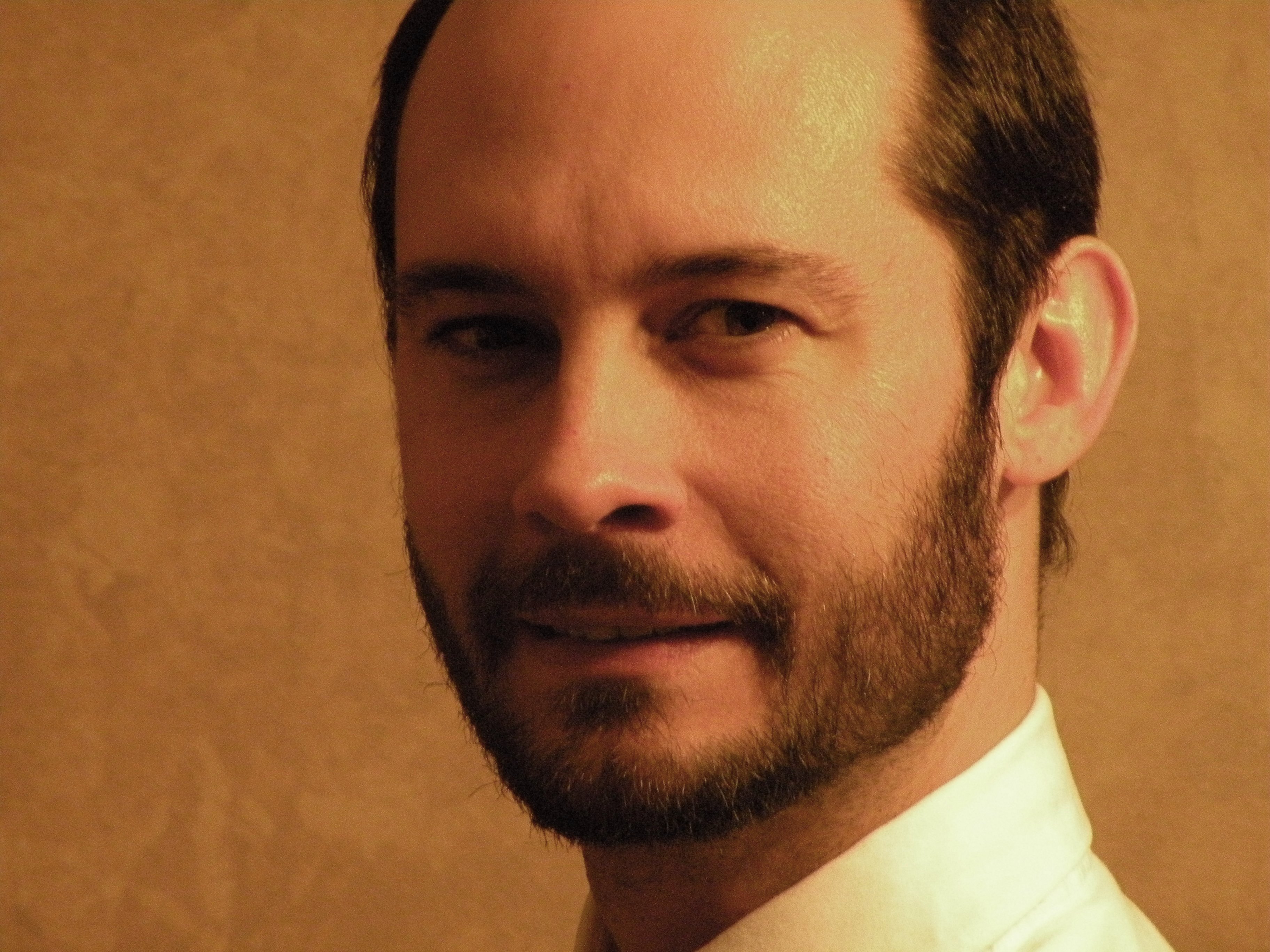
Guest Bio: Brandon Sanderson writes epic fantasy novels for Tor Books.  He is the author of Elantris, the Mistborn trilogy, Warbreaker, and his newest grand epic, starting with The Way of Kings. He was also chosen to complete Robert Jordan’s The Wheel of Time series, the final book of which, A Memory of Light, is due out in January 2013. Find out more about Brandon at www.brandonsanderson.com.


Is it still worth trying to get an agent?

26 June 2012 | 3 Comments » | frank

This month we’re talking publishing in all its shapes and sizes.  Like many of you, I am an author struggling to reach that huge milestone of my first published workd.  I’m very optimistic this is the year it’s going to happen.  I’ve been writing for seven years, and although I have two novels I could self-publish, I’ve opted to sign with an agent and pursue a traditional publishing route, if possible.

Several people have asked me why bother?

With the advent of ebooks and the ease of self-publishing novels, why not just throw my manuscripts out into the ether like so many other people?  Maybe I could become one of those few to really succeed with it?

Maybe I should.  Perhaps I still will.  The publishing industry is going through very difficult times, and there are many people who argue an author is doing themselves terrible damage by signing a traditional publishing deal.

I’m not convinced it’s all bad.  First, I want confirmation from industry professionals that I’m really ready, that I’ve mastered the craft to the point where I can approach publishing a work with confidence that it can compete and not waste my time, or the time of my readers.  Having an agent say, “Yes, I love this manuscript and I believe it is written to a professional standard and is ready to submit to publishers” is a huge milestone in my career.

Now it’s no longer just me and my close circle of relatives and friends who think I’ve got what it takes.  I need that confirmation.  Without it, how do I really know I’m ready?  After four years and several drafts, I completed my first novel, a 300,000 word behemoth I was convinced was awesome.  Thankfully the e-publishing bubble hadn’t hit yet, so rejection letters from agents started piling up.  Eventually I progressed in my mastery of the craft to where I could recognize the novel’s flaws.  I made the hard choice to throw it away and re-start from the ground up, saving only some of the worldbuilding and characters.  The resulting novel is worlds better than the original, and that’s the one my agent accepted.

So yes, the first huge benefit of agents is that confirmation by the industry that I’ve at least got a shot at a deal.  Another undeniable benefit to traditional publishing is getting your physical book distributed to physical book stores, hopefully around the world.  That distribution has value, and especially for a new author, I’d love the help of a publisher in getting my book out to readers.  I know there’s still tons of work to be done to market it myself, but at least I’d have a physical product to sell.

We all know authors who have self-published, and most of them sell few copies, despite how well deserving their books may be.  So, a traditional publishing deal might help establish a reader base to build off of.  I know it’s not guaranteed, but it’s something worth investigating.

Another big reason I am still pursuing a traditional route for my first book goes back to my agent.  John Richard Parker with Zeno Agency knows the industry and players far more than I can since he’s worked with them for many years.  His expertise is invaluable, and even though we have not landed a deal yet, working with him has already brought valuable insights I could not have gained otherwise.

The other reason I’ve hesitated to self-publish is that after working for years on my books, I want them to be the best they can be.  I’ve read e-books that could have been great, but fell short of their potential because their authors failed to wait just a little longer and complete a rigorous editing process.  Landing a traditional publishing deal, and working with the professional editors there, will be wonderful when it happens.  I am eager to learn from them all I can.

With all this said, I am not ignoring other publishing options.  My YA fantasy novel, which my agent is reviewing now, is scheduled to be professionally edited by Joshua Essoe (see his post on editing here)  later this year after I complete a third revision.  If the traditional route falls through, that novel is a prime candidate to be e-published through an e-publisher like MUSA, or directly self-published after it’s fully vetted and ready to go.

And while I complete preparing my two novels for some type of publishing, I’m busy writing the next one.  I also plan to explore e-publishing for a novella and related short story I wrote.

It’s an exciting time to be an author, with so many options out there.  I encourage everyone to learn as much as you can about each avenue, and explore multiple options.  But whatever way you choose, make sure your finished product is the best it can be.  Anything less is nothing short of a tragedy.


Gini Koch: Why I Like Traditional Publishing

25 June 2012 | 3 Comments » | fictorians

Q&A with Gini Koch

Q: Tell us a little about yourself and your career as an author.

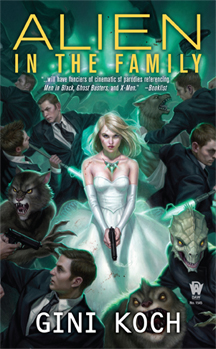
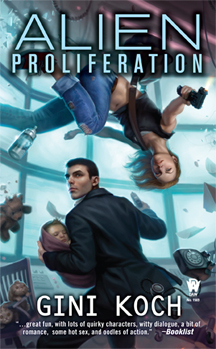
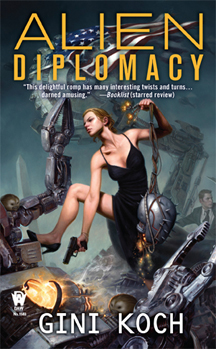
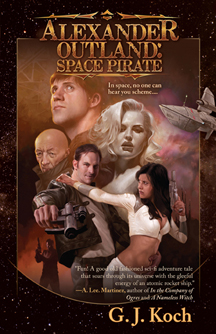
A: I’m a wife, mother, have dogs and cats (the Canine Death Squad and the Killer Kitties), ride horses, and up until a couple of years ago, I worked full time for Corporate America. I wrote for six years before I ever considered trying for publication, and it took four more years to get good enough to BE published. I landed a great agent in December 2007, got a 2-book deal with DAW Books in May 2008, and have been happily writing like mad ever since. I’m published in 6 pen names, so far, in short, mid-length, and novel-length fiction. I write the Alien/Katherine “Kitty” Katt series for DAW Books/Penguin, the Alexander Outland series for Night Shade Books, and a variety of shorter fiction series and stand alones for Musa Publishing.


Q: You have contracts with one of the majors in publishing (DAW Books/Penguin), a smaller house (Night Shade Books), and with an e-only publisher (Musa Publishing). What are the differences?

A: Because I have great editors at all three houses, I’d have to say that speed is probably the biggest difference between them. Ebooks, by their nature, can go up faster than anything else, and smaller presses have less layers to go through, so they tend to move more quickly than Big 6.  There are other differences (advances tend to be larger from the Big 6, for example), but I think speed to publication is the difference I notice the most.


Q: What’s it like to work with a NY publishing company?

A: Very cool. There are a lot of advantages to being with the Big 6, including worldwide distribution. There’s a lot of hurry up and wait involved, but you adjust to it. The pros tend to outweigh the cons. Plus I’m with DAW, which is just a fabulous imprint, run by amazing people who love books and authors, so it’s pretty much livin’ the dream when you’re with DAW, and then you add in all the cool Penguin folks and worldwide reach and, I’m not gonna lie, it’s pretty darned great.


Q: What are the reasons you think this is still the best way to publish?

A: In this day and age, coming out in favor of “traditional” publishing feels kind of risky. But you really can’t beat getting an experienced, professional editor, a big name cover artist, and a full sales force selling your book into bookstores all over the world. Traditional publishing means you have gatekeepers. Are they always right? Of course not. Are they right a lot? Absolutely. And the checks and balances of traditional publishing mean that you’ll have a professional product when you’re done, and that really does matter, especially when you’re starting out.

BTW, I consider my epublisher to be a traditional publisher, just as I do with my Big 6 and small press publisher. They do the same things — provide editing, cover art, promotion, support.


Q: Why did you choose to send some of your books under different pen names through smaller publishers?

A: LOL. You make an error in assumption. The publishers choose what they want to publish, not the agents or authors. I write under a variety of pen names. My shorter works are not appropriate to go via Big 6, since they’re not in the business of publishing short stories, novelettes, or novellas all that often. Musa, by way of being an epublisher, was a much more appropriate place to send my shorter stories, regardless of the name I wrote them under. And, Night Shade loved Alexander Outland: Space Pirate, which made them the right publisher for that book. So far, none of my publishers have asked me to change which pen name something’s written under, and I hope that continues.

I’m a firm believer in starting at the top and working down. I’m also a firm believer in getting the best out of my time. While I still submit to anthologies and such because I like them and like being in them, for the majority of my shorter works, going with an epublisher I trusted was, for me, the better use of my time than doing the submit and wait process with the paying short fiction markets. I get editing, covers, etc., and I don’t have to spend all my time submitting and keeping track of said submissions. I promote all the time, so adding on promotion for additional titles is a natural extension.

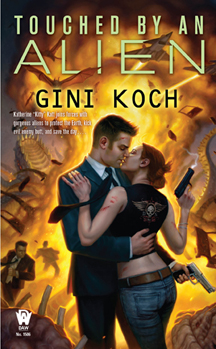
And for novels, going with the publisher that loves your book is the right move, at least 9 times out of 10. DAW loved Touched by an Alien when they read it, Night Shade loved Alexander Outland: Space Pirate when they read it, Musa loved my various titles when they read them. And because my books are with publishers and editors who love them, they get the benefit of that love.


Q: What difference does having your books with one of the Big 6 make in terms of exposure, gaining new readers, getting onto panels at conventions, and so forth?

A: It’s huge. HUGE. I have worldwide distribution because of Penguin. Note: availability and distribution are not the same thing. Anyone on the ‘net has worldwide availability, but getting people to know you’re there is like trying to make them choose your one grain of sand over all the others.

Distribution, on the other hand, means my books are in bookstores all over the world, giving me a worldwide fan base. And that’s how you gain readers — they’re able to find and buy your books.

As for getting onto panels, my first panel as a published author was at San Diego Comic-Con in 2008. That would have never happened if I hadn’t been with DAW/Penguin. So being with the Big 6 is a tremendous advantage.


Q: Do you consider an agent necessary these days?

A: Absolutely, possibly more important today than ever before. The top agents in the world cannot make a publisher take a book they don’t want. However, a good agent gets your book read by the right editors, and normally much faster than you’ll ever manage yourself.

Plus, your agent deals with contracts, runs interference between you and your editors, is the person making the calls about money, deadlines, disagreements, and so forth. I think having that buffer is important for authors — I want someone I can trust looking carefully at contracts and spotting what isn’t beneficial to my career. I can and do read my own contracts, but I prefer to spend most of my time focused on writing and promoting.


Q: Why do you think the advantages in having an agent, editors, and book cover artists are worth the smaller percentage of profit you gain working through NY compared to smaller publishers or self-publishing? Or do you?

A: Oh, I absolutely see the advantages outweighing getting a smaller percentage of profit, especially for those beginning their careers.

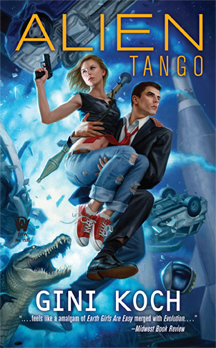
Daniel Dos Santos is the cover artist for my Alien/Katherine “Kitty” Katt series. Dan’s one of the top artists working in science fiction and fantasy. There is no way in the world I could have afforded to hire him if I’d gone it alone. And I know that his covers are responsible for a goodly number of my book sales.

A small percentage of a big number is far better than a big percentage of a tiny number. Never forget that. You have to weigh your financial options carefully, and always err on the side of being too conservative, because expecting to take the world by storm gives the cosmos far too much leeway to have a good laugh at your expense.


Q: What’s it like to see your name on a bestseller list the first time?

A: It was very exciting. I don’t have big enough print runs to make the New York Times bestseller list (yet!) but I’ve made the Barnes & Noble bestseller list more than once. And it was a thrill each and every time.


Q: What are your views on self-publishing?

A: I think it’s brilliant for experienced authors with an established fan base. If you have books that are out of print, heck yeah, get those puppies up there for sale. Your publisher doesn’t want to continue your series? Absolutely, go for it. You have a new series that you want to publish that’s getting the “we don’t really know how to market this” type of rejections? Again, go for it.

The key words in this are “experienced”, “established”, and “fan base”. Because experienced authors will put up a professional product (as in, something that’s been professionally edited, is spelled correctly, is punctuated correctly, actually has a coherent narrative, and so on).

Three years ago when I said I was an author absolutely no one asked me who I was published with. Now? Now I’m asked who my publisher is nine times out of ten, and this is by readers, not those in the industry. Once they know I’m with an established publisher, then they get interested in my books again.

Why is this happening? Because there’s a lot of utter garbage being self-published, and readers are getting wary. There’s only so many times you can get an individual to buy a bad book before they assume any and all self-pubbed books are terrible — and it’s a low number per person.

For every indie author who puts out a fabulous product, there are thousands who type “the end” to their first draft, ever, and toss it up there to be sold. These books that are in no way ready to be published, let alone read by someone outside of the author’s immediate circle, do terrible damage to everyone involved with publishing.

If you’re going to self publish, do yourself and everyone else a favor and ensure — via means other than yourself and your immediate friends and family — that your book is of the highest quality possible. That means doing more than one draft, editing, ensuring it’s spelled and punctuated properly, ensuring you’re using the right words (their, they’re, and there are NOT the same and all mean different things, for example), putting forth some effort to have a good cover. It means ensuring that your book is well written, has a coherent narrative, has a start, a good and not saggy middle, and a satisfying conclusion. You know, all the things that the publishing industry, especially the Big 6 and small presses, look for and demand.

Sadly, the very people who need to heed this particular warning will read it and assume that it’s not directed towards them. But it is. New and newer authors are rarely as ready as they think they are.


Q: What about those who just go for it and self-publish anyway?

A: I wish them all the luck in the world. No matter how you publish, it’s going to be a lot of work. It’s going to be more work for someone who doesn’t have an established name and fan base. Is it doable? Sure. The more work you put into an excellent product (your book), the better your returns will be.

I’m going to be self publishing a title myself — the official announcement is coming shortly. It’s an exciting addition to what I’m already doing. Self pubbing does not mean that I’m leaving DAW/Penguin (I’m not) or any of my other publishers. It means that I’m at a point in my career where I feel that I can experiment with this aspect of the publishing industry and see how it works for me. And I can do that with a level of confidence because I’ve been inside the traditional publishing process for several years now, and I know much more and can apply it to my self published title in the same ways I apply that knowledge and experience to my titles with Big 6, small press, and epub.


Bio

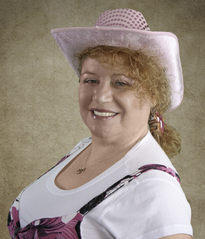
Gini Koch lives in Hell’s Orientation Area (aka Phoenix, AZ), works her butt off (sadly, not literally) by day, and writes by night with the rest of the beautiful people. She writes the fast, fresh and funny Alien/Katherine “Kitty” Katt series for DAW Books and the Martian Alliance Chronicles series for Musa Publishing, and, as G.J. Koch, the rollicking Alexander Outland space adventure series for Night Shade Books. She also writes under a variety of pen names (including Anita Ensal, Jemma Chase, A.E. Stanton, and J.C. Koch), listens to rock music 24/7, and is a proud comics geek-girl willing to discuss at any time why Wolverine is the best superhero ever (even if Deadpool does get all the best lines). She speaks frequently on what it takes to become a successful author and other aspects of writing and the publishing business. She can be reached through her website at www.ginikoch.com.
 

Sunday Reads: 24 June 2012

24 June 2012 | Comments Off | KylieQ

Well, Publishing Month is drawing to a close.  We’ve got just one week left to go.  Stay tuned for our  final Publishing Month guest bloggers, Brandon Sanderson and Gini Koch.

In the meantime, here’s 10 reads worth your time:

Rachelle Gardner talks about what to expect from your agent in Understanding Your Agent.

Also on the topic of agents, Red Sofa Literary lists some basic mistakes writers make when approaching an agent in How to “win” over an agent.

Lois H Gresh discusses the necessity of submitting your work in Rewriting Treadmills: Traditional Publishing versus ePublishing.

Philip Goldberg talks about the benefits of traditional publishing in Who Needs Publishers? We All Do!

Writers In The Storm discusses how a writer’s business needs should affect his choice of publisher with Gettin’ Busy With It.

Dean Wesley Smith dispells a few common myths in The Secret Myth of Traditional Publishing.

The Intern discusses Five Signs You’re About to Land an Agent.

At The Art and Craft of Writing Creatively, Cheryl Shireman guest blogs about the prejudice against indie writers with Dear Traditionally Published Writer.

Rainy of the Dark looks at Just What Percentage of Book Sales are eBooks?

Ashley Barron discusses lessons learnt during the indie journey with A Self-Publisher’s Dilemma.


Missed any Fictorians articles this week?

Moses Siregar III – So, You’re Considering Indie Publishing…

Nancy DiMauro and Colette Vernon - Women Writing the Weird: Publishing in an Anthology

Joshue Essoe – Editing Saved My Life. And It Could Save Yours


Joshua Essoe: Editing Saved My Life. And It Could Save Yours.

22 June 2012 | 8 Comments » | Joshua Essoe

Writers frequently ask me if an editor is really necessary. The answer is no. An editor is not necessary, an editor is essential.

Many indie authors say, “But, I can’t afford it.” The truth is, if you can’t afford it, then don’t publish a book. Something I think many indie authors tend to miss is that you guys are running a small business. You’re the boss and the employee and everything in between, and should expect a certain amount of upfront cost. Releasing a book before it’s ready because you won’t hire an editor or cover designer does more harm than good. It is better to wait and make sure that your book is as strong as you can make it before you throw it to the wolves.

Especially your first book. There are thousands and thousands of self-published books out there and they’re all inexpensive and easy to get. If a reader gets hold of it, finds a few spelling errors, a missed word here or there, and an abundance of passive voice, they’ll put your book down (or remove it from their e-reader) and just move on to the next thing. They’ll never give your potentially wonderful story a chance to be potentially wonderful—and there goes your chance for future sales to that reader. Think what your reaction would be as a reader. First impressions mean everything. That goes for your first book in a new series, your first book ever, your first chapter, your first page, your first sentence.

The New York Times has editors, TV news stations have editors, Vogue and Maxim have editors, all the publishing houses have editors. Why would successful businesses like those all use editors? There must be a reason. . . . Ah, yes. It is because they’re essential to a finely tuned, professional product.

An indie editor is different from a trad editor. The only person who pays an independent or freelance editor is you. The only person that editor is beholden to is you. Their job is to strengthen your words and your voice to help make your story as good as it can be. The way you want it. A good one will be enthusiastically in your corner, working to help make you a success. And you want them in your corner. You wouldn’t think of going into an MMA match without having had a trainer. You’d get killed. Likewise, you shouldn’t throw your darlings to those wolves without some ninja skillz.

An editor’s job is not to rewrite you. Writing is your job. Their job is to help you make that writing shine as brilliantly as possible.

And another huge difference between indie and trad editors? Between hiring your own editor and having one imposed on you? If you hate what they do, you don’t have to use it—any of it.

So what can your friendly neighborhood editor do for you? There are several forms of editing; copy or line, content, substantive, proof reading. We’ll focus on line and content which will be the most applicable and reasonable for an indie author.

A copy or line edit, as the name suggests, is a meticulous edit of each line in the text looking for missing and misspelled words, superfluous language and redundant phrases, mixed tenses, and all technical inconsistencies. Line editing is editing for tone, style and flow—focusing on polishing the author’s words to improve the overall effect and increase the impact of the writer’s message. And to make sure that horrible passive voice is not yammering all over your story. You don’t want readers to admire your writing. You want them to be so engaged by the story that they don’t notice your words.

A content edit is more involved. It is checking the story for logic holes, inconsistencies of plot and character, patching any holes in the fourth wall, finding spots in the story that are weak or don’t make sense, then suggesting possible solutions.

An editor’s job is to help you get the movie you see running in your head playing the same way in the heads of your readers. What makes a story work is an emotional connection with your readership. If you get that, they’ll love your book and they’ll love you.

A good content editor is not easy to find; there aren’t many out there who can tell you what’s wrong and offer solutions on how to fix it. So be careful. Get references, talk to people you trust or people with experience.

When you contact an editor be professional. Be prepared to send a sample. Be prepared to give the editor a deposit for reserving time for you. Be prepared to meet your deadlines so that you have time to do a couple passes on your own before handing it off. Not only will those passes make your editor happy, but it will make your wallet happy. Make sure you know what format the editor needs. For example, I use industry standard—I know how long an MS formatted to those specifications will take me to edit based on a five page sample.

What will amaze and appall editors of all shapes and sizes is that a large percentage of manuscripts submitted for review have not even basic formatting set correctly. It immediately gives the impression of laziness, that the author didn’t care enough to do a little research.

If you are curious what the vaunted Industry Standard looks like, read Vonda McIntyre’s handout. This is a good starting point, but keep in mind that the industry is in flux and many online submissions will vary from this. If they do, they’ll certainly state it in their submission guidelines. If not, always go with the old standard.

A good content editor will also be able to help you sculpt your story to best appeal to the audience for which it is targeted. Do you want to enrapture teenage girls? Or do you want men in their thirties on the edges of their seats? Knowing who you are writing for and what appeals to them is as important as having a wonderful story. Because what might be an amazing story to that thirty-five year old guy is almost certainly not going to appeal all that much to a sixteen year old girl.

So, all you indie authors out there, go out and find an editor you love (and hate—if the editor is any good you’ll curse their name more than a few times). Get that editor working for you, and let them help you and your business produce the best product possible.


Joshua Essoe is a full time editor. He’s been editing and writing for twenty years in one form or another, but has focused on speculative fiction in the last several. He’s done work for David Farland, Dean Lorey, Moses Siregar and numerous Writers of the Future authors and winners, as well as many top-notch independents. To learn more, please visit his website.
Together with author Kary English, he is the creator of Caravel Writing Workshop taking place Fall 2013 with Kevin J. Anderson, David Farland, Rebecca Moesta, and Grammar Girl, Mignon Fogarty instructing.


Women Writing the Weird – Publishing in an anthology

20 June 2012 | Comments Off | Nancy

Nancy:  Welcome back to The Fictorian’s Publishing Month. Colette and I wanted to talk a little about our experience with the Women Writing the Weird (WWTW) anthology published by Doghorn Publishing since participating in an anthology is a bit different than other forms of publication. So, Colette, what did you think about the opportunity to participate in an anthology?

Colette: I was thrilled when you told me about the upcoming anthology, in part because of the publishing opportunity, and in part because it consisted entirely of women speculative fiction writers. I was excited about that opportunity. I’ve always meant to ask, how did you find out about it in the first place?

Nancy: Accidental networking. Seriously though, I met the editor, Deb Hoag, through an online writing group. Deb approached her publisher – Doghorn – and asked if she could put together an anthology of genre defying stories by women writers. When she got the go ahead, she contacted a group of writers she wanted to work with. Fortunately, I was in that group. Deb later opened submissions up and I sent an e-mail to the Superstars Writing Seminar group to see if anyone had a story that might work. When you said you thought you just might have a story if Deb was willing to accept previously published works, I put the two of you in contact.

Colette: Even though my story, Beneath the Skin, was published in SNM Horror magazine under the title, Becoming, it seemed like the best of my current stories for an anthology called Women Writing the Weird. A were-beetle burrowing into your leg with nefarious purposes fits weird. I was very flattered that despite it being a reprint and one of my earlier stories, Deb still accepted it. Of course, it’s definitely a different tone than a guy in a monkey suit.

Nancy: Yea. The Gorilla in the Phone Booth was definitely very different than your story. The idea for the story came out of a Writing Excuses episode where they were talking about the promises we make to our readers. Howard Taylor mentioned that if you put a gorilla in a phone booth you’d better have darned good reason for it. So I spent the weekend figuring out why. I came up with a twist on the genie story and some land selkies. One of the fun things about WWTW is the stories cross a lot of genre lines and, at least one of the stories, defies classification (in a good way) in my mind.

Oh, and because Colette’s too modest to mention it, I should tell you that Beneath the Skin got a really wonderful review at http://www.kathulhu.com/2011/11/women-writing-weird.html

Beneath The Skin, by C.M. Vernon gives a different twist to the were-creature tale and I think this story would make a great movie. I also couldn’t help but think of Kafka’s Metamorphosis while I was reading it.

You have to love being compared to Kafka.

I won’t put Colete on the spot and ask her about the review. But I will ask her about her thoughts on this publishing experience. So . . . ?

Colette: I thought it was amazing that even though the book didn’t come out in hardcopy until last month, you put together a book promo at World Fantasy Convention in October, 2011. I couldn’t believe what a great job you did with posters, flyers, food…the whole deal.

Nancy: Thanks. Putting together the book launch was a lot of fun and a bit nerve wracking. World Fantasy is a huge writer’s and agent’s convention. Tor hosted a huge party in the suite we used later that evening. For the book launch, Doghorn printed a small number of the book so we could promote it at World Fantasy. Adam Lowe (the head editor at Doghorn) sent me the artwork so I could make the posters, postcards and flyers. I’m not sure the postcards were effective swag, so I probably won’t use them as promotional items again.

We were also lucky enough to get a lunch-time slot to promote. There were no competing lectures. We were also next to the hospitality suite, and when it ran out of food, they directed people to us because we had food. We probably had an extra thirty people drop in because of the food. And they stayed for the readings.

Of course, the book launch wouldn’t have been as successful if I hadn’t sweet talked you into helping. Your reading was great.

Colette: I’ve read in public before, but never my own piece. I was so nervous, but once I started, I have no idea if I did a good job, but I loved it. I would love to be an author who does presentations in schools, book readings, signings, the whole deal.  I look forward to that part of publishing. Speaking of which, it seemed rather odd that you had the book in October, but it didn’t come out in bookstores until May. I haven’t heard much buzz on it, either, but I haven’t been in this business long enough to know if that’s just normal.

Nancy: The book’s been available at the publisher’s website since October, but for some reason the general release was delayed until May, 2012. I’m not sure why Doghorn decided to stagger the release or if the delayed release was just part of its agreements with Amazon and Lulu. Amazon’s currently out of stock on it as well.

I know with the two short story collections I’ve published through Musa Publishing (yes, I had to get them into this post) , Paths Less Traveled and Shots at Redemption, Amazon had the book within hours of it going on the Musa site. But then, the Musa collections are e-books and that might make a difference.

Colette: I have no idea if the book will do well from this point on, but it’s been a fun ride, don’t you think? I wish I had researched the anthology a little better before I jumped on board, not because it isn’t top quality, because it is, but I’m afraid that my participation in a book fondly called by our friends, “the booby book,” is a bit of a misrepresentation of my name as a brand.  I don’t write erotica, and the beautiful cover suggests there’s a fair amount of content in that category. That’s something I’ll pay more attention to in the future, so I don’t confuse any readers as to what they might expect from my writing.

Nancy:  Ah, yes, our cover. One of the things you often can’t control as a writer – what your cover looks like. Coming up with a cover that captures the scope of the anthology would have been tough, and I understand the decision to base the cover on the short story by the best known writer.  But I’ve had web designers decline my job and promotion sites decline the listing because the catfish girl on the cover has very prominent and very naked breasts.  And don’t get me started on telling my folks about the anthology. The artwork is gorgeous but, in accurately rendering the light coming from above, the artist placed a lot of emphasis on the breasts. It wouldn’t have been my choice of a cover if we’d had any say in the matter, and my story did have erotic elements. I think this is one where a bit of strategically placed seaweed would help attract more people to the anthology.

Colette: More than anything, I’ve enjoyed the publishing experience and the chance to interact with fellow writers and readers. I also loved the launch party you put together at WFC.  I may not make any money from this particular sale, but I’ve learned a lot from my experience. I’m grateful for that.

Nancy:  WWTW made me realize how difficult putting together an anthology is.  We have a lot of short stories in the anthology from very different genres.  Deb did a great job bundling them into the three sections based on the type of weirdness. If you’re looking for stories that balance on genre edges, this is the anthology for you.

It’s definitely been fun. I got to know a lot more writers than I would have if I hadn’t participated. I wouldn’t turn down another opportunity to work with Deb or Doghorn. Being invited to submit to the anthology was an honor. Having Deb select my story for it was amazing and my first professional sale. So, WWTW will always have a special place in my heart.


So, You’re Considering Indie Publishing …

18 June 2012 | 6 Comments » | Moses Siregar III

Hello, neighbor. It’s so nice to see you again. I heard you’re thinking about dipping your toes in the indie end of the publishing pool. Well then, come away with me to a world of wonder, where authors can do anything they wish and even make a little money at it (but sorry, you’re not getting laid—that’s only for rockstars, CEO types, and firemen).

Right. Onward. Resources … resources are very good. They help you do stuff. You want resources. So then, knowledge … leads to power. Power. You like power! Yes you do. That’s why you’ll want to do some reading, follow some blogs. Otherwise you’ll fail, and failure is, like, really bad. So start with these, because the world of indie publishing changes at lightning speed. You’ll always need to stay on top of what’s happening (and be wary of any e-book on the subject that’s more than a day old).

The Writer’s Café at Kindleboards. It’s a jungle over there, but if you’re looking for current discussions, be there now.

Lindsay Buroker. Lindsay is quietly conquering the world. The best part? She shares all of her secrets.

David Gaughran. This one is quite the hub. Keep it on your radar. Btw, David actually wrote a better version of this very blog post.

Kristine Kathrine Rusch’s The Business Rusch. Good stuff.

Victorine Lieske’s “Why Isn’t My Book Selling?” Vicki is one of the classiest humans around, and you can learn a lot from this blog.

The Passive Voice. Smart people read this. You’re smart. You should read this.

Dean Wesley Smith. After reading his blog and his great series of posts on killing the sacred cows of publishing, I met Dean at the recent Superstars Writing Seminar. He was cool.

Robin Sullivan. Her postings have slowed down lately, but she has a righteous blog.

Joe Konrath, poking bears in the eye with badass style.

Elle Casey recommends YA Indie, a blog run by some indie YA authors. Looks good.

World Literary Café. I’m not familiar with it, but Melissa Douthit says “WLC is good for connecting authors to readers and vice versa. If you’re new, it helps to get your books up off the ground.” So yeah. That’s good. Another one that some people like for this sort of thing is Wattpad.

Looking for something else? A particular service, maybe? Jennifer Powell has a nice list of resources for self-publishers. As does Katie Salidas. And here’s a crapton of useful links for indie authors, from kindleboards.

Next, neighbor, we will discuss philosophy. Writer’s write. So, write. Moving on …

Some basic advice:

Make sure your work is ready. Don’t be stupid. Everyone thinks their writing is great. Make sure you can find some total strangers who think your work is the bomb before uploading to Amazon.

The most common regret indies have is that they didn’t hire a good editor. Hire a good editor. Also, copyediting and proofreading are kind of important. Ask around, ask for referrals, and get an editing sample before you splurge and spend big bucks on a crappy editor. They’re definitely out there. Don’t pay for crap.

Joshua Essoe, one of my editors and a fellow Fictorian, isn’t crap.

If you’re writing science fiction or fantasy and you want to sell books, don’t even think about not writing a series. This also goes for any genre where series are a big deal.

A good book cover has two ingredients: art and typography. Lots of indies have great art and awful typography. If you don’t have the skillz, spend some money on typography. Find someone who knows what they are doing and pay them to make the lettering on your cover look professional (Don’t worry. I won’t tell anyone your secret).

If you’re the shy type …

You don’t necessarily have to do social media, you don’t have to have a platform, and you don’t have to do a ton of marketing. BUT, if this is going to be your path (the path of the shy gal/guy), you’ve got to write really frickin’ fast. Like, a lot of fast. And pick a big, hungry audience (for example, romance or thrillers), and know exactly what that audience wants, and then get up early every morning and make those readers their  frickin’ donuts. Serve up their donuts. You are going to be a slave to all of those hungry readers and you’re going to consistently give them what they want. Worship the readers, serve the readers, and you’ll do just fine. Yep, it’s a lot like a job. Disclaimer: I’m still working on this part.

If you’re the social type …

Set writing goals, stick to schedules, and make the writing the number bleeping one (#1) priority. Put your game face on. No smiling! Eye of the Tiger. It’s business time.

Thanks for going on this little trip with me. Just remember, the most important thing is to have fun and enjoy the journey. Don’t get too caught up with numbers. Live from your heart. And listen to Mr. Rogers …


Moses Siregar III is the author of The Black God’s War. It’s okay.


Sunday Reads: 17 June 2012

17 June 2012 | Comments Off | KylieQ

We hope you’re enjoying our Publishing Month as much as we are.  We’ve had some great posts already from both Fictorians and guests, and there’s more to come, including Brandon Sanderson and Gini Koch.  In the meantime, here’s 10 reads worth your time:

Vickie Britton looks at Compiling A Short Story Anthology for Print or eBook Publication.

Rachelle Gardner discusses whether self-publishing and agents can mix in Self-Published Author Seeks Agent.

Laura Hazard Owen sums up the recent BookExpo America with 5 Things the Book Industry Will Be Talking About Next Week.

Victoria Strauss has a warning for those thinking about jumping into self-publishng with ePublishing Revo: It’s A New Electronic Publishing Service, But There’s A Catch.

Karen Schechner looks at how indie bookstores are responding to the growing self-publishing phenomenon in Working With Self-Published Authors.

Rich Adin asks Should Editors Certify That an eBook Has Been Edited?

Confused about creative commons?  Check out Matt Enis’s article Ebook Crowdfunding Platform Unglue.it Launched for an explanation.

Nail Your Novel muses about Where Will Self-Publishing Get Quality Control?

Dear Author lists some Publisher Experiments I’d Like To See.

Publishing Crawl discusses The Not-So-Secret Backdoor to Publishing.


Missed any Fictorians articles this week?

Guest poster S. James Nelson – Abandon All (Unreasonable) Hope

David Carrico – I Haven’t Given Up

Guest poster Laurie McLean – Literary Agents in the New Publishing Era


Laurie McLean: Literary Agents in the New Publishing Era

15 June 2012 | 5 Comments » | Ace Jordyn

With the advent of indie publishing, there has been much speculation about the demise of traditional publishing and the role of the literary agent. Laurie McLean, Senior Agent at Larsen Pomada Literary Agents, shares her views on her profession and the changing industry. Check out her agent blog, www.agentsavant.com, for tales of the agenting life, and the agency’s site, www.larsenpomada.com, for valuable information and links.


  1. Can you tell me a little bit about your background in publishing?

I entered publishing from a sideways path, not the traditional one of being an intern at a publisher or agency having gotten a creative writing or MFA degree from college.  I was a journalist first, then worked in public relations, eventually starting my own PR agency in California’s Silicon Valley and building it into a multi-million dollar business.  When I retired early, I was too young to sit around and do nothing, so I wrote a novel. Got a literary agent (Elizabeth Pomada), got involved with the San Francisco Writers Conference, and never looked back. Less than two years after I retired I was a full-time literary agent, author, and on the management team of the San Francisco Writers Conference.  Today I am also the Dean of the newly created San Francisco Writers University found at www.sfwritersu.com. And this year I am starting two ePublishing companies with two of my clients to make out-of-print vintage romance (JoyrideBooks.com) and children’s books  (AmbushBooks.com) available to a new generation of readers.

  1. How would you describe the role of the literary agent?

I find authors with promise, work with them to improve their manuscripts and try to sell them to a large New York-based publisher, a smaller indie publisher or help them self-publish their work.  But agents do so much more than that. (see next question)

  1. In your opinion, what are the most important things that you do for your authors?

An agent is:

  • A scout who constantly researches what publishers are looking for
  • An advocate for an author and his or her work
  • A midwife who assists with the birth of a writing project
  • A reminder who keeps the author on track if things begin to slip
  • An editor for that last push before submission
  • A critic who will tell authors what they need to hear in order to improve
  • A matchmaker who knows the exact editors for an author’s type of writing
  • A negotiator who will fight to get the best deal for an author
  • A mediator who can step in between author and publisher to fix problems
  • A reality check if an author gets out of sync with the real world
  • A liaison between the publishing community and the author
  • A cheerleader for an author’s work or style
  • A focal point for subsidiary, foreign and dramatic rights
  • A mentor who will assist in developing an author’s career
  • A rainmaker who can get additional writing work for an author
  • A career coach for all aspects of your writing future
  • An educator about changes in the publishing industry
  • A manager of the business side of your writing life
  1. What skills and qualities should literary agents possess?

An agent must be organized, intelligent, multi-tasking, a good negotiator, have excellent time management skills, love books, know marketing and sales and be well versed in the mechanics of writing/storytelling/character development/plot/pacing and social media.  He or she must also be relentless in keeping up with developments in publishing contracts, editorial taste and digital publishing.

  1. How do you think the role of the literary agent has changed in the past ten years?

Two things: digital publishing and social media marketing.  These are disruptive technologies that are transforming one of the oldest businesses on the planet.  The rapid rise of eBooks is truly changing the industry and opening opportunities for writers and new eBook-only publishers never before seen. By solving the twin headed dragons of accessibility (through self-publishing) and discoverability (through social media), authors will be free to experiment, broaden and enjoy the control they have over their creativity and careers for the first time in hundreds of years.

  1. What would you describe as the biggest threat to literary agents?

The biggest threat I see is not keeping up with the changing landscape of publishing. If an agent doesn’t dive in and integrate digital publishing into every client’s career planning, he or she will cease to thrive and eventually be out of business.

  1. Is your agency doing anything specific to overcome that threat?

In 2011 we created San Francisco Writers University (www.SFWritersU.com), an online and live place of learning for authors that is a 24/7/365 resource for writing.  We have created tracks at the non-profit annual San Francisco Writers Conference (www.SFWriters.org) for social media for authors and self-publishing.  I have spent four years immersing myself in digital publishing to understand its wide-ranging implications and impacts. And this year I am launching two eBook-only publishing companies with two separate clients—Joyride Books for previously published romance books, and Ambush Books for out of print children’s book backlist titles.  No original works, so I won’t face any conflict of interest accusations…only good, out-of-print backlist titles that deserve to be reissued and now they have a chance.

  1. What is your opinion on some of the new agency business models emerging (e.g. full career management, fee-based services, consultant and publishing services)?

As you can see from my answer to question 7, I love the fact that agents are looking at their specific tangential talents outside the core agent competencies and offering this expertise to their clients, and sometimes to authors who are not their clients.  It is an exciting time to be involved in the publishing industry.

  1. Is there a business model that you think will become standard?

I doubt a standard business model will emerge within the next decade, if ever.  Agents are as individual as authors, each with their own strengths and weaknesses.  I am a serial entrepreneur and I bring my business and marketing strengths to any new venture I create.  Other agents are more comfortable offering indie editing services or book-to-film advice.  Some are assisting their clients with indie publishing…going so far as procuring cover art, editing, formatting, etc.

  1. Do you see the 15% commission continuing as the standard payment for literary agents?

For traditional publishing deals, absolutely.  And I don’t see traditional publishing going away.  Like the myth of the paperless office, we will not abandon paper books altogether. There will be shorter initial print runs with quick follow-up runs if a book sells well, print on demand services will thrive (could we possibly see an Espresso Book Machine leased by publishers to booksellers so they can make a book while you wait…I hope so!), and people will read more books in more formats than we ever dreamed possible.

  1. Do you have any thoughts on what the role of the literary agent will be in the future?

If things settle down at all, I believe agents will take on more of a career management role for authors, similar to the way sports or celebrity agents work today.  So they’ll negotiate deals for their authors’ print, ebook and subsidiary rights, but they’ll also make more things happen themselves along the way.

I Haven’t Given Up

13 June 2012 | 3 Comments » | David Carrico

The writing business is in an incredible turmoil right now.  It has been for a long time, actually.  And right now, there are doom-sayers and prognosticators all over the place predicting that traditional publishing is on its last legs and the only way to go is independent self-publishing.  Some of them are experienced writers who are intelligent and articulate (see Lawrence Block, or any of a series of posts at According to Hoyt, for example); others, not so much.  Myself, I’m a bit of a skeptic.  If someone indicates he knows for sure what the publishing industry is going to look like in ten years, I put my hand on my wallet.  If he says he knows for sure what it will look like in five years, I put both hands on my wallet, because sure as death and taxes, the next statement will probably be something like “And here’s an opportunity for you to get in on the ground floor of the New World Order.”  Heh.  Lord knows my spam bucket catches enough “we want to publish you” emails to prove that point.

Moving on.  I’ve been trying to crack the fiction traditional publishers’ Newbie Wall since 2002.  My first hardback anthology story was published in 2006 by Baen Books, with five more since then.  My first novel, a collaboration with Eric Flint, was just turned in to the publisher, Baen Books in April 2012.  I’m not sure I can say I’ve arrived, but I think I can see the station from here.  (And “arrived” does not mean I’m a name.  It just means I’ve got solid professional credits.)  So my perspective on all this may be a little different from either an established author with an extensive back-list or a struggling newbie yet to make a “professional” sale.

In my skepticism, do I think traditional publishing will survive?  Yes, I do.  There are a lot of people out there who derive an almost physical pleasure from sitting down with a physical copy of a good book anticipating a pleasant evening of reading (myself included), and I think those folks are going to continue to demand hard copy books.  And at this point, I’m not sure that the economies of scale for print-on-demand technology are going to prove truly competitive.  I think the jury is still out on that.

Will traditional publishing survive in its current form?  No.  I think the next ten years will force traditional publishers to find a different business model.  But I do think that there might be a few publisher names you recognize still in business in ten years.  However, I can guarantee that they will be doing business in a very different way.  Forget the governments; Amazon and Barnes & Noble and Apple will force them to it, one way or another.

Do I think traditional hard copy books will survive?  As I stated above, yes, I do.  However, I think the days of the 200,000 copy best-sellers are singing their swan song as I write this.  Once publishers adopt reasonable pricing for e-books and drop the DRM security, which I think they will be forced to do by market and legal pressures in the not-too-distant future, I suspect the sheer convenience of e-books will drive the sales of e-books up, consequently forcing sales of hard copies down.  (But that opinion and $5 will get you a Starbucks coffee.)  What I think will happen is independent publishers like Baen and small publishers like Subterranean Press and Nightshade Books will continue making hard copy books for readers who are dedicated to their offerings and programs.  Surviving big name publishers, if they can get divorced from the bean-counters who are killing them, may do something along those lines as well.  200,000 copies?  No.  500 – 5,000 copies?  Yes.  Maybe by subscription only, but still there.

But what does this mean for the writer?  Do we totally abandon the traditional publishing approach as so many are advocating?  Do we totally embrace the independent self-publishing model?  Do we reject it and cling to the traditional model?  Or does the truth lie somewhere in between those two extremes?

Regardless of what you think, any realistic assessment of the near-future industry is going to contain e-books and a substantial amount of self-publishingThat topic has been and is almost continually being addressed in blogs all over the web, including right here at The Fictorian Era this month.  But what about the writers who still have a desire (for whatever reason) to make it in the traditional publishing world, to see hard copy books with their names on the covers?  What are their options?  Limited, but they all have a common element, and that is getting the author’s name out there somehow in the traditional world.

To do that , I think the future successful new author will have almost certainly have to build a resume of self-published work to serve as a door opener that shows the following:  number of works published, how quickly they were produced, samples of quality, and statistics of sales volumes over time—not just the initial surge, but the longevity of the sales.  Whenever you’re around other significant writers, or editors, or publishers, have those files (constantly updated) on your phone or your tablet, accessible at a moment’s notice, ready to e-mail or present if someone asks for them.  And work on your verbal presentations:

  • The elevator speech:  what can you say in 15-30 seconds that will intrigue an editor or publisher or significant writer with your ideas enough to say “Come with me,” or “Call me tomorrow.”
  • The expanded elevator speech:  1-2 minutes.
  • The conversation.

You never know when an opportunity may arise.  Be ready.

Here’s one final thought:  I found my publishing route by participating in Eric Flint’s grand fan-fic experiment, where he allows anyone who has the desire to write and submit stories in his Ring of Fire universe, the best of which are selected for publishing in the Grantville Gazette e-magazine, with the best of the e-magazine stories selected for the Grantville Gazette hard copy anthologies.  So this is a blended electronic and traditional approach, and it’s produced a number of writers, myself included, who have cracked the Newbie Wall from that platform.  Eric’s approach is unique (although I hear rumors that Thieves’ World may be contemplating something similar).  But the idea of finding some kind of existing program or co-op that has an established presence and fan base may have some merit.  Star Trek/Star Wars/Harry Potter don’t qualify, but there may be something else out there.  Look for it.  Again, the goal is to get your name on the cover of something that will serve as a credential to a traditional publisher, whether New York or small house.

So, that’s my thoughts.  They may be good prognostications, or they may be as wildly out in left field as the flying cars that were predicted in 1950’s science fiction.  It will be interesting to look back in five years or so and see how they stack up.

S. James Nelson: Abandon All (unreasonable) Hope

11 June 2012 | 5 Comments » | fictorians

Guest post by S. James Nelson

My intention with this blog is to give you a healthy dose of despair and a stronger injection of hope.

I’m honestly surprised that this blog has turned into what it has. I’ve written and discarded a dozen drafts until settling on this topic–the topic I most hated to hear writers talk about when I started up writing again. In my heart I simply believed it wasn’t true. At least not for me. For the rest of you schmucks, sure. But not for me.

Turns out I was wrong.

I started my self-publishing experiment last August when I published The Demigod Proving. In November I followed up with Keep Mama Dead.

I haven’t sold a million copies.

Yet. I haven’t sold a million copies yet.

I’ve purposefully kept my marketing efforts to a minimum, although I have dabbled in what I would term marketing. That has netted me only about 2k sales and 12k give-aways. I’m more qualified to talk about what doesn’t work in self-publishing than what does.

But there is one thing I have learned, that I’m qualified to talk about, and that might be useful to you: you should give up your unreasonable hope, and maintain your reasonable hope.

I learned this over time, as I came to the conclusion that I am not an exception to the rule. There’s a very high chance (probably better than 99.9999%) that you aren’t, either.

I now suspect that the promise of quick and easy riches was what lured me back into writing. My day job wasn’t meeting my income desires, and so I thought, “I think I’ve got some skill with writing. Maybe I can hit it big. In fact, I bet I can.”

I haven’t told anyone that until now (so, naturally I put it on the Internet for all the world to read)–after all, they would scoff and spout some rot about those stories being the exception to the rule. They would try to distract me from my objective. I believed that I could be one of writers who had crazy huge success without much work.

Alas, it didn’t happen. At the same time, my day-job miraculously exceeded my income desires. The fire in my belly–the desire and urgency for quick and easy success–disappeared, leaving me wondering: why am I getting up early every morning to write? Why am I expending all manner of resources on this effort? It would be so much easier to use those resources for something more productive.

And yet, here I am, still writing. Still planning on putting out more books.  And, in fact, trying to find ways to be more successful. I’m certain I’ll have to work harder. Perhaps I need to step up my marketing efforts. Maybe I need to hone my writing. There’s a chance I need to understand my audience better. It might be that the package of my book (style, cover, title, editing) needs more work.

How strange to find myself thinking like that when it’s safe to say I will never be the exception to that stupid rule. I’ve worked way too hard to ever legitimately be called an overnight success.  For mercy’s sake, I’ve sacrificed for my art!

This has led me to a conclusion: I’m no longer in it for the quick and easy money. Which leads me to another realization: though success isn’t the primary goal, I still want to sell a lot of books. Which begets another conclusion: if a large number of book sales is something I’m going to continue to pursue, I’m going to have to manage my expectations about how easily that success might come. At the same time, I must maintain hope that I’ll succeed. Without hope, I have no reason to try. I may as well write and hide my work under a bushel.

Yet I have hope, and therefore I must continue to act. I must try different things, believing that if I change this or that—maybe this time I’ll have success.

So, the message?

Despair at ever being an overnight success, yet hope that your hard work will pay off.

Let your hope lead you to continue to develop your writing. If you self-publish, let your hope lead you to develop your marketing. If you fail at first and give up, it means you were in it for the money. There’s nothing wrong with that. But if you fail at first and find yourself willing to keep going, you must maintain hope that with persistent work, constant learning, and different approaches to the same problem, you’ll succeed.

You may not, though, and that’s why the money can never be the only reason you’re in this business.

S. James Nelson recently won first place in David Farland’s Nightingalewriting contest. If you enjoy action-oriented, deep-thinking fantasy, take a look at his book, The Demigod Proving. If you like strong characters, real-world fantasy, and hiking in national parks, take a look at his book Keep Mama Dead

.

Sunday Reads: 10 June 2012

10 June 2012 | Comments Off | KylieQ

Still to come in our Publishing Month: guest posts from writers Brandon Sanderson, Stephen Nelson, and Gini Koch, and literary agent Laurie McLean.  In the meantime, here are 10 reads worth your time:

Anne R Allen examines the different types of publishers in Who Are the Big Six? What Does “Indie” Really Mean”? Answers to Not-So-Dumb Questions You Were Afraid to Ask.

At Writers in the Storm, Susan Squires explains her own publishing options in Too Many Choices.

The Intern takes a somewhat tongue-in-cheek look at The Publishers Weekly: The Deals You Don’t See.

Teleread crunches numbers in Amazon Price Bots Result In Unusually High- and Low-Price Books.

Mhairi Simpson talks about how Self-Publishing Is Not the Easy Way.

Still on the topic of self-publishing, The Huffington Post discusses The Changing Politics of the Self-Publishing Stima.

Nathan Bransford talks about how Traditional vs Self-Publishing is a False Dichotomy.

The Guardian examines writers’ incomes in Stop the Press: Half of Self-Published Authors Earn Less Than $500.

Interested in checking out some books by small or independent presses?  Take a look at Small Press Reviews.


Missed any Fictorians articles this week?

Guest post from David Dalglish – The Triumph of the Dalglish: How I Sold 2ook Novels While Not Knowing Squat

Nancy DiMauro – E-Publishing – Why I Chose It

Guest post from Jordan Ellinger – Coming Up In The Trenches


Jordan Ellinger: Coming Up in the Trenches

8 June 2012 | 9 Comments » | fictorians

Guest Post by Jordan Ellinger

Quick! Name some of your favorite science fiction writers. Some of you might have named Asimov or Theodore Sturgeon, while others might have said Orson Scott Card or Kristine Kathryn Rusch. The more literary-minded amongst you probably listed Elizabeth Hand or Jeff Vandermeer. Guess what? They’ve all written tie-ins.

There is a perception among writers that tie-in books–that is to say books that are based in a universe created by someone other than the writer–are of low quality and reside in a kind of literary ghetto, and in some ways that’s even true. Tie-ins are generally hastily written and of poor quality. The plots are often clichéd or trite and the characterization hobbled by the need to not conflict with “canon” and to leave the universe in a state suitable for the next writer to tackle. But these books can often add depth to a beloved universe like Vonda McIntyre’s Stark Trek novels, or continue the story of favorite characters like Dave Wolverton’s the Courtship of Princess Leia, or even fill in plot holes such as Isaac Asimov famously did in Fantastic Voyage.

Like many of today’s fantasy writers, I spent my teen years playing Dungeons and Dragons and so it was with some pleasure that I discovered a set of Dragonlance books on the shelves of my local bookstore. Tie-in books had existed previous to the Dragonlance novels by Margaret Weiss and Tracy Hickman, but in the late 80s they were being pushed in a big way, and began to occupy whole shelves at the local bookstore. Being a fan of both dragons and lances, I devoured Weiss and Hickman’s novels and moved onto the Forgotten Realms series also set in a world that obeyed D&D canon.

It didn’t matter to me that many of these novels were hastily written and clichéd. I was young enough that a plot line revolving around an elf, a dwarf, a wizard, and a warrior meeting in a tavern seemed fresh and new, simply because I hadn’t read enough to know how many authors start their novels that way. At one point, I had more Forgotten Realm novels on my shelves than original novels, and I would incorporate some of the plot lines I read into the D&D campaigns that I ran with a few friends.

In 2009 an event occurred that marked the beginning of my career as a professional writer: I won 1st place in Writers of the Future with a story about a woman with the powers of a Phoenix and a lifespan only a day long. After my win, I immediately started writing novels, hoping to capitalize on my newfound notoriety. Unfortunately, everything I wrote seemed to peter out after 50,000 words (just over half the length of a modern fantasy novel). A year after winning the contest, I had nothing to show for myself other than a few failed manuscripts.

Around that time, Larry Segriff put out a call for his Story Portals site, which would launch with a series about Katya, an assassin who killed with a mixture of extreme competence, sexually aggressive tactics, and magic. This was my first experience with work for hire. He owned the characters and universe and, once I signed his contract, he’d own whatever stories and ideas I created for him as well. Despite that stipulation, I was intrigued. Tracy Hickman and Margaret Weiss had done quite well from Dragonlance, and I told myself this could be an opportunity to get in on the ground floor of a new franchise. I expressed an interest in the project and sent Larry a writing sample, which he quite liked. I was hired.

With a story for Larry under my belt, I decided to tackle other franchises, and when I went down to the local mega-bookstore I found that Warhammer had the most shelf space. I sent them a note telling them I’d won this award, and did they have any stories that needed writing? Laurie Goulding, their acquisitions editor wrote me back to say that he was interested and that I could send him a pitch. When I asked what I should write about, he gave me four potential ideas. I ran out, spent a ton of money buying the rulebooks and then did my best to bone up on the areas he suggested. Instead of sending him a single pitch I sent him four (two of which were accepted and will be in issues of Hammer & Bolter this summer).

Laurie seemed to like my work, and he was one of the best editors I’d worked with (and still is) so I dove full-tilt into the world of Warhammer. The Black Library sends its authors free books whenever they ask to encourage them to become familiar with canon, and I must have read twenty novels in those first few months. Some were bad, but to my surprise and delight, some were amazing. In the latter books, the prose held up to that of any in the genre, and though the focus was necessarily on bloody action scenes, they were dynamic, with well-realized characters. These would be the kinds of books I’d write. Sure, they’d be Warhammer books, but they’d be the best damned Warhammer books out there.

Things have really skyrocketed for me recently. Since writing that first short story for Story Portals, it seems that my career has come full circle. When I was a kid, I had a ton of Tracy Hickman books on my shelves and I now have a novel coming out in a series he anchored. My name will be on the spine of a novel only a few books away from his on the shelves.

Writing tie-ins has given me the confidence to write my own stuff, and I’ve been able to bring the lessons I’ve learned writing them to my own original work. Best of all, the work pays better than pro-rate and is paid in advance. I’ve heard it said that the average number of novels a new writer has to pen before selling one is six. I sold my first novel before I’d even written it.

In terms of ways for a new writer to practice their craft, it’s hard to beat the tie-in market.

 
Guest Writer Bio:
Jordan Ellinger is a Writers of the Future winner and Clarion West graduate. His story “Kineater” recently made an appearance in Warhammer:The Gotrek & Felix Anthology and has work upcoming in Hammer&Bolter as well as World’s Collider, a new anthology from Nightscape Press. In his spare time, he helms Every Day Publishing, publisher of Every Day Fiction, Every Day Poets, Flash Fiction Chronicles, and Raygun Revival. To read more, visit his website www.jordanellinger.com or follow him on twitter @jordanellinger.

E-Publishing – Why I chose it.

6 June 2012 | 5 Comments » | Nancy

 As you know from my post earlier this month, I have two short story collections published by Musa Publishing. I’m participating in an anthology – The Jack Gorman Project - that was born at an after-conference dinner at the 2011World Fantasy Con, The anthology will release on July 20, 2012. I also have a novella, Apollo Rising, that should be released in September, 2012. All as part of Musa’s line.

So, why did I choose E-publishing?

Well, let’s be honest, Musa said yes.

All kidding aside, I chose to E-publish rather than continue the short story publication rounds or wait on traditional publishers to deem me worthy for several reasons.  But, before I go into those reasons, let me use Celina Summers’ definition of E-publishing from the June 1, 2012 blog.

According to Celina:

(E-Publishing) houses are digital first.  They publish e-books primarily, although some are moving into POD(print on demand) availability for their books.  An e-publisher is a genuine small house, following the same submissions, acquisitions, and editing processes as traditional publishing.  Five years ago, e-publishing wasn’t considered a legitimate publishing credit by agents and New York publishers. That mindset is changing as the popularity of digital books increases.

Okay, now that we are all on the same page, let’s talk about why I chose this path.

Probably most importantly, I met Celina at World Fantasy. I  liked her. We talked for hours about everything and nothing before she gave me permission to pitch her. I can’t stress how important this personal connection is in any form of publishing. I’m not sure I would have trusted my babies (the stories) to an e-publisher, especially one who’d just opened its doors, if I hadn’t met Celina.

On to more general reasons to consider an E-publishing house. I don’t have the time or energy to do all the work the fabulous people at Musa do for me. Self-publishing wasn’t an option for me. E-Publishing has all the benefits of traditional publishing. When I submit a story, a slush-pile reader has to like it enough to take it to the head editor for that genre. If the editor likes it, I get a contract. Once the story is under contract, it benefits from professional editing. Then it goes through line editing. So, we both know we’re publishing a book that’s as clean as possible. Musa has a professional artist that does my cover AND (unlike traditional publishing), for anyone but the N.Y. Time best sellers, I had significant input into what that cover looked like.

E-Publishing has the potential to pay better. Musa’s contract is on its website. You can see how your royalties will get calculated before you submit to it. If I’d sold my short stories to a magazine, I might get 6 cents a page. For a 15,000 word story, I’d be paid $900. It’s a good number, but that’s it until I get the rights back and resell it. Paths Less Travelled  is a 15,000 short story collection being sold for $3.99. For Paths, I make that same $900 after I sell about 460 books. That’s not that hard to do. From book 461 on, I’m making more money than I could have by traditionally selling the short stories.  It is potential that is up to me to realize. Musa will help, but success or failure sits on my doorstep. Which leads me to marketing.

As part of an E-Publisher’s line, you’ll get some limited marketing. But just like with traditional publishing the onus is on you to make sure your book sells. Musa helps me work on my marketing materials. In fact, Musa requires it. Musa won’t release a book unless its tags, blurb and excerpt are turned in. It also has pre-existing deals with Amazon, Barnes and Nobles and other vendors to get my book out to the public. There’s no one but myself to blame if I only sell 100 books. There’s a lot of people to thank if I sell 1,000, 10,000 or more books.

E-publishing also happens a lot quicker than traditional publishing. You might wait 2-3 years between signing a contract and a publication date with the Big 6. Not so with E-Publishing.  As a new author, it’s highly unlikely that a traditional publisher would take a risk on four books in one year. And, as it is said, the best marketing for your current book is your next one. By allowing me to get more stories to my audience quicker, E-publishing helps me build a platform that I can convert into more sales and, maybe some day a print contract.

The nature of E-publishing allows those houses to take risks that traditional publishers just can’t afford. A significant portion of producing a book is in the actual printing process. E-Publishers don’t have this expense. Most first time novels lose money for the traditional houses. Think about that for a minute. A traditional publisher knows that most of its first time authors won’t earn their advance. As a result, a traditional publisher has to limit its exposure to these losses meaning it will be hesitant to take on an unpublished writer. Because of the significant difference in costs structures, E-publishers can take more risks with new writers. Just like I have the potential of making more money this way, an E-Publisher needs to sell fewer books than a traditional publisher to recoup its expenses and start making a profit.

E-Publishing makes novellas and short story collections viable. A novella is a story between 40,000 – 70,000 words. Magazines have problems with novellas. Often, they are too big, and take up too much space. This length of story poses two problems to traditional houses: First, the expense of producing one is about the same as producing a full novel. Second, the spine of the book is going to be too small to show up on a shelf. So, novellas have been a hard sell for traditional publishing. However, E-books breathed new life into novellas and collections. E-publishers don’t have to worry about spine size or shelf space. They can price a book at $1.99, and still earn a profit. Traditional publishers can’t. E-publishing created a market where none existed.

I can’t end this post without bragging about Musa, and how thrilled I am to be part of this house. So, bear with me. Here’s what makes Musa special. Musa is a community of writers. We support each other. We help each other market. Musa offers master classes to help us become more savvy business people and better writers. I don’t know anyone else out there that’s investing in its writers in this manner.  Musa strives to provide more and better services to its writers and readers. We now have books on OverDrive, a library lending program. We have a vibrant blog. Again, if I don’t succeed to the level I want, I have no one to blame but myself.

So, yes, I chose E-publishing and it chose me. Does this mean I’ve given up on traditional publishing? No. I think they are both avenues that should be pursued. But I’m happy to be with this fabulous E-Publishing house. I chose it as much as it chose me.

For my short story collections, Paths Less Traveled and Shots at Redemption, or a host of other amazing stories in just about every genre, please check out Musa Publishing.


David Dalglish: The Triumph of the Dalglish: How I Sold 200k Novels While Not Knowing Squat

4 June 2012 | 10 Comments » | fictorians

Guest Post from David Dalglish

In Christmas ’09 I bought my wife a Kindle as a present, which we ended up sharing. It took less than a week to realize that little e-reader was something special. Together we were reading more books than we had in months, and buying far, far more than in years. I felt like I’d stumbled upon the iPod just before its sales went insane, and mentioned to my wife how awesome it’d be if I could get in before it really took off. At the time, I was speaking out of wish fulfillment more than anything, but my wife went investigating, and realized I could start self-publishing on the Kindle without any monthly fees, upfront costs, etc.

Now at the time, I had a very simple mindset: self-publishing equals loss of money, and spectacular failure. In college I’d taken plenty of Creative Writing classes, and my favorite teacher had a single day each semester devoted to discussing the pure business of publishing. I still remember what she said: self-publishing meant the end of your career as a writer. You’d never be taken seriously again, because self-publishing was the route of the desperate, and those unwilling to put in the time and effort to get published traditionally.

I bought into this completely. I really did. And to be fair to her, much of what she said was true, particularly when she said it. When my wife showed me the option to self-publish on Amazon, I had, deep down, given up on a traditional deal. Everything I could find, from agents to publishers, basically said what I wrote wouldn’t sell. If you had elves, or orcs, disguise them with new names or consider yourself dead in the water. So trying to shop a series titled The Half-Orcs, well . . . yeah. So part of me was giving up, waving goodbye to a world of agents, query letters, minimum/maximum word counts, and the like. It was terrifying.

On the other hand, I still firmly believed two things. One, I could tell a story that’d entertain readers out there; those who grew up with Dragonlance and Drizzt. Two, the Kindle was going to be huge. I decided if I was going to do this, I’d go all out.

I scoured deviantart for covers (because at the time, you could point out 99% of self-published authors just by their cover, and I didn’t want to be one of them). I lucked out insanely to find Peter Ortiz, who has now done twelve book covers for me.

In a mad dash I edited, edited, rewrote, and then uploaded Weight of Blood for 99 cents. I basically tried to outrun my doubt and fear, because I knew if I delayed I would eventually wimp out. So on sale at Amazon went my first book. I figured fifty sales a month would be fantastic. Heck, on the first day that I sold five copies, I called and told my brother, all ecstatic.

“So you don’t know any of those five people?” he asked me.

“No! I don’t!”

“That’s awesome!”

“I know!”

It might seem crazy to get excited about what amounted to $1.70, but at the time, I considered it a score having a short story accepted at a magazine with copies as payment. Making money, however little? Awesome.

I should also point out I was working at Pizza Hut. An extra fifty bucks a month per book I wrote? Rock on. Two hundred books later, I’d be a millionaire.

So now things have changed a bit. Obviously. It seems everyone and their dog has self-published a book, and there are too many people making solid money to still believe self-publishing will destroy your career. And now I have people sending me emails, asking what I did, and what they could do to have sales like mine. The terrible truth is, I’m not sure what worthwhile advice I have to give. Why?

Because if I tried self-publishing from scratch right now, I’d fall flat on my face. That’s how much the self-publishing world has changed. Let me explain. Self-publishers are like locusts (I’m serious, hear me out). For every one person that is respectful, and putting time into their craft, and willing to abide by the rules, there are five who won’t, and will simply swarm in, regardless of the damage it might cause. So one of the earliest ways I got sales was by chatting with people on the Fantasy forums on Amazon. But once people realized that could earn sales, those forums were bombarded with spam, sock puppets, people recommending their own books regardless of the topic. Once upon a time, a reader could make a post saying “I just finished this book by David Authorguy, and it was great!” and you’d nab ten to fifteen sales just like that. The same went for the 99 cent price point. It was an easy way to get noticed, and undercut competition. But now? Pricing 99 cents does nothing, absolutely nothing, to make you stand out.

One of the biggest kickstarts to my success was when Amazon price-matched Weight of Blood free for about five glorious days. Sales for all my books quadrupled the following month. Now? With Select, we’re drowning in freebies. Websites with banners, email blasts, all costing more and more, and giving diminishing returns (other than a precious few . . . to give one example, ENT. They also filled up a year’s worth of paid advertisements for self-publishers *in a single day*).

So yeah, this probably sounds dire. In some ways, it is, at least if you’re in the get-rich-quick mindset. I rode the various waves just ahead of everyone else, and that’s probably the best advice I can offer. To do this, you need to keep your eyes and ears open. Pay attention to what’s going on, and always try to think from a reader’s perspective. Your pride does not matter. What you think your book is worth does not matter. You can trot out the tired “people pay four dollars for a cup of coffee” nonsense, but it changes nothing. Stay nimble, pay attention to the people who are doing well, and then emulate them.

I guess that isn’t my absolute best advice, but it’s what I usually resort to telling people when they ask. See, the other advice isn’t anywhere near as sexy. It’s also the most obvious. Write. And then write some more. You know what’s easier than selling 10,000 books? Selling 5,000 copies of two books. And far easier than that is to sell 3,500 copies of three books.

So many people seem to want to hit the jackpot with just one book. To be fair, people out there do pull it off occasionally. I’ve seen it, even had friends do it. But I’ve seen some of those same people have their sales eventually dry up into nothing, and instead of giving something new for their readers, they keep shopping and pushing that same book, trying to recapture that old miracle.

No.

Stop it.

Keep writing.

And I don’t mean crank out crap. Imagine that you have a fan base out there, one you’re steadily growing. Every book you write, make sure it’s something that audience will love and devour. With each new book, you’ll gather in the new, and satisfy the old.

I’m starting to ramble, so I’ll cut it off here. In short, if you want to self-publish, go in wide-eyed, your pride swallowed, and your ears open. Treat your readers, who are also your paying customers, with respect and courtesy. Don’t make excuses, but instead have the best editing you can have, the best cover, the best formatting, and the best presentation. Most of all, the best story.

And then do it again.

And again.

And again.

Guest Writer Bio:
David Dalglish is the author of the Half-Orc Series, the Shadowdance Trilogy, The Paladins Series, the Watcher’s Blade Trilogy, and the Land of Ash anthology. Find out more about David at http://ddalglish.com.