The Fictorian Era

Archive for the ‘Jason Michelsen’ Category

Superstars Week, Day 2: Top Benefits of the Superstars Seminar

6 March 2012 | Comments Off | fictorians

Today, Day Two of Superstars Week, three more Fictorians share some of the top benefits the Superstars Writing Seminar provided to us.

*              *              *

Frank Morin: Superstars was a landmark event in my writing career. I came to Superstars thinking I knew what it meant to be a writer. I left knowing what it takes to succeed.

The presenters shared so much knowledge in such a short time, it’s hard to understand until you’re there. Of all the brilliant advice, here’s what I found most useful:

1. Volume matters, particularly in today’s market. One book per year is minimum. No longer can a writer slave over a manuscript for years before it’s ready for release. Just like everything else in our world, the pace is faster than ever. Competition is fierce and readers’ attention spans are short. They have too many other options available. They won’t wait for years. Kevin J Anderson said early in his career, he was querying with over 30 separate pieces simultaneously.

2. Contracts. This is business. Publishers, and even some agents, are not your friends. The only person who is really looking out for your interests is you. Learn about contracts, ask questions, and don’t sign anything you don’t fully understand.

3. The economics of publishing. We got a glimpse at the economics involved from both the authors and publishers points of view. It was eye opening.  I had never realized publishers generally lose money on an author’s first book. A publisher is making an investment, hoping to reap a return on that investment through future books by that author as their fan base grows. That helped explain why most new authors get very little for a first novel. Understanding how the industry works allows us to approach it as professionals, with correct expectations.

*              *              *

Ann Cooney: Superstars was wonderful because now I’m able to manage my career with confidence and approach it with professionalism rather than naive timidity.

Superstars showed me where the bar sits to be a professional writer. For example, if you’re serious about writing, WRITE! A novel a year is the minimum output. So, that first year after Superstars I wrote two novels to complete the trilogy I had started. Last year I researched and wrote another novel. This year, my new research complete, I expect to complete one, possibly two novels for a series. So now when I talk to publishers and editors, I have a product line which show I’m serious because I have more than a one-time dream I’m selling.

Before Superstars I found the idea of talking with anyone in the industry intimidating because I felt so naive. And I was. Now, with some understanding how things operate, it’s easier talk to publishers, editors and successful authors in a time when the industry is changing so much.

When I saw how much the superstar authors give back to the writing community I was inspired to do more than I had been. I’m a short story contest judge. I’m editing an anthology. I help other aspiring writers and support writing groups. The neat thing is that the more I give, the more I learn and grow and my network of resources and contacts are always expanding.

In short, the greatest thing about Superstars is that I have great role models who have not only inspired me but have shared what it takes to make it in this industry. And for that, I’ll always be grateful. Thanks!

*              *              *

Jason Michelsen: I can’t recommend the Superstars Writing Seminar enough. Even after going through two different writing programs at the undergrad and graduate levels in college, there were so many things left untaught during my education about the business side of the industry. I suppose it is a school’s job merely to teach its students how to write better, but, as I learned at the
seminar, there is so much more to being a writer than just writing.

For one thing, we never discussed contracts in school, and if you ever want to get paid as a writer, knowing about contracts is important. The lecture by Eric Flint on contracts was invaluable. Granted, there are a lot of writers out there who may not read their contracts carefully and leave all negotiating up to their agents, but I for one want to know exactly what’s in my contract should I ever be lucky enough to get published through traditional means.

Getting published through traditional means typically requires an agent, something else that was never discussed when I was in school but is covered at length during this seminar. It’s true that just about every author has their own unique story about how they acquired their agent, but the Superstars Writing Seminar prepares you for what you need to do when you’re ready to go to market with your finished manuscript.

Knowing a little about the market doesn’t hurt either. Okay, knowing a lot about the market is ideal: what kinds of books are selling, what publishing houses publish the types of books you write, what you might expect to make as a mid-list author or national bestseller, etc.

Sure, discussing salary might be jumping the gun a bit for most seminar attendees, but that’s the beauty of the Superstars Writing Seminar. Not only do you get access to a wealth of knowledge about the publishing industry, you also get access to some of the most prolific writers producing speculative fiction today. So if you go, hang out with the authors during breaks, ask them questions, network and make connections with your fellow attendees. You’ll be glad you did!

See you in April at Superstars!

Pacing: A Literary Strip Tease

16 January 2012 | 3 Comments » | Jason Michelsen

I love the way a good book will spoon feed me interesting tidbits, stringing me along like a drug addict flipping pages from fix to fix. Getting to the end of a chapter and realizing I can’t stop there, that I simply must continue reading, that my life will be a little poorer until I find out how the hero is going to free himself from the rock that has him pinned to that hard place there is an awesome feeling.

With epic fantasy and the cast of hundreds some of the successful series wield (i.e. A Song of Ice and Fire and The Wheel of Time), it might actually be a chapter or two if not a hundred pages before you get back to said hero stuck in said predicament. The challenge the writer faces is making sure A: the continuation of the storyline you’re slavering over is worth the wait, and B: the intervening storylines and their characters are not only necessary, but interesting enough not to lose your attention in the meantime.

Of course, the pacing you use will vary depending on the format of what you’re writing. The pacing in a short story is quicker–for obvious reasons–than in a novel, and a 150k novel will have different pacing than one of the 450k word tomes Brandon Sanderson, Patrick Rothfuss and George R. R. Martin publish. Likewise, it will vary depending on the genre. If you like writing YA, your story will definitely have a quicker pace than a story written for a more mature audience.

I aspire to write epic fantasy, and often find myself struggling with my own pacing. Like so many of you, I’m a product of this current age of instant gratification.  We want what we want, and we want it now! But with literature–as with just about any form of entertainment–a good percentage of the enjoyment we derive from it comes from sheer anticipation. How often do you see the monster in the horror movie before the second act? Very rarely.

And while I love that very same anticipation when reading a book or watching a movie, when I’m actually writing, I wish I could write ten times as fast. As the author, I know what’s going to happen next. I know how awesome I think it is, and how badly I want my readers to get to it so they can revel in its glory right there beside me.

Somewhere along the line in the writing process, I typically lose my sense of pacing and begin revealing things far too quickly. The big secret which is supposed to be revealed at the climax suddenly makes an appearance in the prologue. Perhaps that’s a bit of an exaggeration, but this most definitely is one of my weaknesses as a writer. As such, it’s one of the things I always ask my alpha readers to focus on.

Anyone have any tricks for how they deal with pacing in different forms of fiction? Since I’m writing epic fantasy, it helps to tell myself it’s a marathon, not a sprint.

Stocking the Shelves

30 November 2011 | 4 Comments » | Jason Michelsen

A while back, I started the second draft of a novel I’ve been working on for some time . . . close to a year by the time I opened version 2.o in Word.

I’d made it through the beginning, trudged through the sticky middle, and was well on my way to the climax when I realized some of the characters weren’t where they were supposed to be, both geographically and emotionally.

I’d strayed from my original outline–I’m more Gardener than Architect, though I do try to outline key events in my stories–and realized some changes were in order. It wasn’t until around the 160k word mark of my first draft that I finally understood some of my characters and realized there were things I needed to change in the beginning in order to get them where they needed to be by the end.

So I started over. I got about 20k words in and was really digging the revisions. My villain was more clearly defined in a shorter amount of time. The conflicts seemed more urgent. The setting was even coming to life in ways it hadn’t until much further on in my first pass.

Then, because writers aren’t immune to outside forces, Life reared its ugly head and gave me a smack in the face, bashing my inspiration into the mud and stomping it into an unrecognizable pulp. Pulling words from my head became about as difficult as pulling an entrenched boot from quicksand.

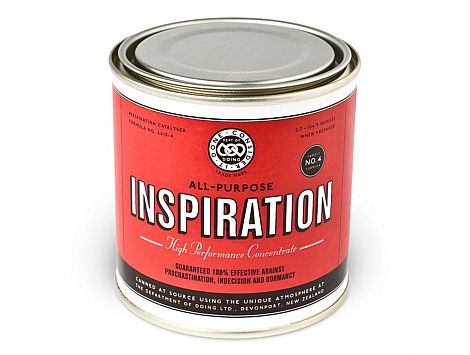
It’s no surprise we talk so often on this blog about what keeps us writing. Sometimes, nothing seems to work. There is no magical can of Inspiration we can use to grease the creative wheels, no verbal laxative to unplug our plugged minds. If there were, I’d put it in a can and stock an entire pantry. I wouldn’t sell it, I’d want it all for myself! Well, I might sell it for an exorbitant price so I could quit my day job and write full time like when I was unemployed. Oh those were the days!

So what do you do when the words won’t come? Last time I posted, I wrote about my return to reading. Indeed, it worked in the short term, coaxing a few thousand more words of my own onto the screen when I wasn’t working or reading. But the effect didn’t last long.

So I ask again, what do we do when an unfinished project turns stale? Many authors will push on, throwing down words they know they’ll delete at a later date until the levee breaks and good words start flowing again. Unfortunately, I’m not the kind of writer that can do that. I’d rather write 50 great words than 1000 bad ones. I’m a little too much of a perfectionist for my own good at times.

The answer, at least in my case, is simple:  Write something else.

I’m not giving up on the novel I’ve worked on for over a year–far from it–I’m simply taking a break to write something else. Something I can finish, because nothing is as therapeutic to an author as writing “The End”. I started working on a short story, and, lo and behold, the words began moving again. It just so happens it’s a short story I’d actually like to turn into a short, animated film . . . or perhaps an illustrated, not-quite-for-children, children’s book a la Pat Rothfuss’s The Adventures of the Princess and Mr. Whiffle: The Thing Beneath the Bed.

What we write isn’t always as important as actually writing. And the more we write, the better we get. Guaranteed. So, when your darling of a story isn’t behaving like a darling, write the ugly step-child of a story instead. Get the words flowing again, and soon you’ll have your inspiration back. Do that enough times, and you’ll have a virtual shelf–or perhaps a folder on your computer hard drive–filled with ever improving stories.

It can’t be said often enough, the only way to grow as a writer is to write.

Life, Inspiration, and . . . a Red Sheep?

11 November 2011 | 3 Comments » | Jason Michelsen

What a week to have to write a post for this wonderful blog (authored by some of the greatest human beings I know!).  Somehow, I’ve got to write a post that follows David Farland–arguably one of the most successful writers of just about anything and everything speculative fiction–a book give away, and an insightful and scary look into the functioning of the brain?

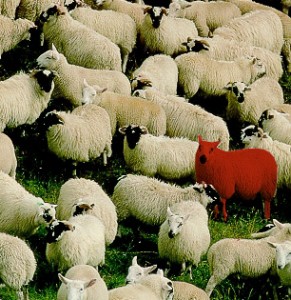
What if I just put a cool picture of a red sheep out there and call it a day?  No?

To be honest, the picture has nothing at all to do with this post.  I just liked it and wanted to use it in a blog post.  I probably should have saved it, using it when I had an idea for a post that would actually work with a picture of a red sheep.

And if I’m honest once again, this is about the most I’ve written in the last three weeks.  And in November of all months!  I competed in NaNoWriMo last year and won, finishing before Thanksgiving, but this year, nothing.  So, what happened?  Life happened.

And just so I don’t give the wrong impression, nobody died.   But neither do I want to talk about what it was here on a public blog.  What it was isn’t the issue.  The issue is the lack of writing.  Nay, the lack of desire to write.

For three weeks, I’ve tried on occasion to sit at the computer–butt in chair, hands on keyboard and all that–but nothing has happened.  It seemed there was little I could do to will the words from my brain out onto the screen.  It was a little like trying to wring water from a dry sponge.

I was empty.

Being an aspiring author, the prospect that there were no more words inside was a little frightening.  A literary suffocation.

It didn’t take me long, however, to realize the only way to fill something up with whatever it is it needs–words in the case of this writer’s mind–is to feed it what it needs.  For over two years, I’ve been so focused on my own writing that I’ve neglected my reading.  Oh, I read a book here or there, usually new releases by certain authors I simply can’t wait to read.  But my pace of a book every 3-4 weeks (I’m a slow reader with a day job, what can I say?) had slowed dramatically.  I’d been on the same book for over four months.

So I read.

In three weeks, I finished the last 300+ pages of the book I was stuck in, read another hefty fantasy book–The Heroes, by Joe Abercrombie–and started A Wise Man’s Fear, by Patrick Rothfuss.  Yeah, I’m a little behind.  My list of books that I’ve bought and need to read is over 25 books long.

Some people might gasp to know I haven’t even cracked A Dance With Dragons.  I know, I’m ashamed.  I deserve to be punished.

But in reading Abercrombie, Rothfuss, and the unnamed author in whose awesome book I’d been stalled for months, I remembered why I’ve wanted to be a writer since elementary school, and why I came to the conclusion that I had to write fantasy after reading Robert Jordan’s The Eye of the World for the first time.

The sheer joy of the story.  The careful selection and placement of words, and the emotions they invoke.  The characters who seem more like good friends than ink on paper.  The anticipation of what waits on the other side of the page.  These are the reasons I’ve always wanted to be a writer, all the things that made me love being a reader.

Some successful authors will tell you they don’t read in the genre they themselves write.  Others will say they read a wide range of literature.  Personally, I read a fairly wide range of books, though admittedly, the vast majority is speculative fiction.  Namely fantasy.  It’s just what I’ve always loved reading; deciding to write it hasn’t changed that fact.

So, um, yeah.  Read.  That’s my advice.  To anyone, but especially aspiring writers.  Not every reader is a writer, but every writer was a reader first.

And you have to admit, the sheep picture is sweet.

Cathartic Writing

12 September 2011 | 2 Comments » | Jason Michelsen

This isn’t the blog post I set out to write.  We aspire to be a blog for writers dealing with the business and/or process of writing.  Sometimes though, writing is about more than the characters and the plot.  Sometimes, it can be about real life, even when everyone in the story is wearing armor and carrying swords.

I’m sure I’m not alone when I say I’ve spent a fair amount of time the past few days watching documentaries about the 9/11 terrorist attacks.  To the majority of Americans – indeed even a great number of world citizens – it is the single most historically significant event to take place within the span of our lives.

We can all remember where we were when we first heard the news.  We’ve all seen the haunting images of the senseless violence.  It was impossible to not be affected in some way emotionally by the events of that day.

Is it no wonder those emotions would find their way into my writing?

In the days and weeks directly after the attacks, I was surprised to see just how affected my writing became.  I was in grad school for screenwriting at the time.  Like many people I knew, I was angry, and the scripts I wrote during that period reflected that.  Loss and vengeance appeared frequently.

But, what became apparent while revisiting the footage these past few days, is how certain images and themes found their way into my fantasy years later.  The story I’m currently working on takes place partly in a desert city.  The desert itself is comprised of fine, gray dust and littered with teetering towers of obsidian.  When I was worldbuilding, I didn’t consciously draw upon images from 9/11, and yet this is just one of many that has manifested in my writing.

It seems only natural.

To write is to express emotion.  Just because we write speculative fiction doesn’t mean that, in some way, we’re not using it to look at relevant issues of our own time.  To dissect them.  To find out what motivates some people to do unspeakable things.  Perhaps, on some level, to find reasons to sympathize with those people, to understand them.  Or perhaps to live vicariously through the hero, thwarting the enemy’s plan in the eleventh hour and saving the day.

Sometimes, however, we write simply to cope.

‘Tis But A Scratch!

1 August 2011 | 1 Comment » | Jason Michelsen

Cartoon Credit: Joe Sutliff, after Monty Python and the Holy Grail

As speculative fiction writers, we often find ourselves doing a lot of research. Much of that research goes into worldbuilding, pulling from this or that culture, borrowing this or that religious ritual. Every nation in my own world has roots in more than one ancient culture from our past, just enough familiarity to give the reader a solid frame of reference. And while everyone pretty much knows where to go to do that particular kind of research, I’ve come across a couple books recently that have helped me tremendously with the authenticity of other areas of my writing.

I write Epic/Heroic Fantasy of an adult nature.  It’s violent.  It’s bloody.  People get hurt, injured, maimed, disfigured, etc. Unfortunately – or fortunately, depending on how you look at it – I don’t get to observe people who have been injured on a daily basis. Aside from TV and pictures, I’ve only seen one dead body outside of a funeral home in my entire life, but I want my books to feel real. I want the injuries that occur to feel real, the consequences to feel real.

Recently, a friend of mine gave me a copy of Body Trauma: A Writer’s Guide to Wounds and Injuries by David W. Page, M.D. While the book does spend a good amount of time dealing with injuries caused by modern weapons, much of the information can be applied to ancient warfare. The chapter on abdominal trauma alone is worth the price of the book. I mean seriously, how many people will I run through with swords in my writing career? Probably one or two. There’s a chapter dealing with injuries to just about every body part with special chapters dealing with impalement, amputation, bug bites, frostbite and much much more. It’s a must have for any writer planning on hurting one of his characters.

Another book I’ve turned to on a number of occasions is Greek Fire, Poison Arrows, and Scorpion Bombs: Biological and Chemical Warfare in the Ancient World by Adrienne Mayor. I originally bought it as a research book for a huge siege set piece I have planned for a future book, but I’ve used it two other times to come up with devious methods of attack. It has information on everything from ancient flamethrowers to poison gases to incendiary bombs. Nothing pleasant, but all pleasantly helpful to anyone writing violent fiction.

And on a less “violent” note, I thought I’d bring up a book that some might never think to read if they’re interested in writing speculative fiction.  Robert McKee is a name widely known in Hollywood, but maybe not so much in the SFF community. He’s a screenwriter of some renown, and his book Story is one that anyone interested in telling stories should read. While it claims to be a book on screenwriting – and was indeed the required text for one of my classes in film school – it is so much more. McKee breaks storytelling down into the most basic elements, providing examples and showing how and why some elements work and others do not. I try to read Story at least once every 2-3 years. Not only is it educational, it is inspirational.

I hope these book recommendations prove helpful to someone out there. If anyone has any other books of this nature that they use regularly, feel free to post them in the comments section. I for one am always looking to expand my research library.


Stand Alone or Grow a Forest?

15 June 2011 | 2 Comments » | Jason Michelsen

If books were trees, I’d have a forest in my head. It’s 842,622 words long, filled with sweeping character arcs, murky intentions, sacrificial heroism, the syncopated percussion of snapping bones, the crackling discharge of magic, the heady musk of blood. It’s a trilogy that has marinated in my conscious for near twenty years. It dwells in the vaults of my mind, the limbs of its beautiful prose framed by spaces, commas and periods, yearning to live the life of ink, dripped and stamped into meaning. My epic magnum opus.

Of course, I pulled that word count out of the ether, but I tend to read and desire to write doorstoppers . . . as long as they’re well-written. Twice before I tried to write the first book of my planned trilogy, and twice before I wrote myself into more corners than any house has a right to claim. The trees of my series blinded me, cramped the single tree I was trying to cultivate. It wasn’t until I heard other authors I respect and read talk about postponing larger projects that consumed their younger years while they honed their craft that I realized I was biting off more than my writing chops could chew. Carrying a story through a single book is far easier than trying to drape one over the frame of a series.

This is why most authors I’ve spoken with advise not trying to write a series fresh out of the gates. Usually, the untried author won’t be up to the challenge. Does this mean you’ll never be able to write a series? No.  Michael Jordan didn’t dunk the first time he jumped, Brett Favre didn’t throw a touchdown the first time he picked up a football. And besides, most publishers won’t buy a series from an unknown author, though there are the occasional exceptions: Joe Abercrombie, Sam Sykes, R. Scott Bakker and others. Some publisher submission guidelines even go so far as to say if you’re submitting something that’s part of a larger work not to provide any info on the later books. If they’re interested, they’ll ask.

So, the advice which was given to me and which I now pass on to any other aspiring speculative fiction writers out there is to write a self-contained, stand alone novel—or six—before tackling a series. Prove to yourself you can carry a story from its beginning, through the muddy middle to its brilliant climax. The best series—in my opinion—contain books that stand on their own with beginnings, middles and endings, so focus on that when you’re just starting out. But—and this is important—don’t hold back! Don’t cling to your best ideas so you can use them in an eventual series, use them in what you’re writing now! You want anything you write to stand out and wow the reader . . . like a majestic tree standing apart from the forest.

Getting it Right: Character Counts

2 May 2011 | 4 Comments » | Jason Michelsen

Six months ago I started a novel, and in that time I’ve written enough words for most books–somewhere in the realm of 185k though 23k now lives in a deleted scenes file–but I’m only just beginning to know my characters.  I mean really know them. This might be due in part to my penchant to discovery-write the majority of my story rather than meticulously plan every scene out in advance. I’m a Gardener, not an Architect, and that means I’ll be prone to much more rewriting.

Oh, I know the ending and several key events, who dies, who lives, and a few other elements of the story, but for me, I enjoy the process of discovering the nuances of my characters as I write. As a result, I’ve recently decided to start over. That is to say, I’ve decided to begin my second draft before finishing the first.

It’s not unheard of; David Farland–bestselling author of the Runelords series–has said he writes through the first half of a book then does a rewrite before tackling the second half. Granted, he’s a self-proclaimed Architect, but the practice seems sound in my opinion, especially since I’m doing it for the sake of character. I finally know much more about the motivations of my characters, their voices, how they would actually handle certain situations–which, in some cases, is different from what I wrote originally.

Many authors talk about how it takes them a few thousand words to truly get into the head of their characters–longer for those like myself writing Epic Fantasy since we’re often dealing with multiple POV characters and, depending on needs of the story,significantly larger casts. But it’s extremely important to know your characters. A good plot is important, key scenes that might be depicted in cover art are important, but, when you think about it, what you remember most about every book you’ve ever read or every movie you’ve ever seen are the characters. You remember the Vaders, the Gollums, the Tyrions, the Moiraines.

Every character should be the hero in their own story. Their motivations should make sense even if we as impartial–or even biased–readers disagree with them on a moral level. This is especially true of antagonists who can become flat and one dimensional if they are not at least some variant of gray. My primary antagonist just happens to be one of my favorite POV characters. He also happens to have the most complex motives, and is the main impetus for my decision to rewrite what I’ve already written before pushing on to the end. In many ways, he’s more a protagonist than antagonist in the true sense of the word, though he does work against the main protagonists’ goals.

So how does one accomplish the task of creating memorable characters? It starts with knowing them yourself, as their creator, the writer who gives flesh and blood to the ink of their existence. Learn their habits, their quirks, their wants and desires. This, I’ve come to discover, can only be achieved by writing in their heads for long enough to begin thinking as they think, acting as they act, loving or hating as they do. You must know them as well as you know yourself for ultimately, they are a part of you.

Another way to breathe life into a character is through physical description. I love to people watch, everywhere I go, looking for the tiny idiosyncrasies that make us all unique and which I might be able to apply to my own characters. It might be something simple: a limp, an incessant cough, the way a woman tilts her head when confused or a man clenches his fists when challenged. It could be something more subtle like speech patterns, grammar–or lack thereof–the amount of eye contact one person chooses to give versus another. We are all of us different, and so too should your characters be different from one another.

Perhaps the most important thing is to like your characters, even the antagonists. Robert Jordan used to say his favorite character was whichever one he was writing at any particular moment, something I took to heart. After all, if you don’t care about your characters–even the baddies–no one else will either. Give them something to strive for, something to long for, something that, if they don’t get it, will bring their world crashing down around them.

These are the things I’ve only now, after 180k+ words, discovered about some of my characters, and why I’ve decided to begin draft two of my novel. I was always going to do another draft anyway–perhaps many more since I’m more Gardener than Architect–so I do not feel like I’m going backwards by starting it now. I’ll be building stronger, more memorable characters, and that will go a long way toward getting this novel published. And who knows, maybe somewhere down the line, some other aspiring writer like me will mention Bos Illur in the same sentence as Vader, Gollum, Tyrion and Moiraine. One can only hope!


Monday Bonus: Scrivener for PC

25 April 2011 | 4 Comments » | Jason Michelsen

I contemplated merely commenting on Matt’s 4/18/11 post regarding the Writer’s Software Arsenal, but thought this info might have been lost or overlooked as a comment. And, since Colette already posted a wonderful article today on learning from our mistakes, consider this Bonus Monday Content!

Many Mac users might already be familiar with Scrivener, but as a PC user, I had never heard of it. Most likely because, until now, it hadn’t been available for the PC. Scrivener is currently conducting a public beta test of the PC version which you can download here. I decided to give it a try and have been extremely impressed despite the bugs I’ve come across.

“Scrivener is a powerful content-generation tool for writers that allows you to concentrate on composing and structuring long and difficult documents.”

The program has built in templates for Fiction Novels, Novels with Parts, Short Stories, Non-fiction, Poetry & Lyrics, and Screenplays. You can also create your own template to suit your personal needs.

What is so great about Scrivener, at least from the perspective of a speculative fiction novelist, is that it allows you to have everything you need to write your story–outline, character bios, research, glossary, etc.–all in a single “project.” You can even add images and video which can be viewed while you’re writing, easily rearrange scenes/chapters, and then compile everything into a single document for exporting or printing. As someone who has multiple Word docs (glossary, book guide, etc.) and an outline in Excel open at any given time–I worked in cubicle for 10 years and have yet to spend the time to learn wikidpad, what can I say?–having everything centralized in a single location seems like a dream.

The current Beta test runs through May 30th, 2011, and the full program will be available sometime in June. The PC version will cost $40, which is a steal considering how robust the software is. Additionally, if you participated in November’s NaNoWriMo contest and verified your 50k word count, you get 50% off the PC purchase price. You can’t beat that with a stick!

Scrivener for Mac: (http://www.literatureandlatte.com/scrivener.php)
Scrivener PC Public Beta: (http://www.literatureandlatte.com/scrivenerforwindows/)