 As my fellow Fictorians are showing you so far this month, there are many ways to set yourself apart as a writer. In my mind, the most memorable way to set yourself apart is voice, to the surprise of no one. In past posts, I’ve highlighted how you might create tension with narrative voice, and used well-known authors with distinct voices as examples. In this post, I’d like to dive into what voice is, the many ways one can use it, and highlight some examples that will hopefully give you plenty of ideas.
First, what is voice? Voice goes by many names. Style. Point of View. Vernacular. Narrative voice. Language. It is all of these things. For the sake of clarity, I defer to my friend Mignon, whom many of you may know as Grammar Girl. Julie Wildhaber writes on the Grammar Girl website:
Voice is the distinct personality, style, or point of view of a piece of writing or any other creative work. Voice is what Simon Cowell is talking about when he tells “American Idol” contestants to make a song their own and not just do a note-for-note karaoke version. (read more here)
It’s the thing that makes a reader say, “Ah. I can tell Kristin wrote this, because there are many f-bombs, and she ends every chapter on a cliffhanger,” for example.

Letting your voice shine is all about one important rule: “Know thyself.” This is not only my own personal credo for just about everything, it’s an important practice that will inform you of your strengths.
Are you funny, or at least have great confidence that you are? Can you translate or work on translating that humor into written form?
Are you good at calculating out the worst case scenario? When friends tell you their darkest fears and worries, are you able to take it another shade darker? Do you have no problem screwing with your characters and making their lives miserable?
Is your writing structure unique? Are you aware of grammatical rules and structures, but can’t help but twist and/or ignore them?
Here are some examples of authors using those very strengths and turning them into voice.
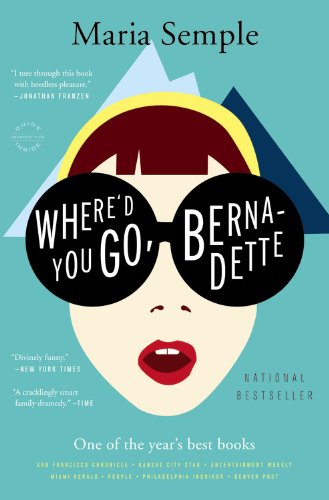 Maria Semple is one funny lady. She wrote for the television show Arrested Development, which banked on candid, awkward family dynamics to amuse their viewers. When it comes to her writing, Maria translates the same odd, character-driven situational humor into fiction. Her second novel, Where’d You go, Bernadette? may be a shade more sophisticated than Arrested Development, but you can expect the same wit and brand of humor that her television writing is known for.
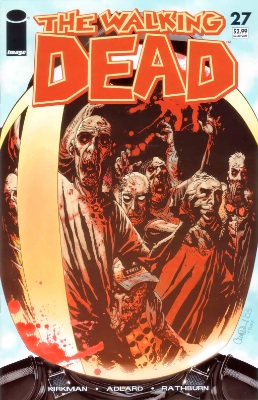 Robert Kirkman doesn’t mind making a character suffer. He doesn’t mind making all of his characters suffer. As Robert has his hand in more and more projects, the common thread between all of them is his signature move: make the character(s) suffer. While reading The Walking Dead, one panel completely floored me. It was too dark, in fact, to be translated to the television version (though I dreaded I’d see it when the time came). If you’d like to read the comic books, skip to the next paragraph. For those of you who’ve read a good chunk of the comic books, you may already guess which part I’m talking about. It’s the Red Wedding of The Walking Dead. Instead of just Laurie taking a bullet, the bullet travels through her baby girl in her arms as well. The worst case scenario, one darker than I would ever dare to think up, becomes a reality in the blink of an eye. When I read it, I thought for sure I felt my heart drop.
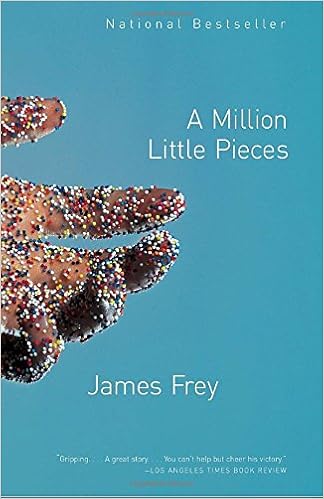 I would be remiss if I didn’t point out an author I’ve mentioned many times in my Fictorians posts who is, in my mind, the king of grammatical voicing: James Frey. If you’re currently in the beginning stages of your career and trying to get published and you’ve read James’ work, he might make you a little crazy. And it’s not because he isn’t good – oh he’s good. It’s because you’ll wonder how he was able to get away with his style and still get published. An example, from the first page I opened up to just now from A Million Little Pieces:
I stare at him.
Trying can’t hurt, Kid.
There is truth in his eyes. Truth is all that matters.
And trying’s nothing to be scared of.
Truth.
Just try.
Where are the quotation marks? Dialogue tags? Adjectives? And yet, from this short section, we can tell this is a conversation, or at least one person talking to another person. We can make very good guesses as to who is whom (given more context). This is James’ style. While different at first, it grows on you very quickly, and your eyes ease from one word to the next until, before you know it, you’re flipping the last page of the book. His style was unlike anything I’d ever seen before (Hemingway would be jealous of his brevity), and I immediately adored the rock-solid voicing.
The bottomline is this: you don’t have to be the next Maria Semple, Robert Kirkman, or James Frey. You just gotta be you! It’s as easy and as difficult as that.
First: know thyself. Next: write.