3 Dimensions of Character – A Review of Larry Brooks’ Character Development Technique

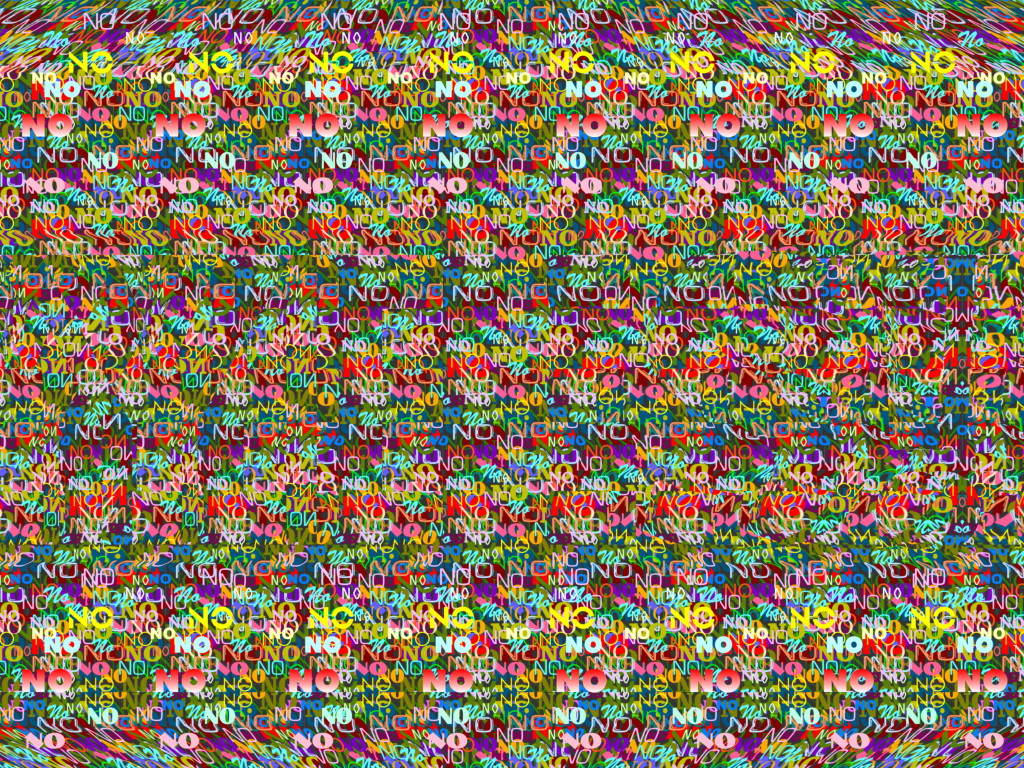
3 dimensions imageWe’re talking a lot about character this month, as well we should.  Great characters are critical components for great stories.  We need to understand our characters, their relationships, and then we need to reveal the truth about our characters with a deft hand, weaving in back story and inner demons.

It can prove a daunting process, and sometimes it’s hard to know how to approach working with our characters to maximize their effectiveness.  At times, it’s like looking at a hidden 3d image, like the one at the top of this article.  Can you see the hidden image?  It takes effort and practice to train your eye to see what’s right there.

Same with building great characters.

There are lots of opinions and articles and books on the subject, including this month’s Fictorians posts.  One resource I highly recommend is Orson Scott Card’s book Characters & Viewpoint.

Another, which I found extremely helpful, is Larry Brooks’ Three Dimensions of Character.  This is available as a standalone ebook, but is also incorporated in Larry’s best-selling book Story Engineering.

The brilliance of this approach is that it explains complex character building in a direct, understandable way that makes it accessible to every writer.  Larry provides a toolbox to assist authors in crafting great characters, and knowing what is required to do so.  He teaches, in essence, how to see the hidden image by removing some of the vague, mysterious elements from the process, which I found refreshing and extremely helpful.

I won’t explain the entire system.  This short article won’t do it justice, but I will review the core concepts to illustrate the power of it.

Characters have three distinct dimensions that authors need to understand and define, and which they can then apply for greatest effect.

Dimension 1:  Personality.  What a character looks like, their quirks, how they present themselves to the world.  This is all surface material, without any assigned meaning.  For minor characters, this may be all we ever see, and it’s left to the reader to assign any deeper meaning, if they choose.  For important characters, we cannot stop here without getting the dreaded “your characters are flat” reviews.

Dimension 2:  Back story and inner demons.  This is where things get interesting.  This is the why of a character’s choices.  This is where meaning is assigned, where they face their inner struggles, hide their deepest fears.  It’s the world view that motivates their actions, and it may or may not coincide with the face they choose to show the world.

Dimension 2 is where characters gain depth, it’s where the reader gains a glimpse into the why, and gives us a chance to build empathy with the character, which is absolutely crucial for our story success.

However, we’re not finished with Dimension 2.  Dimensions 1 and 2 are still what the character wants us to see, to understand.

Dimension 3 is where we get to the true heart of a character, their moral substance, or lack thereof.

Dimension 3 is what a character does in critical moments, moments of extreme stakes, moments that count.  This is where everything is stripped away and their true, inner core is revealed.

It may surprise us.  It may surprise them.  This is where a character really becomes a hero, or a villain.  It’s where they shine, or where they run away screaming.  This is where inner demons are excised, when a character arc is complete.  Only then is the hero ready to overcome the external antagonistic forces.

This is powerful stuff!  Too often advice about character lacks this level of clarity.  Larry goes on to expand upon this in his books, and I highly recommend you study his system, because it empowers authors to elevate character development to a much higher level.

To illustrate briefly:  Assume we have a character, a middle-aged school teacher who works with first graders.  Never married, but beloved by her children.  All first dimension stuff.  Then, let’s give the readers a glimpse into her past.  Maybe she went into teaching because a younger sibling died and she always felt guilty for not protecting that child, and has dedicated her life to teaching to help excise that guilt.  Second dimension back-story and inner demon.  She’s an easy character to empathize with.

Then let’s set the school on fire.  Children are in danger.  What will she do?

Well, that’s the question, and the moment that will make the story.  Will she rush into a burning room to save children, perhaps by making the ultimate sacrifice, and therefore justify her life’s work?  Or will she break down and ignore everyone around her, perhaps letting children suffer because she’s unable to break out of the prison of her memories?  Or does she do something totally different?  It’s not until that moment of crisis that her true character is revealed.

In my next post, I’ll explore examples of great complex characters, and lessons we can learn from them.

Romance in the Air, But Not Taking Over the Plot

romance-04If you’re a genre writer, you’re probably a romance writer. But no, you say? You write fantasy, or science fiction, or mysteries, or…doesn’t matter. One thing about us genre writers, to some extent our genres usually mix, and the most common secondary element is romance. There’s a reason that so many writers from so many genres show up at the romance-centered panels during conventions. For many of us, romance is a strong sub-plot that runs through most of our fiction. So, why should we use it, how should we use it, and to what degree?

Every element of interest we add to our story increases the level of interest to readers. Of course, we don’t want some eclectic hodgepodge, but who doesn’t love a good fantasy book with elements of horror, mystery,  and romance. Sometimes we substitute the romance with the growth of a friendship or business partnership, but that relationship growth is something that carries us along. It gives the story focus when the main plot needs a hiatus, when the bad guys are readying their next assault, when the good guys are recovering or regrouping. Some type of relationship story, in some form, is almost always fundamental to a good book. We need those relationships in order to become truly invested in our protagonist’s well-being.

Integrating romance into a story is like adding spices to a good pumpkin pie. The crust may have no extra flavor, but it’s taste is influenced by the spices running throughout the filling.  And the best pies will have the occasional design on the crust, maybe a cut-out leaf or a small pumpkin, with plenty of cinnamon and sugar sprinkled on top that gives our palates a surge of the wonderful flavors within. So, in a good story. Hints of the relationship will flavor the entire story: a look, a touch, a comment, a moment of inner dialogue. But then we will have the turning points in the relationship, where it takes center stage, even if only for a few paragraphs; the moments when the relationship moves to the next level. This may be the moment when the protagonist realizes he has feelings for his love interest, maybe their kiss, maybe more. It may be a point where the protagonist realizes his contagonist isn’t his enemy but can become an ally. Moving this story arc in concert with the main story will make a more intriguing book. These sugar-coated biscuits dotting the crust move us eagerly through the story as much as the action scenes, giving our tales more depth and emotional resonance.For anyone needing help with this, let me refer you to David Farland’s book, Million Dollar Outlines. I attended the workshop, but I’m sure the same tools and techniques are discussed in the book.

What level of romance or relationship we use can vary from book to book or author to author. For the best discussion I’ve yet seen on the subject, I refer readers again to David Farland and his writing tips at www.davidfarland.net.  Though romance may lead to a sexual relationship, romance itself is the process of falling in love. I think most readers, even men, enjoy participating in that process. Some readers would like to see that romance go to the next level, with every sexy detail, while others would rather have the door closed and know the protagonist and their love interest lived happily ever after. Which is right for you, as a writer, is a very personal decision. I will say though, when you put romance in your books,  or any other kind of relationship, learn how to do it right. Just as a reader won’t accept a moral, honest character suddenly stealing a horse and knifing their victim, they won’t accept a usually open and forthright person suddenly clamming up about their feelings for the sole sake of adding tension to a relationship. Keep your actors in character, in ALL situations.

For me, romance is the cinnamon in my cinnamon rolls, my favorite flavor in fantasy and science fiction. Even my upcoming horror short story, Demon River, has an element of romance that helps us root for a very troubled and difficult protagonist. Love makes the world go around, whether it be this one, a planet galaxies away, or the fantastical ones of complex imagination.


Calling all Alpha Males”¦Romantic Character Needed

heart 1

In romance, we have fairly specific types of characters running through our pages: The hero (probably alpha, could be beta), the heroine, the best friend or side-kick, and perhaps a villain or antagonist.

Let’s look at these characters in terms of romance because romance is almost always a character-driven tale of ups, downs and eventual happy-ever-after (HEA) togetherness.

I’m not discounting any combination of relationship (male/male, female/female or anything else) because to my mind you’ll still have at least one person who is more or less portraying the hero and one the heroine, regardless of gender. So, with that disclaimer let’s start.

While many heroes are alpha males, there is also the beta hero.  What’s the difference?  For me – it comes down to ease of emotion and sensitivity.

Alphas are strong – they ooze confidence and strut arrogance.  They’re über capable and may even be abrasive because they don’t really care if they offend anyone.  They don’t worry about their emotions or being sensitive.  They don’t need to.  They’re too busy kicking-ass.  If they were a doll (action-figure, for the guys), they’d be G.I. Joe.   Guys want to be them and girls want (desperately) to be with them.

Beta heroes are more subtle.  They’re often funny and charming.  They may be able to kick ass, but they’d rather reason or humor their way out of any conflict.  Mother’s love them.  They bring flowers just because and remember anniversaries.  They’re in touch with and willing to express their emotions.  They can (and do) plan candle-light dinners and know what present will bring their lady-love joy.  If they were a doll/action figure, they’d be Ken.   Happy to hang out in Barbie’s dream house for romantic weekends of long talks and walks along the beach.

I love both types of heroes.

Our heroines need to be smart and capable. No one wants to read about a lead character who is too stupid to live (it’s a thing… really).  We want our heroines to perhaps need rescued from a situation but not from their lives.  They need to be able to stand on their own two feet just fine without our hero, so they don’t need the hero, but they want him.

The key is that our hero and heroine are both better people for having the other in their life.  And as a reader, we need to love them both.  If we don’t, we aren’t rooting for them to get together and find their HEA.  Through this identification with and love for the characters, we are invested in their path to happiness, and that’s what a romance is all about – the emotional journey.  Next month when we discuss genres, I’ll go into more depth on the whys and what-fors that make romance … romance. Right now, let’s continue on with the people inhabiting our stories.

We may also have the sidekick/best friend characters. Like other genres, these people can be a huge amount of fun because they don’t have to be heroic. They get to have a lot more flaws and we don’t have to love them.  They can be cowardly, obnoxious, slightly stupid, clumsy… a whole host of things that our heroes do not get to be.  They are perfect foils for our leads characters.

Our villains and antagonists in romance may or may not be actual bad guys/gals, they may just be the wrong guy/gal for our hero/ine.  How far this character is willing to go to keep our leads in their lives determine where they fall on our villain – antagonist spectrum.   Or they may be someone (a well-meaning, or not, relative?) who feels these two should not be together and will do whatever it takes to keep them apart.  Often though, what is keeping our lovebirds from their HEA isn’t a who so much as a what – their flaws or internal conflicts.  I’ll discuss more on this next month as well.

What traits do ya’ll think are necessary for our hero/ine to be identified with and loved?

Villians, Villians, Everywhere-The Perfect Bad Guy For All Occasions

Okay, I confess. I’ve always wanted to be an evil minion. I’m nowhere close to clever enough to be an evil mastermind, but I could totally be an evil mastermind’s go-to girl.

In all seriousness, bad guys are my favorite. Good guys, for the most part, tend to bore me, and I’m the first to admit that my fiction has few heroes. Even my protagonists have their roots in the dark side.

First, let’s be clear. When I talk about bad guys and villains here, I’m not necessarily talking about a story’s antagonist. Though they often are cast as characters whose goals are in direct opposition to the protagonist of the tale, a good villain should be able to take any role. For example, when we’re introduced to Hannibal Lecter, one of the best bad guys around, in Silence of the Lambs, he takes the role of the mentor, helping the protagonist, Clarice, find the real antagonist, Buffalo Bill. In comics and graphic novels, the hero’s arch-nemesis often starts as a friend, and villains often switch from good to evil and back again as the story dictates.

So, what makes a great bad guy? Here’s four traits that I think really get to the root of that very question.

First, and probably most important, a great bad guy never believes they’re bad. As the actor Willem Defoe famously said, everyone believes they are the hero of their own story. Your villain is no different. In fact, while your actual hero might struggle with their identity, the best villains have no doubts. To them, they have only the purest motivations. Everything they do has an extremely good and rational reason.

A great litmus test for your bad guy is to have them take part in a “good vs evil” scene, where both sides lay out their case. The best ones should almost convince the reader to join the evil side of the argument.

In short, a great bad guy can rationalize like nobody’s business.

This brings us to trait number two, which I think is intrinsic to every morally questionable character. They either have no concept of or don’t care about consequence. Unintended outcomes are usually a secondary factor, if a factor at all. To these characters the ends always justifies the means. This capacity is, I believe, one of the main reasons we love villains. They do what we wouldn’t dare. While a hero struggles to find a way around bad consequences and is emotionally affected by having to choose between necessary evils, a good bad guy focuses on the goal and doesn’t let anything get in the way.

We see this all the time with villains who want to save the world, even when it means doing something horrendous. The first season of the TV show Heroes had a group who wanted to blow up New York, sacrificing millions for the sake of the rest of the world. Watchmen has a villain who kills billions for the same reason — and the ploy actually works.

The third main trait is unpredictability. A baddie’s untrustworthy nature is a huge draw because we always want to know what they’ll do next. They always keep us guessing. We see this in various forms, my favorite being when they’re acting as what Tracy Hickman calls the contagonist. A contagonist is the conniver, the untrustworthy ally that has a goal that might run parallel with the hero, but who in the end, isn’t out for the same things.  They have their own agenda that can, at any moment, complicate the story.

We see Hannibal take this role in the novel Red Dragon, where he helps the hero just as he did with Clarice to find a killer, but in the end, his real agenda is to get revenge on said hero for putting him in prison. He plays along, all the while working his secret agenda to bring about a goal that has nothing at all to do with the main plot of the story.

In that vein, always be careful that you don’t reveal too much about your bad guy. When the reader completely understands a character, they lose their unpredictability. While we may be hooked with tantalizing hints into why a bad guy went bad, the best ones always remain something of an enigma that can do anything at any time. A fantastic example of this is the Joker from Christopher Nolan’s Dark Knight, who never does what’s expected because his end game is never fully understood. We get a bunch of theories, but no definite answers. At the same time, our friend Hannibal suffers from over sharing. Over a succession of books, Thomas Harris tells us everything about the man from his childhood onward. For many readers, this ruined the innate menace of the character.

Though, while you’re keeping the reader in the dark for the most part, remember that every big bad is also a person, never completely evil, just as a hero is never completely good. This brings us to trait number four — every great bad guy has a spark of light in that dark little soul of theirs. Something should always give us hope that this character can find redemption, no matter how bad they might behave. I think this last bit is why the best bad guys can bounce around the story in whatever role they like. They might be a protagonist serial killer who only kills criminals the justice system can’t catch, a thief sidekick who’ll do anything to start over clean, or an antagonistic Norse trickster god who just wants his daddy’s approval, bad guys should have something the reader can identify with. A little sugar with their spice always makes their mayhem a little more interesting.

So, got any other traits that can turn a so-so bad guy into a great one?