Making the Science Work: Freedom through Limitation

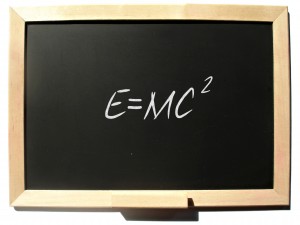
EMC2Sixteen-year-old me dried off after a long summer evening languishing in the family hot tub with one of my best friends from high school. The discussion that evening had been scintillating. With the tangy scent of chlorine still hugging me like a toxic cloud, I opened the patio door and stepped into the house, my damp feet sinking into the now-soggy carpet. I draped the towel over my shoulders and made my way towards the living room, where my friend was already spread out on the couch. I was pleased he hadn’t gone straight home; true, it was well after midnight, but I was awake. I wanted to converse. I wanted to think!

My friend Troy and I spent many late nights deep in conversation while the rest of the house slept, but this particular night in 1998 was the granddaddy of them all. I don’t think we went our separate ways until 5:00 a.m. In the intervening hours, for some unbeknownst reason (I may never recall the exact circumstances that inspired this), we took out a pad of paper and began to sketch out a history of the coming hundred years or so. What would be the defining events of the twenty-first century? Would mankind colonize space? How about the moon? Mars? Perhaps other, more exotic locales? How would we get there? What technologies would we use? How long would it take us to develop them? How would politics contribute to these endeavors? And perhaps more importantly, how might politics hinder them?

We weren’t interested in wild flights of fancy. This was a sober-minded effort to gauge the direction our society was moving in and extrapolate it to its most probable outcomes. And perhaps the oddest part of all is that there was no inherent “story.” No, this was an undiluted act of futurism. We were thinking on a grand scale, laying out the broad strokes of history, albeit a future history. It wasn’t until the following October that I zeroed in on a particular timeframe in our nascent world and decided to set a story there.

On the subject of future studies, Wikipedia says there “is a debate as to whether this discipline is an art or science.” Now, I understand that Wikipedia isn’t the most reliable research venue, but that statement really hits the nail on the head. You see, I was an artist and Troy was a scientist. All these years later, I’m releasing my first novels and he’s a globetrotting geophysicist-but that artist/scientist partnership is crucial. I need the balance it provides. Not that I don’t do my own research (I do a lot!), but it’s helpful to have a watchful eye appraising the more outlandish ideas in my first and second drafts.

This might sound limiting-and I’ll grant that in many ways it is limiting. But as a hard science fiction writer, I love those limits. Placing limitations on the way the world functions on a practical scale, forcing myself to find ways to work within the confines of occasionally unyielding science, often forces me to explore more interesting story possibilities than I ever would have been able to uncover if I had allowed myself to play against a completely open canvas.

What kind of limits am I talking about? They’re mostly in the realm of physics. A big one is gravity. In Star Trek, for example, technological hand-waving allows for the existence of artificial gravity, simplifying ship design and scene mechanics (believe me when I say that having characters float around in unpressurized compartments presents huge scene-blocking challenges… especially if they have to fight to the death). Warp speed allows ships and characters to gallivant from planet to planet the same way we move around in cars today. For space opera, these conventions are accepted and welcome. But what kind of story develops when you embrace the fact that it could take years (or decades) to get to one’s destination? What kind of story develops when you embrace the realities of living in space or on another planet, right down to the nitty-gritty, inconvenient details?

The answer is the kind of stories I like to read. In my experience, scientific inconvenience breeds creativity. I’m constantly asking myself, how does a space elevator work? What kind of propulsion are we likely to use to get to Mars a hundred years from now? What kind of spacecraft might we design for the purposes of traveling into deep space? What kind of fuel might it require, and where might that fuel come from? What kind of resources will be valuable, and how will we access them? These questions lead invariably to conflict, and from those conflicts are born all manner of plots that resonate with me (and hopefully readers) because of their firm basis in probability and reality.

And then I run my ideas past someone who’s smarter than me (in Troy’s case, much smarter than me). That’s a human resource no writer should ever go without.

Not that there’s anything wrong with writing a story about a moon-sized Death Star (that might cost 850 quadrillion dollars to build, by the way). There’s room for everyone under the sci-fi umbrella!
Science Fiction ““ Our Conversation with the Future

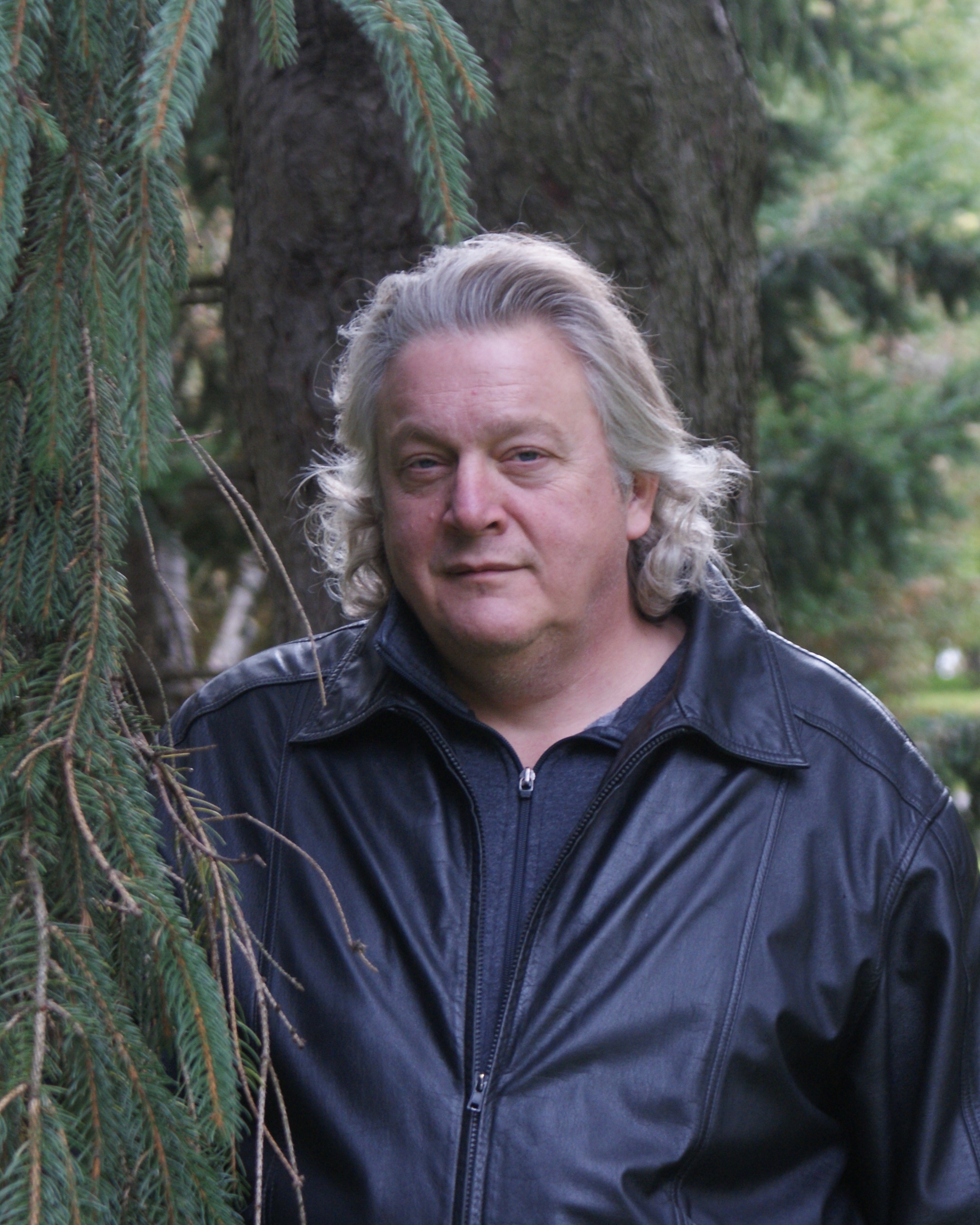
Guest Post by Hayden Trenholm

SONY DSCFor me, fiction is about a conversation we have with each other and with the world; science fiction is a conversation we have with the future.  No matter how far away in space and time, science fiction is in the realm of the possible – decisions that we take, individually and collectively, will either bring that future about or prevent it from happening.  Fantasy, on the other hand, is in the form of a wish, or even a dream, about worlds that never have and never could exist.  No decision I make can defeat Voldemort or destroy the One Ring.

More than that, science fiction relies on the laws and principles of science both for world building and for problem solving.  That means cause and effect, the conservation of matter and energy, measurability and certainty.  The laws of physics can’t be broken on a whim and mysterious and mystical “forces’ can’t be called on to save the day.  Star Trek (“I kenna break the laws o’ physics, Captain”) is science fiction; Star Wars (“May the Force be with you, Luke”) is fantasy.

So to write good SF you need a basic understanding of, and interest in, science.  Make an error in the science and someone – probably an editor but certainly a fan – will point it out to you.  If science bores you and fact-checking is an abomination, maybe writing science fiction is not for you.  If you feel your grade 11 chemistry doesn’t quite ground you enough, try some of the Writing Science Fiction Series books from Writers’ Digest.  Edited by people like Ben Bova (both a scientist and science fiction writer), these will give you lots of basic information on space travel or world-building.  Robert Zubrin has some good books on near-Earth space travel and Michio Kaku’s “Physics of the Impossible“ lays out the law of what can and cannot be accomplished – and when.Hayden Steel

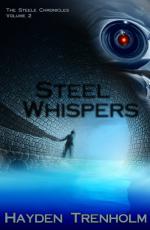
Having said that, one probably shouldn’t be dogmatic about it.  A lot of the fun in writing science fiction lies in exploring the gaps between what we do and don’t know.  In “The Steele Chronicles,” my trilogy of books from Bundoran Press, I read a lot about “junk DNA,’ genetic causality and the theory of mind-machine interfaces to ground my near-future police procedurals.  Discovering that there were several as yet unproven theories about the function of junk or inactive DNA, I was able to pick the one that best suited the story I wanted to tell.

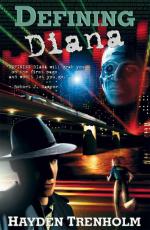
That’s the other thing to remember – science fiction is first and foremost fiction.  While the science background is critical, you still have to tell a good story with strong and interesting characters.  The story also has to be about something.  Defining Diana was, for me, about the nature of human identity: who we are and, more importantly, why are we who we are.  By addressing that theme, I could look at issues of choice and destiny – free will versus programming -in self-definition.

defining dianaThe choice of story is, of course, impacted by the genre.  Mystery novels have to have a mystery (usually a murder) as the core problem to be solved and romance has a broken relationship at its heart.  In science fiction, science and technology are more than simply background, they are central to the main conflict.  The main character may not be a scientist but the problem they face must be grounded in something that is essentially “scientific’ in nature.  Isaac Asimov used to say the way to tell if a story is science fiction is to remove the science from the story; if it’s still a story it wasn’t SF to begin with.

Of course, it isn’t all about physics.  As I already mentioned, my novels were mostly immersed in biology and theories of mind.  On the other hand, my short stories have often revolved around political or anthropological questions.  In my five Arakan universe stories, I wondered what power ideas – especially those imported from “alien societies’ – might have to change a culture.  In that case the alien society was human and the cultural element was music.  But, of course, what I was really talking about was how multiculturalism might change the way we live and the values we have.

There are, of course, many sub genres of science fiction, each with their own rules and regulations.  So-called “mundane’ SF demands stories confine themselves to known facts and well-grounded theories (remember: in science, theories are never proven, merely not disproven yet).  Post-singularity science fiction posits a point at which we can no longer predict the future because advances (usually in the area of artificial intelligence) have outstripped the ability of the human mind to understand them.  Space opera routinely permits faster-than-light travel without worrying too much about the physics that might be involved – though most writers try to give it some kind of scientific gloss involving black holes, anti-matter or wormholes.

Nonetheless, they all have those basic things I listed at the heart of the story – cause and effect, adherence to the basic laws of physics, and a reliance on reason and human action to get things done.  Even in the most pessimistic post-apocalyptic novels, where all our problems (environmental, political, economic) may have arisen from the misuse of technology, science fiction will still rely on science to find a way through, rather than falling back on a mystical return to nature or the power of prayer.

To learn more about my views on writing and other topics, visit my web-site at www.haydentrenholm.com or my blog at http://bundoransf.wordpress.com

Anime: Aren’t They Just Cartoons?

Guest Post by Stone Sanchez

The year is 1998. I’m sitting at home watching the latest airing of Power Rangers in Space, excited to see my favorite multicolored team of heroes take out the newest baddie on the block. Up until now, the draw of other shows has been meaningless and nothing has been able to take me away from the Power Rangers franchise that I may have been a little obsessed with. (If I’m honest with myself, I’m still a little obsessed with it.) Outside of mega titles like X-Men, Spiderman, and Superman: The Animated Series-shows that I only watched with some form of regularity-the Power Rangers franchise had me completely hooked.

Until that fateful day when my brother runs into our room just as the theme to Space is about to start and he changes the channel on me. All of a sudden I’m greeted by the image of what looks to be two aliens flying in front of the moon. The words “I wanna be the very best, that no one ever was” play in my ears … and from that moment my world was changed. I had just experienced Pokémon for the first time, and by extension, anime.

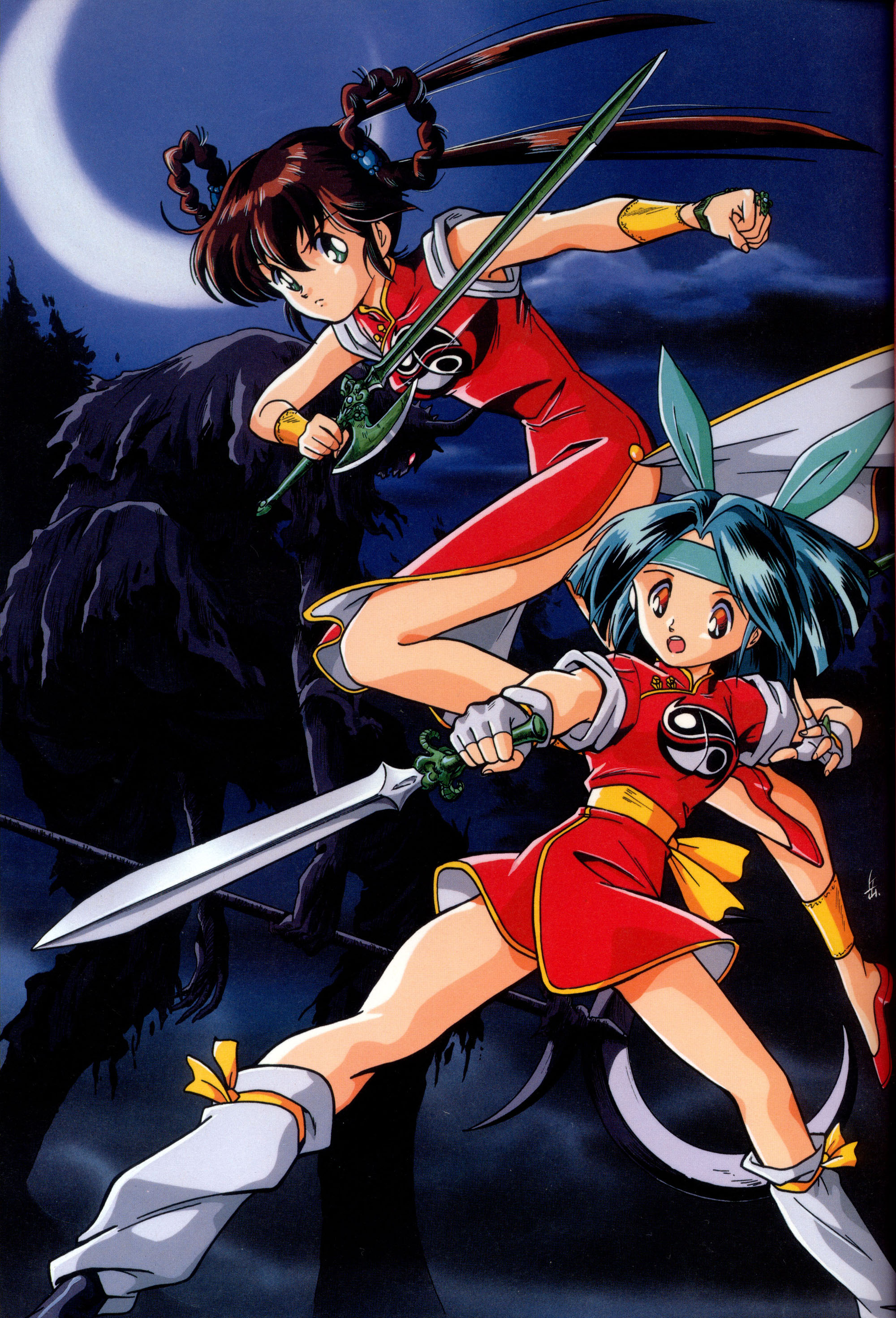
dhy_ya061 ANIMEThe word “anime” is usually mistaken to come from the word “Japanimation,” a word that was coined in the 1980s and commonly used to reference animated series made in Japan. This origin, while seemingly very possible, is inaccurate. Anime is actually the Japanese’s shortened word for the English word “animation.” In Japan, the term is used to describe any works that have been animated-be it from Japan or anywhere else. Outside of Japan, using the word anime is reserved and specified for Japanese Cel Animation only.

What is anime, though? What makes it different from any other regular Saturday morning cartoon? Absolutely everything! A major difference between anime and cartoons is in the art. While American art is very basic, usually putting just enough effort to make the characters recognizable, anime is very artistic and creative when it comes to the depiction and distinction of each character, depending on which stylized version of anime you watch. But the biggest is in story.

In Cartoons we only see kids deal with kid situations, and adults deal with adult situations. This line is skewered in anime. Case in point: Gundam Wing. Five teenagers ages 15-16 are sent to Earth from the Space Colonies to begin terrorist attacks on the unsuspecting OZ organization. In the fallout, these teens must deal with being hunted, hated, and targeted at every turn. Throughout the show they deal with emotional strain from constant war, being betrayed by the home they thought they were protecting, and become ostracized by the world.   Teen depictions in Cartoons are usually comedic while dealing with their issues. Even in the great American Cartoons like Avatar: The Last Airbender, tense situations are usually broken by a comedic gesture so that the tone of the show isn’t too heavy.

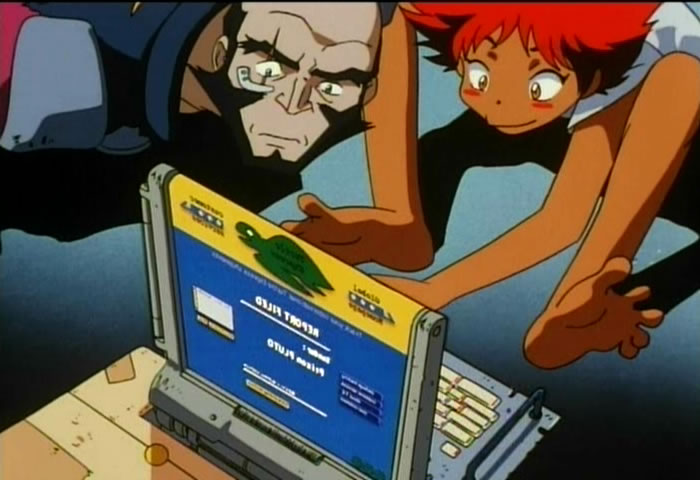
There are different ways anime can be categorized.  Luckily for us, the Japanese have given us several ways to do this:cb_ed0050 ANIME

  1. On one hand, it can be broken down anime by genre. You have your run of the mill action/adventure, horror, sci-fi, drama, progressive, and then one not so normal: game-based. This is used to denote animes that are based off a game. (Yu-gi-oh is a good example.)
  2. More specifically, you can categorize anime by demographic. The Japanese have specific names for each demographic.
  • Shojo: This brand denotes anime made for young girls from the ages of ten to eighteen. (Sailor Moon, Cardcaptor Sakura, Kaicho wa Maid-sama)
  • Shonen: This is usually targeted at male ages ten and up. There’s no age cap to seal that limit. (Dragon Ball Z, Naruto, Bleach)
  • Seinen: Targeted at males over the age of eighteen, Seinen is sometimes mistaken  for the Japanese Hentai category. In actuality, Seinen anime emphasizes storyline and character development instead of focusing on just the action and powers of the characters. Oftentimes, due to its concentration on plot and characters, Seinen may be confused with Shojo, but ultimately comes out as Seinen as the show is played out. (Ghost in the Shell, Hellsing, Akira)
  • Josei: Young women ages fifteen to forty-four are the target market. Unlike Shojo anime, this category is more restrained with its animation. There are no sparkling eyes, although the wispy features of the characters are kept. Unlike Shojo, Josei deals with a very realistic aspect of relationships and takes away the romanticized view of everything that Shojo usually contains. (Paradise Kiss, Loveless, Between the Sheets)
  1. One of the last ways to classify Anime is by the themes of the story:
  • Bishojo: Anime with beautiful girls. (The Melancholy of Haruhi Suzumiya, Sailor Moon, Lucky Star)
  • Bishonen: Anime with guys with pretty, girlish features. (Kaicho Wa Maid-Sama, This Ugly Yet Beautiful World, Getbackers)
  • Sentai: Anime with teams of fighters. On a reference note, Power Rangers was based off a Japanese show called “Super Sentai” (Dragon Ball Z, Yu Yu Hakusho, King of Fighters)
  • Mecha: Anime with giant robots in them. (Gundam, Robotech, Neon Genesis Evangelion)
  • Post-apocalyptic: Anime taking place after the world has already ended. (The Big O, Cassherin Sins, Desert Punk)
  • Maho Shojo: Anime based on magical girls. (Sailor Moon, Princess Tutu, Shugo Chara!)
  • Maho Shonen: Anime based on magic boys. (G Gundam, Nagima! D.N Angel)
  • Expertise: Sports, arts, cooking-related anime. (Whistle, Prince of Tennis, Kaleido Star )
  • Harem: One guy with a lot of female romances. (Tenchi Muyo, Shuffle, Love Hina)
  • Reverse Harem: Anime where a girl has romances with multiple guys. (Candy Candy, Fruits Basket, Princess Army: Wedding Combat)

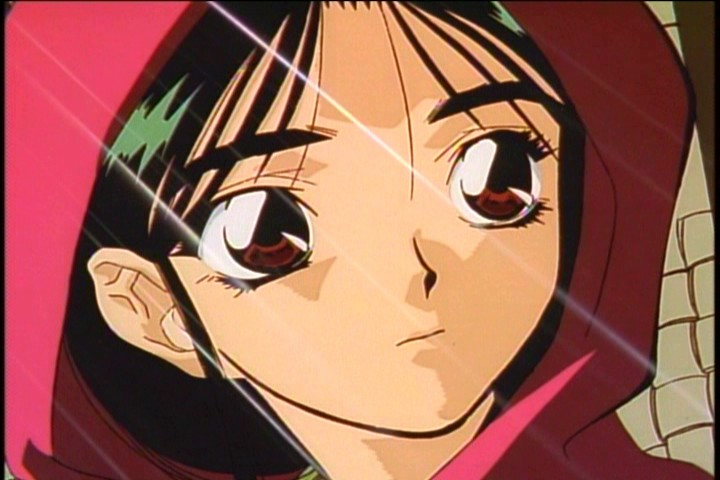
pp_rangiku002 ANIMEThese are the building blocks of anime. Some of these themes can be translated into anime’s counterpart, cartoons, but usually most cartoons aren’t willing to go as far as anime is. Liberties are taken with darker tones, risqué characters, and “grey area” subject matter. Whereas cartoons in America are specifically seen as things for kids to watch, with the exception of shows like South Park and Archer, anime in Japan has a categorization for every demographic and is not strictly seen as childish or immature.

Anime is a very broad subject, and this post barely scratches the surface. There are many differences between anime and cartoons and within anime itself. If you’ve never watched any anime before, do so. You may be surprised to find out you’re one of those “anime people” after all.

Here are my top picks: Cowboy Bebop, Gurren Lagann, Ghost in the Shell, Eden of the East, Clannad, Gundam 00 (I’m obsessed with Gundam), Desert Punk, Tenchi Muyo, Another, Yu-Yu Hakusho, The Big O, Samurai Champloo.

Stone Sanchez is an aspiring professional author that has been active in the writing community for the past two years. Currently Stone is associated with the Superstars Writing Seminars by recording, and managing the production of the seminars when they occur. He’s also worked with David Farland recording his workshops, and is currently the Director of Media Relations for JordanCon, the official Wheel of Time fan convention. Often referred to as the “kid” in a lot of circles, Stone is immensely happy that he can no longer be denied access places due to not being old enough.

Photos are courtesy of the website http://www.animegalleries.net/

The Elements of a Good Mystery

Guest Post by Gail Bowen

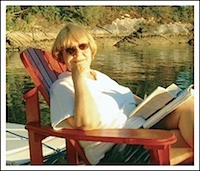
Bowen pic3Aesop’s tale of the fox and the lion is often credited with being the first mystery.  Remember the story of the King of the Beasts summoning the lesser animals into his den?  All the animals trot in happily. Only the wily fox refuses.  When the Lion asks the fox why he fails to do what his fellow creatures have done, the fox says simply: “I see many footprints going into your den, but none coming out.”

In this simple tale we see many of the elements of the mystery.

l.   Mysteries are plot-driven. They give readers a story.  There’s a fair play rule in mysteries. The reader must have equal opportunity with the detective for solving the mystery, and that means the reader is engaged. There’s a reason mysteries are called “page turners’.

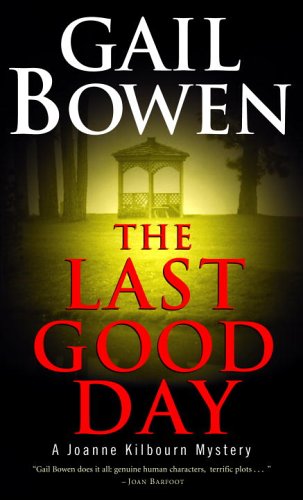
In a good mystery, there is always an “aha’ moment. When the Lion asks the fox why he doesn’t follow the example of theBowen cover 2 other animals, and the fox says, “I see many footprints going into your den, but none coming out,” that’s the fox’s and the reader’s “aha moment’.

2.  Mystery writers take the problem of good and evil seriously.  In the enduring popularity of Conan Doyle’s Sherlock Holmes series, we see good and evil personified in Sherlock Holmes and Professor James Moriarty.  When the two meet at the edge of the Reichenbach Falls and wrestle till they fall over the falls together, the arch villain plunging to his death and the detective miraculously escaping with his life, we see law triumphing over lawlessness and good triumphing over evil.

In mysteries, after a fair fight, good always wins and evil is punished.

3.  Mysteries are a very accommodating genre.  Mysteries offer something for everyone: police procedurals, forensics, cozies, character driven series; studies in aberrant psychology.  As long as the writer plays fair with the reader and some sort of rough justice is meted out at the end, the mystery writer can do pretty much what he or she wants.

4. People like series, and many mystery writers choose to create series.  

Peter Robinson and I were on Shelagh Rogers show last year talking about mysteries and whether we felt as a genre writers we were relegated to sit at the kids’ table at the great literary banquet. Peter and I have been writing for about the same amount of time -around twenty years-so we know something about publishing.  With a series, your backlist stays in print, your readers are loyal; they will forgive you a book that they don’t particularly care for and look forward eagerly to the next book.

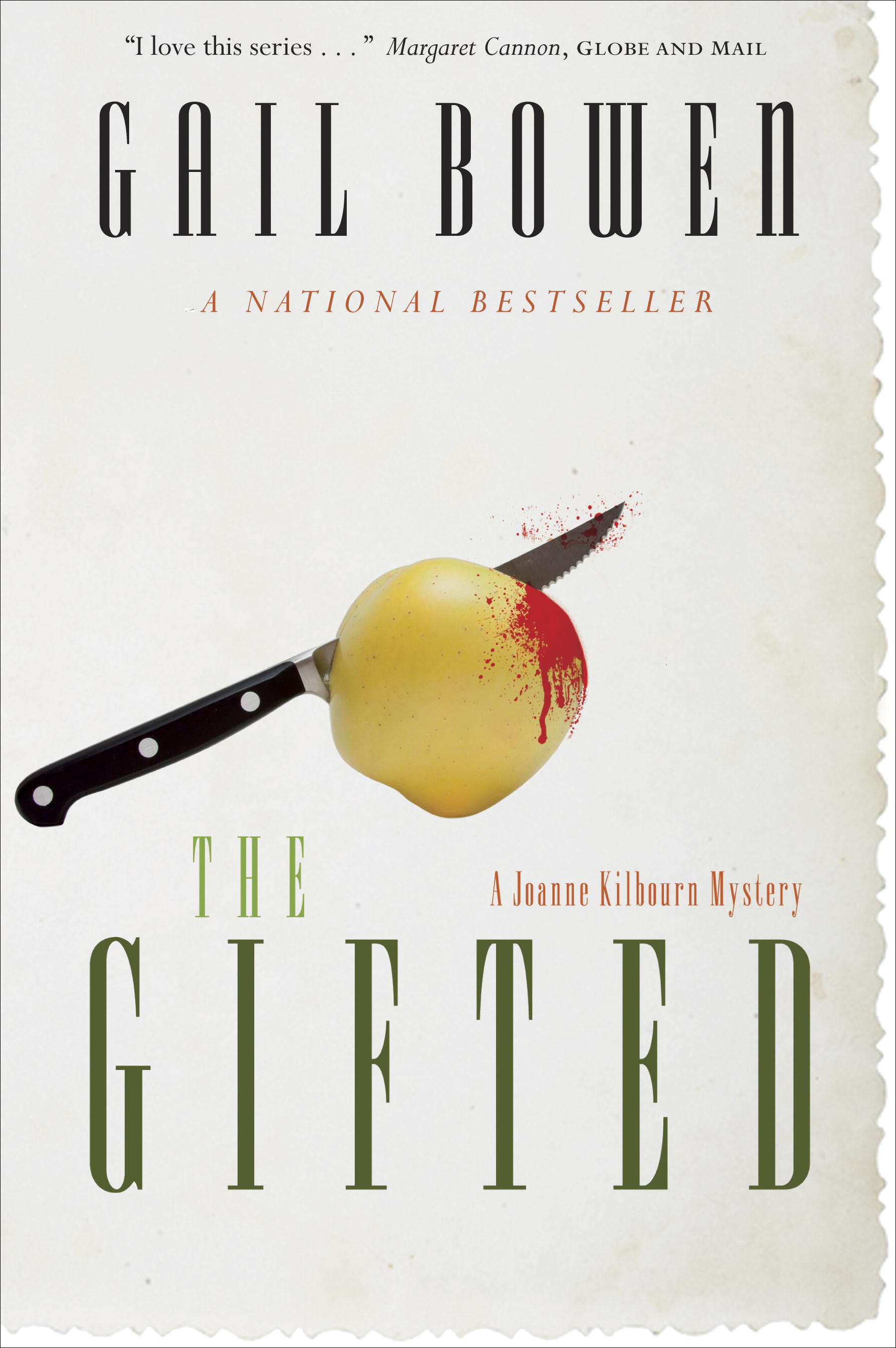
The Gifted Gail Bowen book jacketThere’s also the fact that in a stand-alone book, a writer gets maybe 380 pages to create a world.  The Gifted, which will be published in August 2013 is my 14th book, and that means I’ve had 5,000 pages in which to develop my protagonist Joanne Kilbourn-Shreve’s character.  Peter Robinson’s Inspector Banks has appeared in 19 novels. Rex Stout wrote 46 Nero Wolfe novels and an equal number of novellas. Conan Doyle wrote 4 Sherlock Holmes and 56 short stories. As you can see, writing a series is very rewarding for a writer.

5.  People are drawn to a protagonist and they become loyal to him or her.   Last year I had to write a piece about Buried Treasures in crime fiction for the Globe and Mail and I wrote about the Nero Wolfe cook-book. Nero Wolfe is my all-time favourite detective and I’m not alone in my affection for him. Not only is there a Nero Wolfe cookbook; there’s a brilliant biography of Nero Wolfe by the cultural historian Jacques Barzun and endless scholarly papers and squabbles.  The Nero Wolfe books are very well written.  In the Globe and Mail article I admitted to lusting after Nero Wolfe – “tireless talker endowed with a touch of Johnsonian genius”, a grower of orchids, a brilliant detective and a great and discerning expert on food.”

I’m not sure that anyone lusts after my protagonist Joanne Kilbourn-Shreve, but I do know that I get at least ten very nice emails a week from people who are reading and enjoying the series.

I didn’t set out to become a mystery writer. By training I’m an academic who spent her professional life teaching Canadian Literature and creative writing.   That said, I’m very glad the adventure of mystery writing came my way.

*****

Gail Bowen’s mystery book series features Joanne Kilbourn, a university professor, sometime political columnist, and a wife, mother and grandmother. Her 14th Joanne Kilbourn novel will be released in August 2013.  In June 2008, Reader’s Digest named Bowen “Canada’s Best Mystery Novelist’. To learn more about Gail’s books and to read her blog, visit her website http://gailbowen.com/ .