Tinkering with History: The Mainstay of Steampunk

Guest Post by Quincy Allen

Quincy 2Steampunk, at its purest and most basic, is anti-establishment fiction in a Victorian setting that adorns an adventurous stage with impossible gadgetry driven by steam, clockwork, aether and Tesla coils. Imagine 20,000 Leagues Under the Sea, Frankenstein or The Time Machine, but with more goggles, zeppelins, corsets and guns … oh, and the odd zombie, vampire or mad-scientist thrown in for good measure. But that’s just the textbook answer … or would be if a textbook on steampunk existed, anyway.

Commercially, steampunk is a growing sub-genre under the rather wide umbrella of science fiction and fantasy. It’s intriguing that steampunk as an aesthetic has been branching out into other genres, including romance, horror, paranormal and pure fantasy. Or is it the other way around? Is steampunk an underlying aesthetic or is it window dressing? Those questions are best left to the purists and the marketplace.

Most good steampunk literature has a strong sense of being part of real world history. It’s real history told with a twist … a change in the very fabric our knowledge that turns the impossibilities of steampunk into an alternate reality more compelling and vibrant than the history itself. The question is, how does a writer achieve this?

The answer? Research.

It would be foolish to suggest that every writer of every steampunk story researches actual events and then merely applies and alters them. There are many examples of researched and un-researched steampunk that are good reads and are commercially successful. However, a writer can increase the likelihood of both a good story and its success by delving into real history-even at a cursory level-and then playing with it as a god plays with the fabric of the universe. After all, truth frequently is stranger than fiction.

For me, it is critical to create a moment in time where my fictional history deviates from the real one. Doing so allows me to extrapolate from that moment in time and rationalize the existence of both magic and impossible technologies in a recognizable but alternate nineteenth century. Imagine a world where witches are as common as blacksmiths, the railroad was surpassed by zeppelin transports and fully functional artificial limbs are a reality, albeit an uncommon one. And all derived from a single change, a critical moment gone awry in the history of the Catholic Church.

The irony is that the altered moment I refer to-the assassination of Pope Gregory IX in 1227-is not even mentioned in the manuscript I’m currently editing. What is important is the  awareness of this “revisionist” history. Because of it, I understand the reason why witches were not exterminated. I know why the populace didn’t die off from The Plague and how technology flourished a hundred and fifty years too early. This awareness lends itself well to understanding the social, political, economic and cultural influences that shape characters and culture .

History is awash in a variety of extremely colorful characters that can give-with a little bit of research-a truly genuine and vibrant feel to an invented history. For example, while researching the American West of the 1870s, I discovered real people like Emperor Norton (yes, America had an Emperor in the nineteenth century) and Bloody Bill Anderson, who was a brutal and ruthless advocate of both slavery and the slaughter of anyone who believed otherwise. Both historical figures are in my manuscript, and they add both color and validity to what is a very alternate history.

I’m not suggesting that a writer of steampunk needs to be a historian. Far from it. However, steampunk authors owe it to their readers to be familiar in the aesthetic and at least some of the significant people and events of the time. An adventure story traversing Europe and the East Indies in the early nineteenth century should mention the East India Company or justify why it doesn’t exist. A story set in America in the 1860s should address the Civil War or eliminate the war completely. A steampunk story set in China during the Victorian period should mention British influences there or find a reasonable way of working around them.

In the west, we refer to the nineteenth century as the Victorian Era as a direct result of Queen Victoria and the British Empire’s influences. However, that period of human history was an exciting time all around the world. More and more steampunk is reaching out to the four corners of the Earth and exploring it with truly interesting explorations of world cultures.

Steampunk audiences understand the historical setting in one way or another. When you take pen in hand (or finger to keyboard) you’d best have a few ducks in a row. Not only will you be drawing upon actual history to invigorate your writing, you’ll be giving your readers easy markers and handholds to lock onto as you fiddle with the space-time continuum.
Quincy has been published in multiple anthologies, online and print magazines, as well as in one omnibus. His steampunk version of Rumpelstiltskin is under contract with Fairy Punk Studios, and he’s written for the Internet radio show RadioSteam.  His novel Chemical Burn-a finalist in the Rocky Mountain Writers Association Colorado Gold Writing Contest-was first published in June of 2012, and has been picked up by Fantastic Journeys Publishing.  His new novel Jake Lasater and the Blood Curse of Atheon, will be on sale this summer, and he’s writing an off-world steampunk-esque series.  You can follow his ongoing exploits on FaceBook and at www.quincyallen.com.

What Makes Good Horror?

Guest Post by Craig DiLouie

Craig DiLouie headshot-sm-1

I enjoy writing horror because it allows a writer to really stretch and go way beyond standard norms and reader comfort zones. But what makes a good horror story?

First, let’s define horror fiction. Wikipedia defines it as a genre of literature that is intended to “scare or startle readers by inducing feelings of horror and terror.”

In other words, it’s fiction that produces feelings associated with horror-what Merriam-Webster defines as “painful and intense fear, dread or dismay”-in the reader. The Horror Writers Association essentially agrees with this definition.

I do as well, though I would add that effective characterization is so important to achieving the goal that it should be part of the definition. Why? Horror is more likely to be realized by the reader when there is a character, with whom they can relate, experiencing it at the same time. In this way, certain characters in the story are intended to stand in for the reader.

Character is doubly important when one considers the fact horror is a very subjective emotion. Some of us find the sight of blood horrifying, while others don’t. Some of us tremble and sweat at the slightest turbulence on an airplane, while others barely notice it. If the author can put the reader in the protagonist’s shoes, they should experience feelings of horror through empathy even if they themselves don’t find the object of the protagonist’s horror that scary or dreadful.

Before we continue, we should probably ask the question: Why would anybody want to actually experience this? Horrorperf6.000x9.000.indd is, after all, horrifying.

In Thrill Seekers Thrive on The Scary, published on WebMD.com, Dr. Frank Farley, psychologist at Temple University, says people can satisfy their curiosity about and fascination with the frightening, the bizarre, the unusual, and make sense of it. Dr. Glenn Sparks, professor of communications at Perdue University, believes people have a basic need to seek out situations outside their comfort zone. In some cases, they want to confront danger in order to conquer it.

Then there are the physiological changes that occur when confronted by danger, which some people enjoy-the adrenaline rush, the pounding heartbeat, the sweaty hands. Says Farley, “There’s almost nothing else, including sex, that can match it in terms of the incredible sensory experience that the body is put through.”

That’s powerful stuff. So how do we “bottle” that in a book?

The basic structure of a horror story goes like this: You have the normal, introduce the horror element that disrupts the normal, and finish with the new normal.

Force some interesting people in a story to face the fantastic with high stakes, and you’ve got the setup for a thriller. Make the fantastic horrifying, and you’ve got horror. Make the horrifying life-threatening, and you have survival horror. Make the horrifying element a ghost, demon, etc., and you have supernatural horror. Make the horrifying element a serial killer who brutally slaughters his victims, and you have splatterpunk. Make the horrifying element be life-threatening to everybody at once, and you have the makings of apocalyptic horror. And so on.

Personally, my favorite kind of horror stories are apocalyptic. There are so many great stories that can be told in an end-of-the-world scenario. When well told, these stories can be stirring to the spirit as well as the intellect, particularly when horror is contrasted with hope.

So now we know what horror fiction is and why it’s sought out. But what makes a good horror story? The answer is deceptively simple. In short, a good horror story is a good story that happens to be in the horror genre.

I’m not trying to be cute here. Too often, writers put the horror element so far forward that other elements of the story that matter, particularly character, take a backseat. At all times, a good horror story will give us people we care about, engaging conflict and so on.

Story always comes first!

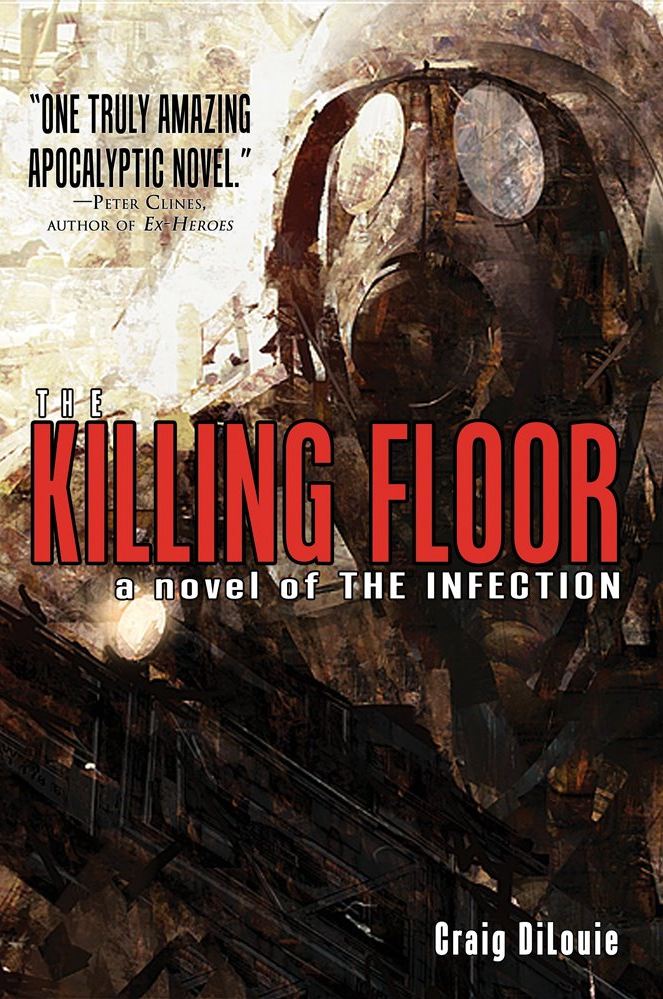
The Killing Floor by Craig DiLouieIn fact, with horror, getting the basic story elements right is even more vital because the horror element may be so fantastic it requires a greater suspension of disbelief and therefore a higher degree of grounding. The more the reader can empathize with the character’s subjective response to the horror element, the greater their shared feelings of fear and dread. The more richly rendered the setting, the more the monsters that populate will stand out. The greater the willing suspension of disbelief, the more likely the reader will confront the horror in your story, find it believable, and experience genuine feelings of horror. And so on.

In short, the greater the story, the greater the horror.

Now let’s talk about the horror element, which can be conveyed as elements that are internal or external, imaginary or real, supernatural or physical, atmospheric or in-the-flesh. This is where you can have a lot of fun and let your imagination soar. Is it a plague that changes behavior? A trusted pet that turns on a family? A serial killer stalking a couple in a remote motel? A nice, outgoing family man slowly becoming violently insane? Tentacled monsters freed from an underground cavern? Hordes of the cannibalistic dead? A sadistic summer camp counselor? A derelict house haunted by the spirits of its victims? How successful the novel is will depend on two things-first, how well your writing gets the reader to empathize with the characters’ horror, and two, how much the horror element resonates with their imagination.

Horror is still a young genre that has been largely neglected by the major bookstores. With the advent of eBooks, online retailers like Amazon are eating their lunch as literally thousands of titles are becoming available, many of them very good. As a result, there is still plenty of opportunity for writers to break in and make a name for themselves. Forget your preconceived notions of what horror fiction is-that it’s werewolves and vampires, that it’s Nightmare on Elm Street and Friday the 13th, or whatever else immediately comes to mind-and make it your own.

Most important is to tell a good story and have fun, and your reader will too!

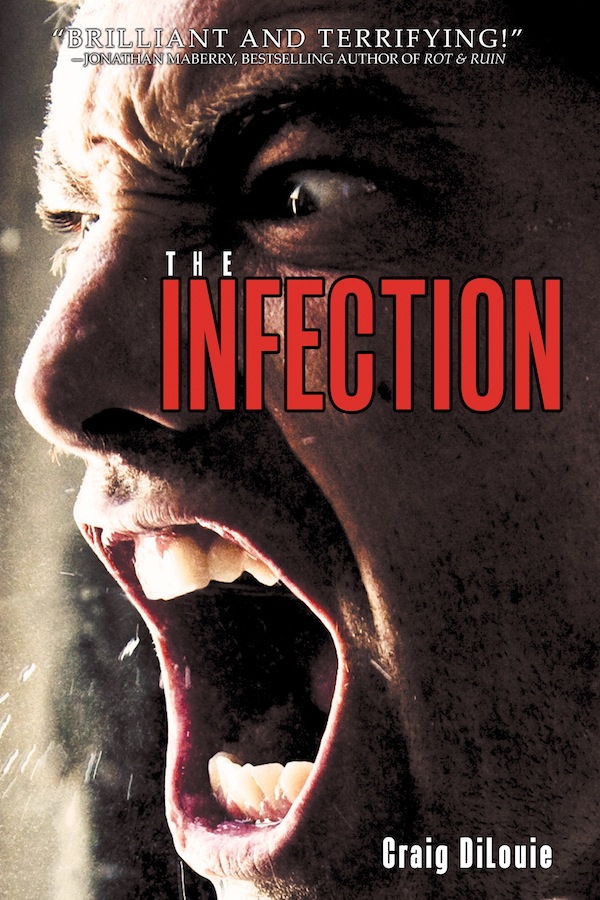
Craig DiLouie is the author of the apocalyptic horror novels Tooth and Nail, The Infection and The Killing Floor. His latest horror novel is in contract negotiations with a major publisher. He is an Active Member of the Horror Writers Association. For more information about Craig’s work, visit www.craigdilouie.com, where he blogs regularly about apocalyptic horror media.

Literary vs. Genre Fiction – What’s All the Fuss About?

Once upon a time, there was literature. That was it. Everything was just literature. At some point, stories became so varied that they branched into distinctive categories. Whether this was something brought on by readers gravitating to certain types of stories or publishers categorizing said stories to make it easier for readers to find, or some other reason all together, I don’t know. But, over the last hundred years, fiction split into the convenient labels we know today.

This split isn’t without its controversy, though, and has created a very real divide between what’s referred to as literary fiction and genre fiction. When most people think of the difference between the two, many think of overly-serious literary writers looking down at genre writers as hacks, while genre writers run off with all the money. Tempers can run high when it’s discussed. Stephen King famously almost got into a fist fight over the very idea that genre fiction was somehow of less value than literary fiction.

But, what’s the big deal, really? What are the actual differences between the two?

When I was in college I took a creative writing class, where the teacher asked us that very question. One of my fellow students, who was a literary writer, said that literary fiction was character driven, while genre fiction was plot driven. Now, anyone who reads Joe Abercrombie knows that’s a false assumption. Actually, that student was keying to something very real, he just didn’t recognize it for what it was. It has little to do with character and plot, really, and all to do with structure. Genre fiction is built on structure. Literary fiction isn’t.

We’ve mentioned using scriptwriting as a basis for writing novels more than once. Pyr editor, Lou Anders, talks about the Hollywood formula all the time. Why? Because the Hollywood structure works. Certain beats happen at certain moments, and the story resonates better for the audience. It works. Readers like the structure, and every genre has its own. Romance, for instance, is famous for its very strict story structure — and it’s the highest grossing genre of them all.

Literary fiction, on the other hand, has a more organic approach. It lacks the structure that makes genre fiction so easily digestible for readers. Funnily, my aforementioned writing instructor confessed that she was halfway through a story when she realized she didn’t have a story arch. That’s a problem few genre writers will ever have. But, one of the things this allows for literary fiction is experimentation. You get weird little stories that are all dialogue or written in stream of consciousness or told backwards. Playing with technique and form is much easier when you don’t have to worry about story beats hitting at a certain moment. For more adventurous readers, this is great, but, like I said before, people like structure, and this may be one of the big reasons genre fiction is more lucrative.

The other real difference between the two, has to do with subject matter. Literary fiction tends to be rooted in real life far more than genre fiction. Sometimes, a little too much. I’ve heard more than one person disparage literary fiction as depressing and oppressive. At the same time, it explores life in a way that genre structure won’t allow. The killer is usually found out in the end of a mystery. The hero usually beats the evil sorcerer in an epic fantasy. The boy usually gets the girl at the end of a romance. Literary fiction doesn’t flinch from the reality that life doesn’t always end well for the good guys, if there even are goods guys involved.

Genre fiction, on the other hand, is often thought of as escapist because it deals with situations that you won’t find in everyday life. Me, I think that’s an over simplification. In truth, all fiction is escapist, even if there are no spaceships or serial killers involved. Even if you read only literary fiction, you’re not reading your own life, so it’s still an escape. If it weren’t, it would be non-fiction.

So, are you one of those writer’s who stresses over the decision to write literary or genre fiction? The differences above are, of course, generalizations. There are lines blurred everywhere. There are plenty of experimental genre stories that look at real life, especially in Science Fiction. There’s plenty of fantastic elements in literary fiction, too. And anyone saying that genre fiction makes more money really needs to look at how much genre fiction there is out there to see how easily that wealth is swallowed by the sheer magnitude of product. Even if there are more readers, it’s no easier to make it big. Besides, literary fiction has Oprah Winfrey on its side. Neither path is a surefire path to financial freedom, but neither is a surefire path to destitution either.

To me, choosing between literary and genre fiction is like choosing between landscape and abstract painting. They both have their detractors and their supporters, but their creators are also both artists who follow a craft they love. Our art chooses us just as much as we choose it. We write what we write because that’s what we feel the need to do.

So, really, in the end, it doesn’t matter which side makes more money, does it? If you feel the need to write literary fiction, you won’t find any happiness writing techno-thrillers, and your readers won’t enjoy reading them, either. Stick with your passion, even if it means you’re still stuck at a day job. You’ll never go wrong.

Choosing A Genre or Mashing-Up Genres ““ What’s it All About?

 I read three well written novels novels recently and wasn’t sure what genre they belonged in. They were set in the future – one was set in a dystopian Calgary with some really cool cyborg people, another was set on Mars where people had the option of having their consciousness transferred into android bodies, and the third was set in another solar system with interstellar travel and neat technologies and alien beings. Science fiction seemed logical as they were all in the future, but their telling and basic elements were much more traditional.
defining diana
If mystery had a future-crime sub-genre, all would fit that category beautifully. Rob Sawyer’s Red Planet Blues has a delightful, laid back gum shoe detective. Defining Diana by Hayden Trenholm (see his blog on writing science fiction later this month) is a solid crime novel that’s gritty, hard and gruesome when it needs to be. K.A. Bedford’s Hydrogen Steel has a retired homicide inspector struggling to save humanity while she struggles to accept her own physical reality. These are three well-executed detective stories  marketed as science fiction.

The fact is, when we write, we use elements from several genres in our stories. Mystery in science fiction. Thriller in fantasy.  Romance in steampunk. The mash ups are as varied as the imagination! And yet, some work better than others. Why? The magic happens when the author understands the elements that make each genre unique. For example, a cozy mystery like Rex Stout’s adventures with Nero Wolfe, could have easily fallen into the annals of “literature’ as Stout deftly captures the voice of the time by using strong characters and a well-defined milieu. Yet, his stories are, first and foremost, mysteries and his novels are marketed as such.

ShanghaiSteam-110px-150dpi-C8In all four examples, it is each author’s ability to understand the genres they are mashing that gives their work depth and memorable voice. Most importantly, their writing is a joy to read as it pleases the intellect on many levels. Making it fun for the reader, transporting him to worlds he never dreamed of – that’s the true test of knowing your genre well and choosing mash-ups wisely. I recently had the privilege to edit Shanghai Steam , an anthology with a unique mash-up of steampunk and wuxia. Reading the submissions and editing the selected stories was fun because authors who understood the subtleties of both genres created distinct worlds, plots and characters. Fun, gripping, mind-blowing – that’s what it’s all about for writers and readers.

Do you choose to write in one specific genre or do you use a mash-up? Every novel has elements of several genres and the question is one of degree and desired market placement. Is it science fiction or mystery? That’s determined when you decide the character of your novel – what its unique voice will be. It’s no different than creating well-rounded, deep characters as was discussed in many of February’s posts. Frank Morin, in his post Complex Characters reminded us of Shrek thinking he is like an onion – layered. In his post Platonic Male-Female Relationships in Fiction (a.k.a. “The Glue”), Evan Braun compared the complexities of romance against friendship as he discussed how each creates a different dynamic in character interaction. What is your story’s dynamic? How will the  genres you choose relate to one another? Is your story more mystery or science fiction? Which genre will have the stronger voice? Like Shrek’s onion, how many layers deep will you go into each genre? What blend provides the best milieu for telling your story? How will your characters and your readers react? What will you choose?

March’s posts will help you better understand how each genre can give your story its unique voice and character. We’ll also have posts comparing genre writing to literature, choosing which genres to mash and how to market them, and there’ll also be a case for not worrying about any of it. There will be posts on specific genres including horror,  steampunk, fantasy, romance, science fiction and many others. What makes each genre unique? What makes it work?

Choose your story’s voice and character and have fun writing as you peel back the layers!

Let’s see now … Miss Marple in dystopian 2081? A western horror? Steampunk space opera? Romantic military SF? Historical fantasy thriller? Urban fantasy folktale? So many to choose from…