Feeling Tense: 2 of a 2-part series

Feeling Tense:  2 of a 2-part series

Part 2:  Third person

Third person omniscient

“Cora felt uneasy as she stepped into the cave’s gaping maw.  Tina, on the other hand, was thrilled at the opportunity to explore.”

The narrator is God, looking down on Her characters.  Since the narrator is omniscient, the writer has the freedom to reveal what any character is feeling, thinking, or doing, at any time.  If characters are keeping secrets from one another, the omniscient narrator knows, and can share those secrets with the readers.  If a storyline is complex, an omniscient narrator can make sure the readers find out what they need to know to follow the story.

This technique has its drawbacks.  Third person makes it easy for the writer to preach:  to tell the readers how they should feel about the characters, or whether a character’s decision was “right” or “good,” instead of letting the readers draw their own conclusions about the characters’ thoughts and actions.  It is also somewhat impersonal in that the characters are held at a certain remove from the reader (we’re watching them, rather than seeing through their eyes);  a novelist wants to avoid the dry tone of a history book.

One of my English professors once suggested to me that the narrator was also a “character” of sorts.  The narrator affects the reader’s interpretation of the story’s events by the use of judgmental language–descriptions can include value judgments about characters or actions–and by describing certain events in detail while glossing over others.  The omniscient narrator may not be a neutral one.  When writing this tense, be aware that how you describe things, and what you choose to dwell on or leave out, may skew the way your readers look at your characters and plot.


Tight third person

“Cora looked around the inside of the cave, shivering in the disgusting dampness, wishing she was anywhere but here.  She shot a glance at Tina, hoping to ask if they could leave, but Tina was too busy gawking at the cave’s ceiling.”

If first person is a view from behind the narrator’s eyes, and standard third person is the God’s-eye view, tight third person can be described as a view over the narrator’s shoulder.  In the above example, although it is third person, since it is seen from Cora’s viewpoint, she does not know that Tina likes the cave.  All she knows is that Tina seems to want to look around, while all she cares about is getting out as soon as she can.  Similarly, while the omniscient point of view allows the narrator to outright tell the reader that Tina’s excited to do some exploring, the tight third person viewpoint requires the narrator to drop hints which will allow the readers to guess at Tina’s mindset, whether or not Cora ever figures it out.

From Tina’s point of view, this same scene might look like this:

“Tina looked around the inside of the cave, fascinated by the beautiful limestone stalactites tumbling from the ceiling.  Unfortunately, Cora didn’t seem as entranced.  Tina couldn’t imagine why not, but she wasn’t going to let her friend’s reluctance get in her way.”

Is the cave disgusting, or beautiful?  In this case, it very much depends on which character is doing the looking.

In real life, different people might have different interpretations of the same event.  Tight third person also allows for the narrator to get right inside the thoughts and feelings of his characters, but also provides the possibility of showing multiple points of view.  This viewpoint is tricky, since the “narrator as character” is muted, and it is imperative that the writer describe events in a manner consistent with the beliefs of the character, as opposed to colouring them with her own experiences.  It can be uncomfortable to see through the eyes of a villainous character-a bigot, a thug or a self-serving sleazeball-and present their point of view as rational, even natural.  However, it allows for a fascinating insight into the way different characters think.

It’s Finished… or Is It?

We’ve all done it. We finish our manuscript, think we’ve done our self-editing, followed submission guidelines, we hit Send, and then…oops. We should have done__________.

checklist

I had a completely different post written out for today. One with lots of links to books, and workshops, and what to do and not to do, and it sounded patronizing–not the customer kind, but the looking down your nose kind. I mean, let’s be real. I think I’m a good writer, maybe even a great writer someday, but I’m no editor. Every time I go to send a query, send out my next novel, or write up a series synopses, I think I’m going to hyperventilate. Why? Because, I almost always forget something. I have an editing checklist, but it’s changed over the last couple of years, improved, and yet I’m realizing right now, I’ve never actually updated it. Most of the checklist is in my head and for me, that’s not the safest nor the most reliable location. So for my sake, and I hope this helps someone else, here’s a revised self-editing checklist. This is my list for end-of-the-line editing, not the content editing or even the full line-editing list. Maybe we can do those another time, but it’ll be a much longer post.

Basic Formatting:

  • One-inch margins
  • 12-pt Times New Roman font
  • Double-spaced
  • No spaces before or after paragraphs (check to be sure)
  • first-line indent
  • Header with last name/title/page #
  • Correct title page with contact information, Word count, and title done correctly
  • Chapter Heading one-third down the page with page breaks between chapters (but no blank pages)

My Particular problems:

  • No extra spaces between words/before paragraphs
  • Search and replace or delete over-used favorite words, like “just”
  • Check for improper usage of past and past-perfect tense.  (This became an issue when I read a lot of YA books with this problem, so now I especially check to make sure it doesn’t seep into my own writing–Thank you David Farland for pointing this out.)

Problems to watch for, learned from David Farland’s workshops:

  • forward and toward, not forwards and towards (That’s American English vs. British English)
  • Check usage of  “and, then, finally, felt, saw, look, that”  Get rid of them whenever possible
  • Use spell-check
  • Check “-ly” adverbs–There should be few, if any
  • Have I read the manuscript out loud, at least once?
  • Did I change the font and read the manuscript in order to catch less-noticeable errors?

And a few extra:

  • A basic spell-check
  • Re-read the publisher’s or agent’s specific requirements
  • Include appropriate letters (query, cover letter, synopsis)
  • correct postage for snail mail
  • proper formatting for electronic submissions
  • If I cut and pasted from another submission, change editor/agent name, word count, work’s title, name of magazine/agency, and all other details.

And NOW, it might be ready. This seems like a lot, but I think I’ve forgotten almost all the points on this list, or have almost forgotten them, at least once when sending to agents and publishers. I wish I’d put this together years ago, but then I don’t think I knew half the items on this list years ago. I hope this helps someone, and I’d love to add anything I’ve forgotten, so if you think of something please leave a comment.

Happy Writing!


The Fictorians Have Been Busy!

Contributing to the Fictorian Era represents a very small portion of my continued efforts to further my writing career, albeit it’s an effort I can get pretty passionate about. Like the rest of our regular bloggers, I am committed to growing that career and getting my work out into the world-and of course, the market.

Some of us have been serious about this pursuit for many years, while others have begun the endeavor more recently, but we’ve all made tremendous progress. Today’s post is dedicated to showcasing the work we have collectively sold or published in the last two years.

 *          *          *

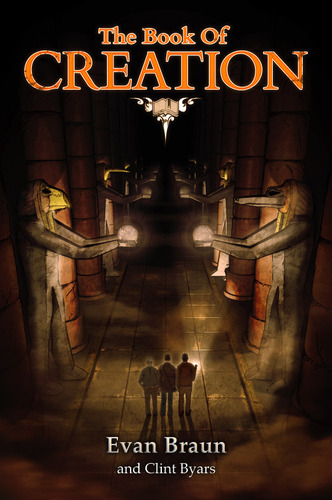
Evan Braun. I’ll BookofCreationstart with me. In May 2012, my debut novel was published through a small press in Canada. Called The Book of Creation, it is the first in a three-volume adventure series in the vein of Indiana Jones, with a bit of Da Vinci Code mysticism thrown in for good measure. I wrote a piece about the release of the book last year.

The Book of Creation can be purchased here. The Kindle version is currently on sale for just 99 cents! It is also available on the Nook as well as the book’s official website. The second volume in the series, The City of Darkness, is coming out later this year. Details will be announced right here at the Fictorian Era, so stayed tuned.

David Carrico. In the last few years, David has sold four short stories and one non-fiction piece to The Grantville Gazette, an online magazine featuring stories and articles about the inhabitants of the world of 1632, the first novel in a long-running series by bestselling author Eric Flint. The first of the stories is “Evening of the Day,” followed by three stories co-written with Enrico Toro-“Euterpe, Part 5,” “Cadence,” and “The Duelist.” He also wrote the non-fiction “After the Ring.”

In addition, anotherTheDevilsOpera of his stories, “Suite for Four Hands,” appeared in Grantville Gazette VI, an anthology published by Eric Flint and published by Baen Books.

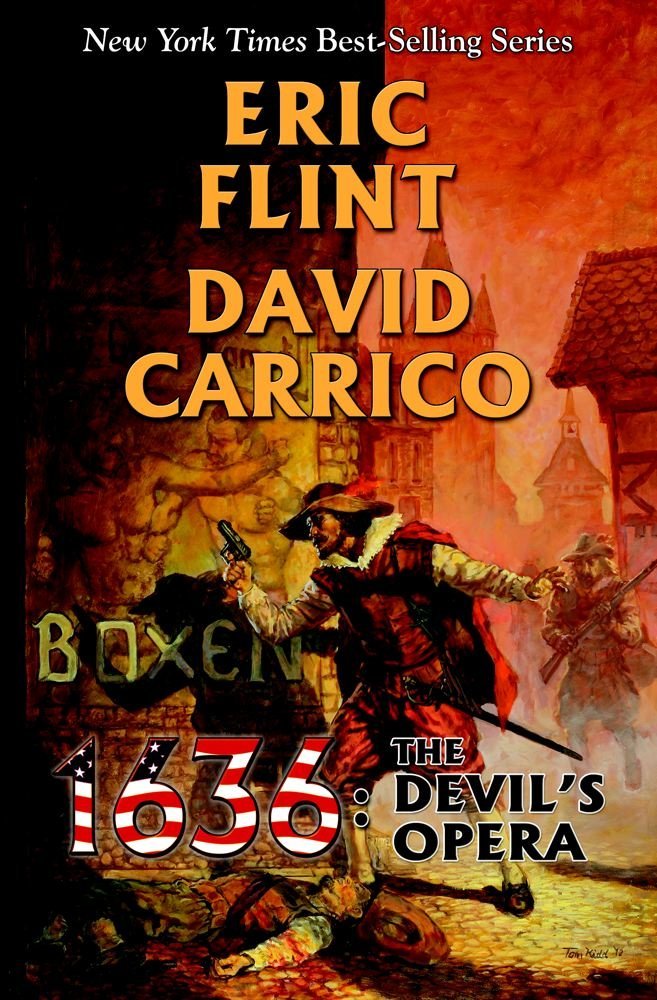
Most importantly, David has recently teamed up with Eric Flint to co-write one of the official entries in the 1632 series. This new novel, coming out in October 2013, is entitled 1636: The Devil’s Opera. In case you missed it, David recently wrote a post about his opportunity to work directly with one of the most talented writers in the industry. Another post on this collaboration is coming later this month.

1632: The Devil’s Opera can he preordered here.

Colette Black. Colette specializes in young adult fantasy, and has also made several sales. Credited as C.M. Vernon, her short story “Beneath the Skin” appeared in Women Writing the Weird. More recently, she received an honorable mention in the prestigious Writers of the Future contest for her 4th Quarter 2012 entry. She also won the CopperCon 32 short story contest with “Kairo’s Opportunity.”

Finally, Colette’s short story “Demon River” is forthcoming this month in White Cat Publishing’s biannual anthology magazine, Denizens of Darkness. It will be available to purchase here.

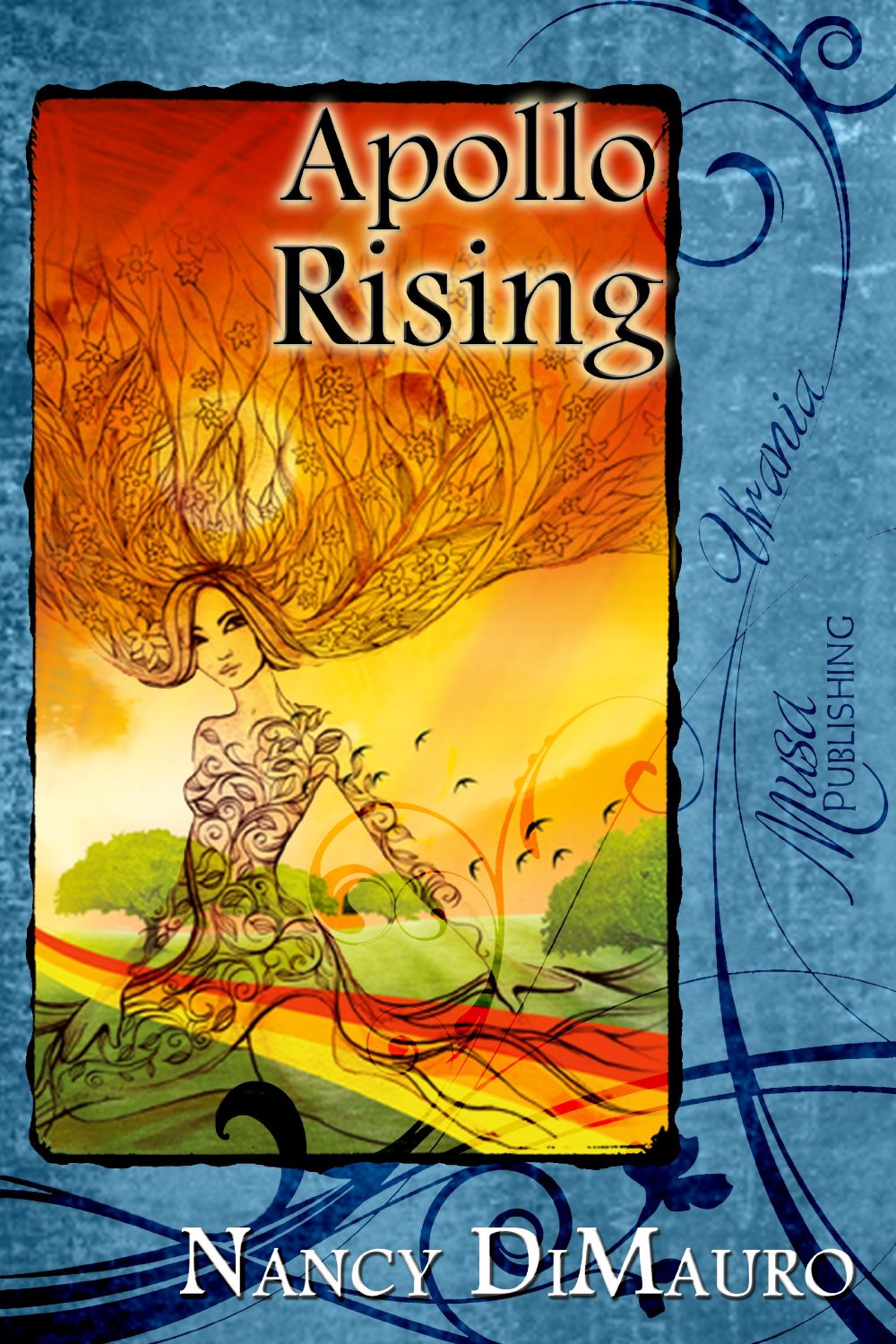
Nancy DiMauroApolloRising. Nancy’s debut novella, Apollo Rising, was released by Musa Publishing last September. The story combines romance with Greek mythology. It can be purchased here. She has also released a couple of short story collections, including Paths Less Traveled and Shots at Redemption, both of which are available as $2.99 ebooks. She also contributed to an anthology called Jack Gorman Got Cut by a Girl. These are Amazon links, but note that the books are also available through Musa Publishing’s online store and Barnes & Noble’s Nook Book Store.

Nancy also contributed to Doghorn Publishing’s Women Writing the Weird, along with fellow Fictorian Colette Black.

Mary Pletsch. Mary is still just getting started, but she recently sold her first short story to a forthcoming anthology. Unfortunately, the details of the anthology haven’t yet been released from the publisher. Rest assured, Mary will be writing a post later this year with all the info. Stay tuned!

Joshua Essoe. Joshua’s foray into publishing began a few years ago when he began working with acclaimed fantasy author David Farland on his award-winning novel, Nightingale. For more information about his successful editing business, check out his website. You’ll find an impressive gallery there of all his edited works which have gone on to be published.

In addition to his editing, Joshua has pulled in two honorable mentions for stories submitted to the Writers of the Future contest. His writing has also appeared on Grammar Girl’s Quick and Dirty Tips for Better Writing.

Brandon MDarkTree. Lindsay. Brandon has been actively self-publishing short stories leading up the released of his forthcoming debut novel, The Born Sword. So far the stories include Dark Tree and an anthology entitled The Clans. The provided links take you to the Kindle Store, but Brandon’s works are available across multiple platforms, including Barnes and Noble, Sony, and Kobo. Links can be found at his website.

 *          *          *

This is not an exhaustive list. There are many other books that are coming out soon, as a number of our contributors are working closely with well-respected agents. We are coming out with new material all the time, so make sure to check back here often, as you will see publishing announcements and articles about our writing processes.

Well, readers, now that you know what we are up to, do you have any exciting projects of your own you’d like to share with us? Feel free to discuss them in the comments section.

Tune in tomorrow, when we kick off our third year with a month of posts from true professionals. Throughout April, we’ll be getting people from different fields, from editors to illustrators, to talk about the process of collaborating with authors on manuscripts.

Quotable Moments, Part Two

The parade of quotes continues! Quotation Marks2If you enjoyed your cup o’ tea or genre cookie in Part One, check out the following snippets from more of our very best guest posts. Once again, we’ve got some great authors who have shared not only their insights, but an awkward moment or two-even hate mail! I cringe at the thought.

Don’t forget to come back tomorrow, when we’ll be talking about the exciting recent fiction releases from our very own regular Fictorian contributors. Until then, click a few links!

*          *          *

Because I DIDN’T say yes to what seemed a sure thing and reasonably easy money, I had to find another way to raise funds… The struggle turned into prosperity, because my choices never wavered. That’s how my synchronicity works. There’s no elusive pattern that creates success; it’s the benefit of following a straight line. (James A. Owen: How Synchronicity Works (for Me))

Yes, I said it. We experienced old-timers have a huge advantage. We have taken the years and decades to learn how to write better stories and we are all still working to learn… That’s right. Shocking as it may seem, writing better novels and stories-stories that fans want to read-makes us better known. It is not promotion or some silly trick. We sell more because we write better stories. It really is that simple. (Dean Wesley Smith: Stop Being in a Hurry)

With a series, your backlist stays in print, your readers are loyal; they will forgive you a book that they don’t particularly care for and look forward eagerly to the next book. People are drawn to a protagonist and they become loyal to him or her. (Gail Bowen, The Elements of a Good Mystery)

All fantasy readers, I would say, expect and desire the extraordinary in their fiction. They want not only the well-drawn characters, coherent plots, strong emotions, vivid descriptions, and insight into the human condition they could get from non-fantastic literature, they also want a “sense of wonder”-an experience of something outside the mundane world. (David D. Levine, The Wonder of Fantasy)

Rhythm may be obvious in a poem and not so obvious when it comes to fiction. How do you hear the rhythm when writing fiction? The same way one does when writing poetry. Read the piece out loud. Get into the habit of doing this. Look for the ebb and flow. If you do, it will help to carry the reader away on your words. (Bob Stallworthy, What Can a Poet Say to a Fiction Writer About Writing?)

Jump. Stop staring at the blank page, stop taking in the dizzying height and jump. When you first open the blank page, jump into writing as fast as you can. When I first start writing in the morning, I put my hands on the keyboard and start typing whatever comes into my head, (Rebecca Shelley: Facing the Blank Page)

There’s a lot of difference between traditional publishing, electronic publishing, and self-publishing… So in order to avoid trouble down the line, it’s important for an author to self-represent correctly-and, more importantly, to use the different avenues in publishing wisely, to build a foundation for a writing career. (Celina Summers: Different Paths to Publishing)

Today’s readers would be horrified at “real” history-its filth, superstition, disease, and cost in terms of human suffering… genre fiction, set in brutal times or places may not be popular unless filtered through modern sensibilities and made more palatable. (Barbara Galler-Smith, A History Lover’s Thoughts on Historical Research)

An agent must be organized, intelligent, multi-tasking, a good negotiator, have excellent time management skills, love books, know marketing and sales and be well versed in the mechanics of writing/storytelling/character development/plot/pacing and social media. He or she must also be relentless in keeping up with developments in publishing contracts, editorial taste and digital publishing. (Laurie McLean: Literary Agents in the New Publishing Era)

There is a perception among writers that tie-in books-that is to say books that are based in a universe created by someone other than the writer-are of low quality and reside in a kind of literary ghetto, … But these books can often add depth to a beloved universe… (Jordan Ellinger: Coming Up in the Trenches)

Build relationships so people begin to recognize your name. If the first post I see from you is promoting your book, all I will remember when I see your name again is that you only care about promoting yourself. (Mignon Fogarty: Social Media Mistakes That Make You Look Like a Newbie)

I think if people are looking to appeal to the widest YA audience, they need to be careful. You want your readers to be able to carry your books around like their latest obsession, which will grow your audience, instead of hiding it in a backpack where new readers will never see it. It think that’s where BEAUTIFUL CREATURES got it right. Those books were show-off-gorgeous… (L.L. Muir, YA Romance: Niche Within a Genre)

You may or may not have seen this piece of advice floating around: those who can be encouraged to quit writing, should be encouraged to quit. (Brad R. Torgersen: On Not Quitting)

You only need to post what you want people to see, but if you post nothing personal, then people may not engage you. Today, people want to know who they are talking to. If you are interesting and engaging there’s a good chance your social media profile will be checked out. If you post nothing about what you do or how to reach you, people will move on to the next person. (Brian Hades: Are You in the Business of Being YOU?)

While the past was historic, the present is amazing, and the future? Well, the future is anything you can imagine. So, don’t be afraid to leap into a unique setting. A line from one of mine, “Every time the old grey cat meowed, Matilda T. Bartholomew was transported fifty five seconds into the future. It wasn’t until he purred that she could restore her missing time, and PG Grey tips was a very crabby cat.” (Julie Ann Avila, Once Upon a Fairy Tale)