 Anyone who spends enough time talking to me about books knows that the books that really blow me away are those that show me something I’ve never seen before. They tend to be a little (or a lot) weird and while they often enjoy a cult following, their oddness keeps them away from mainstream success.
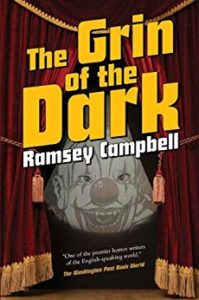
I can’t remember what convinced me to pick up The Grin of Dark, by Ramsey Campbell, but it quickly wormed its way into my consciousness. The book centers on Simon, a disgraced film critic determined to win back his pride–and, he hopes, the approval of his girlfriend’s parents–by writing a critically successful biography of Tubby Thackeray, the world’s greatest comedian during the silent film era, now relegated to barely a footnote.
It doesn’t sound like much, right? But though it may not sound like it from the description above, this book is a deeply unsettling work of horror. In his quest to uncover Tubby Thackeray’s history (did I mention Tubby was a clown?), he discovers fragmented accounts of people literally laughing themselves to death at his live performances. Bits of film Simon watches leave him deeply disturbed. It becomes apparent to the reader, if not to Simon, that Tubby’s history has been erased for a reason.
In his research online, Simon runs afoul of a troll whose typo-ridden posts challenge every point he tries to make (about ten years old now, the book’s use of the internet is dated in some ways but still perfectly relevant in others). As he pours himself deeper into his research, Simon begins experiencing strange sounds and sensations. He begins misspeaking words, sometimes the same words that his troll-nemesis does in his antagonistic posts online. He garbles sentences in ways that will maximally offend those he is speaking to, even his closest loved ones. It’s as if some force or entity is gaslighting him, scrambling his perceptions while convincing him that things he was previously sure of never happened. It’s all deeply creepy, and that’s before the typos begin appearing in the narration of the book themselves.
It happens slowly at first, so slowly that I assumed the first few were honest mistakes that slipped through editing. Regrettable, but it happens. Yet as Simon’s paranoia mounts and his behavior grows more erratic, mistakes trickle into the narration with greater frequency. Every face Simon glimpses in the street is suddenly hostile, every comment pregnant with hidden animosity. He is persecuted from every side, the whole world out to get him. Simon is being driven insane by a darkly comedic force of great malice–or maybe by his own crippling sense of inadequacy–and the book makes the reader feel that shattering of reality with disquieting power.
As Simon’s life unravels around him, the world makes less and less sense. He can’t believe anything he sees or hears. This is a book that will stick with you long after you read it. And now I’ll recount a little anecdote to you. I pulled the book down off my shelf to reference in writing this post. I went to look up some of the typos I wrote about above, hoping to quote a few to show you what I meant.
I couldn’t find any for the longest time. Despite having read the book twice, I was genuinely starting to wonder if I’d imagined them, so much so that it was a huge relief when I finally did find one. I’m… going to put the book back on the shelf now.
About the Author: Gregory D. Little Rocket scientist by day, fantasy and science fiction author by night, Gregory D. Little began his writing career in high school when he and his friend wrote Star Wars fanfic before it was cool, passing a notebook around between (all right, during) classes. His first novel, Unwilling Souls, is available now from ebook retailers and trade paperback through Amazon.com. His short fiction can be found in The Colored Lens, A Game of Horns: A Red Unicorn Anthology, and Dragon Writers: An Anthology. He lives in Virginia with his wife and their yellow lab.
You can reach him at his website (www.gregorydlittle.com), his Twitter handle (@litgreg) or at his Author Page on Facebook.
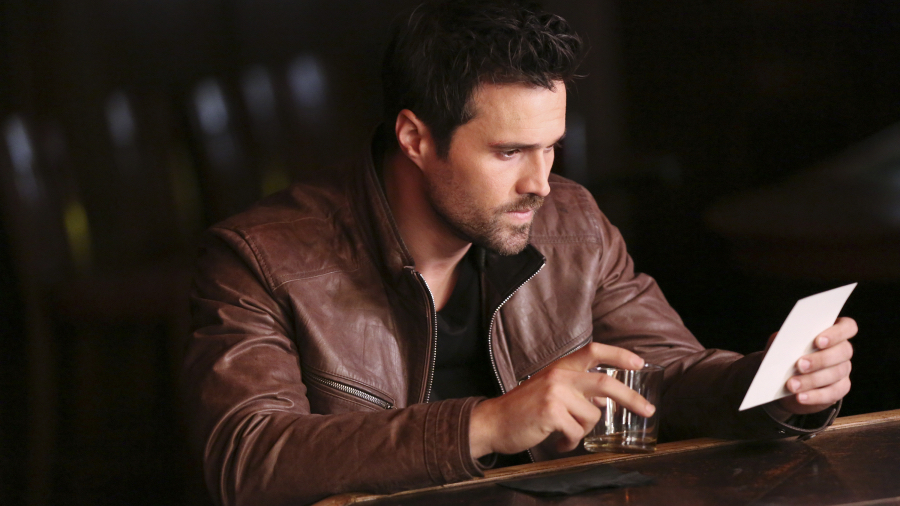 For all of you “Agents of Shield” fans, I think you’ll remember that wrench in your gut when you realized, but didn’t want to admit, that Grant Ward was Hydra. Not only was he Hydra, but he was also quite psycho. Everyone’s favorite character started betraying and killing all of his friends. Except for the recently acquired girlfriend, whom he creepily stalked.
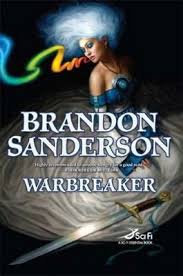 r not effect his own goals or must further them in some way. He can save his friend’s life, it can seem that it’s because he legitimately cares, and we can find out later that it was only because the backstabber needed information. Besides Grant Ward in Agents of Shield, another great example is in Brandon Sanderson’s Warbreaker. (spoiler alert) Throughout the entire novel, Siri finds in Bluefingers a confidante she can trust, until the very end when he and the Pahn Kahl people turn against her and the kingdom. He was the one person she thought she could trust and with that paradigm shift is a plot twist that changes everything.
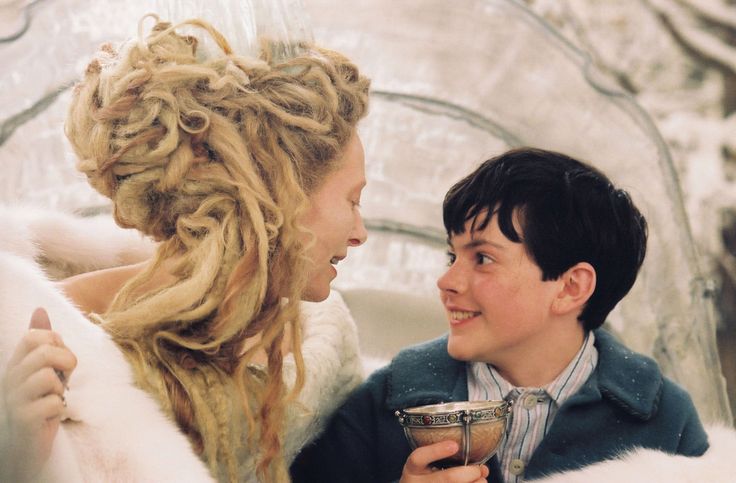 ueen in The Lion, the Witch, and the Wardrobe? We see his betrayal coming, but his poor siblings have no idea until he’s gone. We can unfold the tragedy with carefully placed clues that the reader puts together piece by piece, gradually discerning the awful news that they hate to admit may be true, like in the famed Narnia series. We can also slam the reader with the betrayal for greater impact, putting them suddenly on the edge of their seats as they wait for the protagonist to find out. Either way works and I think the best choice is whichever one fits with the flavor of your book. Is it wrought with mystery so the betrayal is one of many factors or is it a book of many twists, turns, and tragedies where this can be one more layer on the cake?
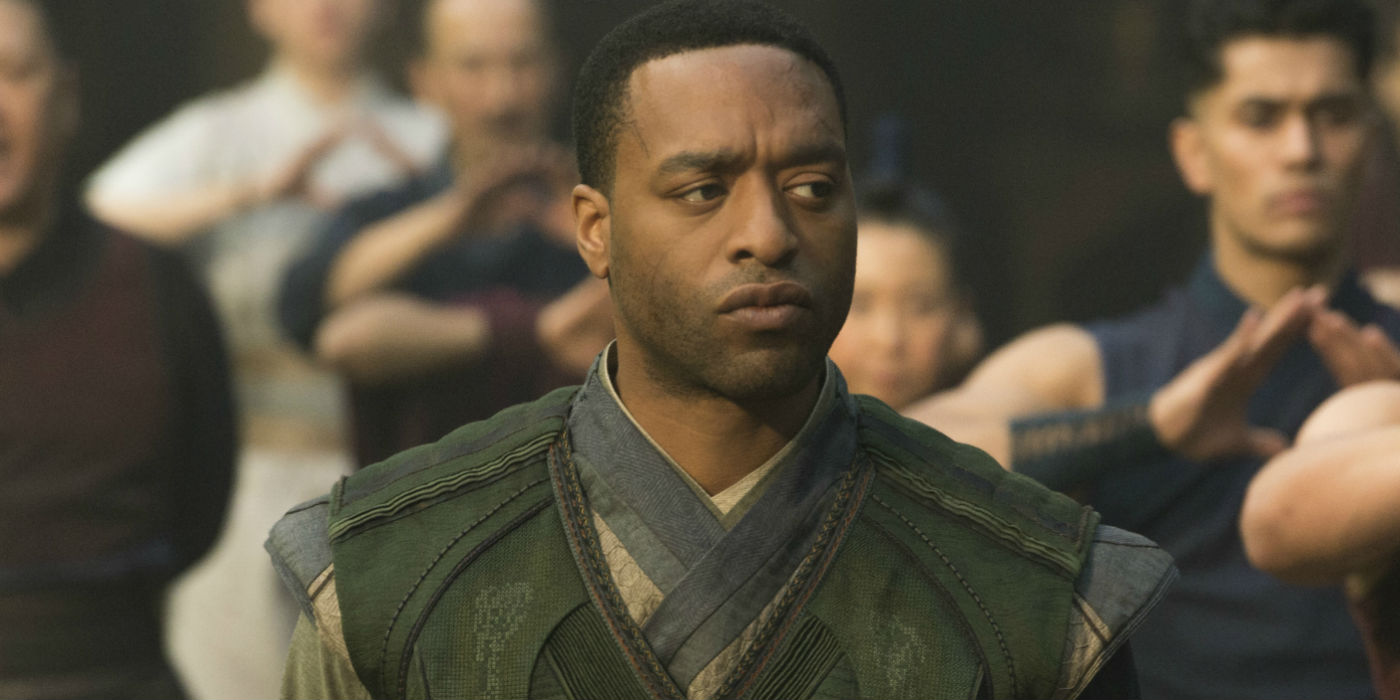 es for him. Mordo’s negative reaction when he discovers their leader has been using forbidden magic all along is a sign that not all is well. Mordo seems to come around, helping Doctor Strange save the world, and it’s not certain what Mordo will do until the moment comes. Even Mordo doesn’t seem certain what he’ll do. And then he turns his back on his friends and becomes the next super-villain. If we hadn’t already known that Anakin becomes Darth Vader, we might have been on the edge of our seats wondering if he’d really turn to the dark side or come to his senses. Because we do know, it becomes an example for the scenario above. We know it will happen, but how and when is the question. I think the unsure betrayer is one of the most compelling and heart-wrenching scenarios in fiction. It gives our protagonist’s friend a great sense of depth as they struggle with the decision. This one is also hard to pull off well, because we must show those forces of good and evil push and pull in a side character while still keeping the protagonist as the focus. Done well, it’s quite powerful.
 Consider as an example the action/adventure film John Wick. The introduction and inciting incident occur in the first fifteen minutes of the movie and the climax occurs at roughly one hour and fifteen minutes. Taken at a very high level, what happens during the hour between those two points? First, there is a period of milieu and character work to establish the character of John Wick and the rest of the world. Then there is a beating delivered by the big bad and the big bad’s first try/fail cycle to resolve the issue without violence. This is followed by a gun fight, a short period of world exploration, a gun fight, a brief pause for recovery, a fist fight, a briefer pause for a few wise cracks, a gun fight, a yet briefer pause in which John Wick sets some stuff on fire, and once again a gun fight that ends in a capture sequence. John then escapes captivity and dives straight into the climax of the movie. The tension is not allowed to slacken for a moment because John is near constantly either in danger and/or kicking some ass.
 I believe that the story of Arrival works as well as it does because everyone goes into a first contact story expecting an overt conflict between humanity and the aliens. However, twists this trope on its head, which is intriguing in and of itself. The main story is a mystery driven by the question, “What do the aliens want?” Along the way, we the audience are given pieces of the puzzle in such a way that they don’t all come together until the very end. This plotting structure latches onto our fundamental human curiosity and pulls us forward with the illusion of progress towards getting an ultimate answer.
 First is by introducing conflict internal to the relationship. By giving the romantic interests compelling personal conflicts and reservations, you allow them to stand in the way of their own happiness. It’s important to note that the reasons holding your characters apart need to be fundamental to their character, something substantial enough that it can withstand several try/fail cycles and significant enough that it poses a legitimate threat to the relationship. An example of this technique can be found in the early relationship between Eve Dallas and Roarke in Naked in Death by JD Robb. During her investigation of a sensitive homicide, Lieutenant Dallas meets Roarke and sparks fly. She feels conflicted because she can’t eliminate him as a suspect in her case, but also increasingly can’t deny her developing feelings for him. Her gut tells her that Roarke is innocent, but she can’t prove it. Robb draws us through the romantic arc by having Dallas’ blooming feelings clash with her sense of duty.
 The second option is to introduce some element of external conflict, where your romantic interests strive together to try to overcome a barrier from outside the relationship. Again whatever the threat is, it needs to be big enough to possibly end the relationship. Twenty three books later in Innocent in Death, Robb introduces one of Roarke’s old girlfriends into the storyline to give Eve an extra emotional complication on top of her homicide investigation. The ex-girlfriend’s presence causes friction between Eve and Roarke and in so doing threatens their, by then well established, relationship. In both cases, the emotional distance between the characters drives our readers forward; they want to make sure that Eve and Roarke end up together.