The Fictorian Era

Archive for the ‘Reading’ Category

The Benefits of Sibling Rivalry

15 May 2013 | No Comments » | fictorians

A guest post by Megan Grey.

Megan Grey PicIn retrospect, the signs of my becoming a fantasy/sci-fi writer and proud geek were all there from an early age. The joy I felt Christmas morning when Santa brought my older brother and me Castle Grayskull—the perfect backdrop to any number of adventures with He-Man and She-ra. The summers spent in my friend’s backyard, acting out the rousing adventures of Link from The Legend of Zelda. Perhaps the most damning piece of evidence is the note I found from my late grandmother, which references a story I wrote at the tender age of five and titled “Battle for the Unknown Universe.”

Despite these auspicious beginnings, however, I remained mostly uninterested in fantasy or sci-fi through middle school. I was always an avid reader, but my books of choice were standard fare for the time—stories about girls and their horses, or girls and their babysitting clubs

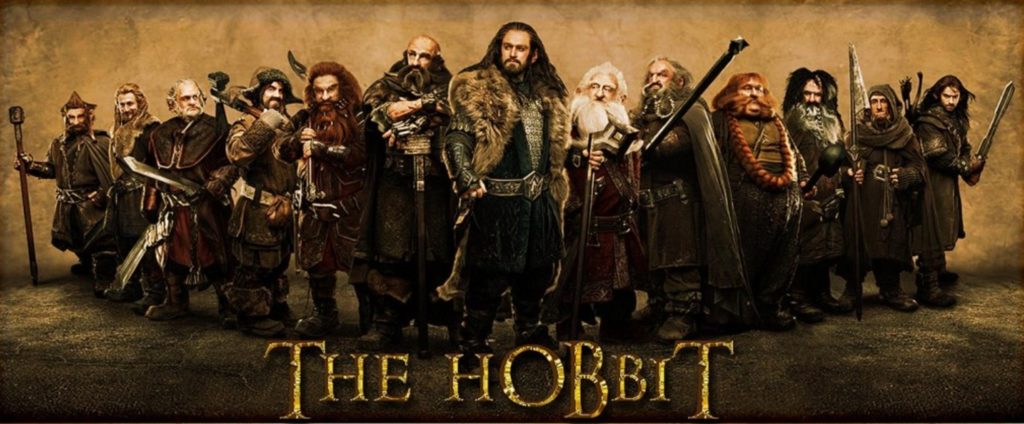
All this changed in seventh grade, when my dad introduced me to a series entitled The Lord of the Rings.

I can hear you already. “Oh, wow. A fantasy writer who was inspired by Lord of the Rings. I’ve never heard that before.” And I get it. Fantasy is a field rife with Middle-Earth wannabes. In some cases, they are great novels all their own, adding their own unique perspective to the genre, and in others, well… not so much.

There’s a reason for all the Tolkien love, and quite simply, it’s because Lord of the Rings is awesome, in the truest sense of the word. But I’m getting ahead of myself.

I soon discovered that my dad didn’t bring home these books for me, the avid reader of the family. No, he bought them for my older brother, a high-schooler who played guitar in a heavy metal band and whose reading, I was fairly certain, consisted primarily of lyrics to Poison songs.

Surely my father was suffering from early-onset senility, thinking that my brother was the better candidate for this intimidating-looking series whose covers promised adventure and magic.

This couldn’t stand. So I, in an effort to show my misguided father who was clearly the smarter sibling, decided I would be the one to read those thick books filled with faintly archaic language and weird little poems first.

I swiped Fellowship of the Ring from my brother’s nightstand and started reading that very day. I admit I didn’t get into it right away. A birthday party for a one-hundred-and-eleven-year-old hobbit didn’t exactly pique my interest at twelve years old. But by the time the Ringwraiths showed up to attack our intrepid band of heroes at Weathertop, I was hooked.

For the first time in my life, I not only enjoyed and was entertained by a series of books, but I lived them. I stood beside Frodo, eyes wide with horror as Gandalf disappeared into the chasm in the mines of Moria. I trod silently through the beautiful and mysterious forest of Lothlorien. I rode on the massive branches of Ents, and triumphed in Saruman’s downfall. I swung my sword beside Eowyn and defeated the Witch-king of Angmar. I begged Frodo to cast the ring into the fires of Mount Doom. I stared solemnly out to sea, watching the ship that bore Frodo, Bilbo, and Gandalf from Middle-Earth disappear into the horizon.

And when I turned the very last page, I wept. I was certain I could never experience something that pure and soul-thrilling again.

Fortunately, though, I discovered that the bookstores had a whole section of fantasy books, full of worlds in which I could surround myself with wonder and magic. Worlds where I could discover who I really was, by living the lives of characters I wasn’t. I devoured every fantasy book I could get my hands on—books by great authors such as Margaret Weis and Tracy Hickman, David Eddings, Guy Gavriel Kay, Raymond E. Feist, Robert Jordan, and many more. Slowly but surely, I made my way across the speculative fiction aisle to discover the joys of sci-fi as well, beginning with Orson Scott Card’s excellent Ender’s Game.

What began as a healthy dose of sibling rivalry become an important part of who I am—not only a reader of speculative fiction, but a writer whose books will hopefully provide worlds that readers want to live in and characters they yearn to sorrow and triumph alongside.

Thanks, Dad, for bringing The Lord of the Rings into my life. And thanks to my big brother, for providing me the competitive push I needed to read it.

For the record, my brother is now a well-respected university professor with two master’s degrees and a PhD, so it turns out he was the smarter sibling, after all.

But I totally finished Lord of the Rings first.

*            *            *

Megan Grey currently lives in Calgary, Alberta with her husband, two kids, and two yappy dogs. Her story “To Be Remembered” won the Editor’s Pick Grand Prize in a fiction contest for the Animism: The God’s Lake animated TV series and will be featured in an upcoming anthology. She has received two honorable mentions and a semi-finalist award for short stories in the Writers of the Future contest.

The Heart Wants…

9 May 2013 | 2 Comments » | clancy

Cinderella

… what the heart wants. Right? As a kid, fairy tales were the reading fare. You know – Rapunzel (prince saves girl from evil witch and they live happily ever after), Sleeping Beauty (prince saves girl from evil witch and they live happily ever after), Snow White (prince saves girl from evil witch and they live happily ever after), Cinderella (prince saves girl from evil witch and they live happily ever after). The list goes on. And as a kid, I thought that was the height of romance.

So, when I hit my teen years, I had a firm foundation of romantic beliefs built up. What did I read then? I read Harlequin Romances (boy and girl have struggles, fall in love and live happily ever after). My allowance money went to belonging to a Harlequin book club.  I chose the Historical club. Every month I got a box of four to six novels that were some combination of medieval romances, western romances and regency romances.  I’d start with my favorite, the medievals, move on to the westerns and then read the regencies.

I read them voraciously and then would have to wait weeks for the next box. Back then, I’m not sure if my library carried romance novels or not. I don’t remember looking.  Libraries do now though, I’m happy to say. In between, I’d read fantasies, sci-fi, biographies and whatever else my parents had sitting around. But it was all on hold once I got my new box of romances.

I’m grateful for Harlequin romances for taking up where my fairy tales left off and providing me and millions of women with stories that give us what our hearts want. Not to mention being a major market for romance writers for decades. I still read Harlequin’s and my first dreams of writing included being published by them.

Fast forward thirty years and what do I read and write? Romance. Despite three failed marriages, and the occasional jaded cynic’s hat I wear, beats the heart of a die-hard romantic. My favorite movies are romantic. My favorite storylines in other genres are the romantic ones. Even when dramas and stories end on a sad or bad note, I always think – we just need one more chapter, one more scene and this can be fixed. They can have a happy-ever-after. I know it.

Is it naïve? Maybe. But what I love about romance is that no matter the journey I go on – thrilling, sweet, harrowing, magical, tragic – I KNOW that at the end, everything will be okay, the couple will be together and all will be right in the world. Okay, it probably is really naïve. I don’t care. I’m a happier person because of it.

This may be a really strange analogy, but bear with me. Romance is like a good natural disaster flick (2012, The Day After Tomorrow, Armageddon) which I also love. They’re hopeful. They end on a positive note. And I want that.

Natural Disaster:

  •  Everything is going wrong (global temperature shift/giant asteroid is about to destroy earth)
  • We rise to the occasion and fix the problem (mankind joins together in global effort to save earth)
  • When all is said and done, regardless of the fact that maybe the majority of mankind has died horrifically, mankind triumphs and earth survives. YAY!

Romance:

  •  Everything is going wrong (boy and girl have conflict – internal and external)
  • We rise to the occasion and fix the problem (boy and girl each overcome their own character flaws and whatever else is preventing their relationship)
  • When all is said and done, regardless of the problems encountered, love conquers all. YAY!

This is why I write romance. My heart wants happy endings. Now though, I want modern fairy-tales where boy and girl save themselves and each other from bad choices/tendencies and work to keep their happy-ever-after  happy. That seems more realistic, less naïve and still hopeful.


What do ya’ll think?


Anime: Aren’t They Just Cartoons?

12 March 2013 | 6 Comments » | fictorians

Guest Post by Stone Sanchez

The year is 1998. I’m sitting at home watching the latest airing of Power Rangers in Space, excited to see my favorite multicolored team of heroes take out the newest baddie on the block. Up until now, the draw of other shows has been meaningless and nothing has been able to take me away from the Power Rangers franchise that I may have been a little obsessed with. (If I’m honest with myself, I’m still a little obsessed with it.) Outside of mega titles like X-Men, Spiderman, and Superman: The Animated Series—shows that I only watched with some form of regularity—the Power Rangers franchise had me completely hooked.

Until that fateful day when my brother runs into our room just as the theme to Space is about to start and he changes the channel on me. All of a sudden I’m greeted by the image of what looks to be two aliens flying in front of the moon. The words “I wanna be the very best, that no one ever was” play in my ears … and from that moment my world was changed. I had just experienced Pokémon for the first time, and by extension, anime.

dhy_ya061 ANIMEThe word “anime” is usually mistaken to come from the word “Japanimation,” a word that was coined in the 1980s and commonly used to reference animated series made in Japan. This origin, while seemingly very possible, is inaccurate. Anime is actually the Japanese’s shortened word for the English word “animation.” In Japan, the term is used to describe any works that have been animated—be it from Japan or anywhere else. Outside of Japan, using the word anime is reserved and specified for Japanese Cel Animation only.

What is anime, though? What makes it different from any other regular Saturday morning cartoon? Absolutely everything! A major difference between anime and cartoons is in the art. While American art is very basic, usually putting just enough effort to make the characters recognizable, anime is very artistic and creative when it comes to the depiction and distinction of each character, depending on which stylized version of anime you watch. But the biggest is in story.

In Cartoons we only see kids deal with kid situations, and adults deal with adult situations. This line is skewered in anime. Case in point: Gundam Wing. Five teenagers ages 15-16 are sent to Earth from the Space Colonies to begin terrorist attacks on the unsuspecting OZ organization. In the fallout, these teens must deal with being hunted, hated, and targeted at every turn. Throughout the show they deal with emotional strain from constant war, being betrayed by the home they thought they were protecting, and become ostracized by the world.   Teen depictions in Cartoons are usually comedic while dealing with their issues. Even in the great American Cartoons like Avatar: The Last Airbender, tense situations are usually broken by a comedic gesture so that the tone of the show isn’t too heavy.

There are different ways anime can be categorized.  Luckily for us, the Japanese have given us several ways to do this:cb_ed0050 ANIME

  1. On one hand, it can be broken down anime by genre. You have your run of the mill action/adventure, horror, sci-fi, drama, progressive, and then one not so normal: game-based. This is used to denote animes that are based off a game. (Yu-gi-oh is a good example.)
  2. More specifically, you can categorize anime by demographic. The Japanese have specific names for each demographic.
  • Shojo: This brand denotes anime made for young girls from the ages of ten to eighteen. (Sailor Moon, Cardcaptor Sakura, Kaicho wa Maid-sama)
  • Shonen: This is usually targeted at male ages ten and up. There’s no age cap to seal that limit. (Dragon Ball Z, Naruto, Bleach)
  • Seinen: Targeted at males over the age of eighteen, Seinen is sometimes mistaken  for the Japanese Hentai category. In actuality, Seinen anime emphasizes storyline and character development instead of focusing on just the action and powers of the characters. Oftentimes, due to its concentration on plot and characters, Seinen may be confused with Shojo, but ultimately comes out as Seinen as the show is played out. (Ghost in the Shell, Hellsing, Akira)
  • Josei: Young women ages fifteen to forty-four are the target market. Unlike Shojo anime, this category is more restrained with its animation. There are no sparkling eyes, although the wispy features of the characters are kept. Unlike Shojo, Josei deals with a very realistic aspect of relationships and takes away the romanticized view of everything that Shojo usually contains. (Paradise Kiss, Loveless, Between the Sheets)
  1. One of the last ways to classify Anime is by the themes of the story:
  • Bishojo: Anime with beautiful girls. (The Melancholy of Haruhi Suzumiya, Sailor Moon, Lucky Star)
  • Bishonen: Anime with guys with pretty, girlish features. (Kaicho Wa Maid-Sama, This Ugly Yet Beautiful World, Getbackers)
  • Sentai: Anime with teams of fighters. On a reference note, Power Rangers was based off a Japanese show called “Super Sentai” (Dragon Ball Z, Yu Yu Hakusho, King of Fighters)
  • Mecha: Anime with giant robots in them. (Gundam, Robotech, Neon Genesis Evangelion)
  • Post-apocalyptic: Anime taking place after the world has already ended. (The Big O, Cassherin Sins, Desert Punk)
  • Maho Shojo: Anime based on magical girls. (Sailor Moon, Princess Tutu, Shugo Chara!)
  • Maho Shonen: Anime based on magic boys. (G Gundam, Nagima! D.N Angel)
  • Expertise: Sports, arts, cooking-related anime. (Whistle, Prince of Tennis, Kaleido Star )
  • Harem: One guy with a lot of female romances. (Tenchi Muyo, Shuffle, Love Hina)
  • Reverse Harem: Anime where a girl has romances with multiple guys. (Candy Candy, Fruits Basket, Princess Army: Wedding Combat)

pp_rangiku002 ANIMEThese are the building blocks of anime. Some of these themes can be translated into anime’s counterpart, cartoons, but usually most cartoons aren’t willing to go as far as anime is. Liberties are taken with darker tones, risqué characters, and “grey area” subject matter. Whereas cartoons in America are specifically seen as things for kids to watch, with the exception of shows like South Park and Archer, anime in Japan has a categorization for every demographic and is not strictly seen as childish or immature.

Anime is a very broad subject, and this post barely scratches the surface. There are many differences between anime and cartoons and within anime itself. If you’ve never watched any anime before, do so. You may be surprised to find out you’re one of those “anime people” after all.

Here are my top picks: Cowboy Bebop, Gurren Lagann, Ghost in the Shell, Eden of the East, Clannad, Gundam 00 (I’m obsessed with Gundam), Desert Punk, Tenchi Muyo, Another, Yu-Yu Hakusho, The Big O, Samurai Champloo.

Stone Sanchez is an aspiring professional author that has been active in the writing community for the past two years. Currently Stone is associated with the Superstars Writing Seminars by recording, and managing the production of the seminars when they occur. He’s also worked with David Farland recording his workshops, and is currently the Director of Media Relations for JordanCon, the official Wheel of Time fan convention. Often referred to as the “kid” in a lot of circles, Stone is immensely happy that he can no longer be denied access places due to not being old enough.

Photos are courtesy of the website http://www.animegalleries.net/

Libraries & Writers Groups – A Partnership made in Reader Heaven

16 November 2012 | 2 Comments » | fictorians

Guest Post by Holly Paxson

You’re a writer. You know the joys and agony of transforming that blank page into something creative and new. But you’re tired of slogging away at the keyboard on your own. Maybe you’re a brand-new writer who isn’t sure where to go after those first few pages, maybe you’re an experienced master of prose who needs a fresh environment to break a block. Whatever the reason, you’ve decided you want to join a writer’s group, perhaps even start one of your own. So how do you go about it?

A great place to start is your local public library. In addition to the helpful books and other resources on writing, libraries often provide free meeting room space for writing groups to meet, or perhaps already run such a group as a library-sponsored program.  Libraries host everything from weekly critique groups to full-fledged day-long writers workshops complete with published-author instructors and tips on getting published. And almost always, these programs and workshops are completely free.

If your local library doesn’t have any kind of writers program or group, then you may wish to consider starting one. First, think about what kind of group you’d like. A small critique group? A large organization where members share presentations on writing and form critique partnerships on the side? Think about how often you’d like to meet, and, if you don’t already have a group of writers ready to join you, consider how you’ll get the word out that your writers group exists.

Once you’ve considered these questions, then, go to your local library. See what kind of meeting space they have available. Will you need to commandeer a table in a quiet corner, or does the library have a meeting room you can reserve? What is the room’s capacity, and how often is it available? Ideally, the availability of the library’s space will work with what you’ve envisioned for your group.

You may even wish to approach the library staff, to see if they’d like to work with you to make your writers group a library-sponsored program. When libraries sponsor programs, they can provide advertising to promote your group to help recruit members, sometimes even provide funds to assist with workshops or presenters. Typically, all that the library asks for in return is that participation in the writers group be free and open to the public.

Libraries can also support the work of your group’s published authors, to varying degrees. For those who wish to get their work into the library’s collection, the best way is to ask the library what their criteria are for accepting books. Some libraries can’t add books that have been self-published, or are only available in ebook form; others can. Some libraries have special donated local author collections, which allow any local author to donate a copy of their book for the community to borrow and read. Some libraries will sponsor special author receptions or book-signings to help promote local authors, or will allow books to be sold in associated Friends of the Library bookstores or booksales.

More than ever, libraries today are community hubs and busier than ever. As an institution supported by your tax dollars, they exist to be used, to provide resources, and to bring people together. For your writers group, a partnership with your local library can be invaluable. So how do you know what your local library can do for you?

All you have to do is ask them.

Holly Paxson has worked (and written!) in public libraries for the past nineteen years. She currently manages a branch of the Timberland Regional Library in Lacey, Washington, where she is hard at work on her next book.

Genre Writing is Like Your Favorite Food

28 September 2012 | 4 Comments » | clancy

Last night I was in a group and had been discussing my book that is currently in edits and being beta-read.  One of my female friends and I began a private talk about reading preferences and she said, “Most romance novels are stupid.”  I write romance, but took no offense because people like what they like.  I get it.

As we discussed this topic further, my friend said the thing she didn’t like about romances was exactly what I like best about romances.  And what I think most people like best about whatever genre writing they read – that they know the formula, they like the formula and they want more of the formula.  Not saying that genre writing is boring or predictable.  I don’t think it is.  I think it’s more resonance and comfortableness.  It’s like your favorite food.  No matter how you change the method of cooking or the ingredients involved – a burger is a burger.  You know it, you like it, you want more of it.   It’s familiar and we like that.

That’s what genre writing is.  Any particular genre has it’s own conventions, things that must happen in order for it to qualify as being in that genre.   In romance, the hero and heroine have to have conflict they overcome in order to be together at the end.  They will be together at the end.  That’s non-negotiable.  No matter the bumpy road (and it needs to be a bumpy road) they must traverse, they also must end up at their destination of happy-ever-after together.   That makes me happy.  I can still get caught up in the bumpy road and feel their frustration and joy with them, but in the end I know it will all be OK and that works for  me.   I like the journey.

I have another friend, she doesn’t like romance writing either, who wants to know what happens after they get together.  She doesn’t want to know how they get together, she wants to know how they stay together for the long haul, the day in and day out.   I don’t care so much how they stay together, I don’t want to see them struggling with how to make time for each other, find romance despite having two point five kids and a mortgage.  This does make for many a great romantic-comedy movie though.  But me, I just want to see them get together after some trials and be left with the fantasy that all will be well – no matter what.

David Farland (aka Dave Wolverton), a SciFi / Fantasy writer (among so many other things he does brilliantly) says that we like genres for what they make us feel.  Fantasy brings us a sense of wonder, Mystery’Suspense gives us a thrill while we try to solve the problem.  Again – this is what makes it genre writing.

I like and read different genres and I know exactly what I’m getting when I start reading.  I know the conventions (or formula) that I can count on, but what I don’t know is the means by which I will travel this familiar road or the sights I will see as I go down it.  But I do know the destination and that’s where I want to end up.  Just watch what happens when a writer tries to not follow the rules of that genre.  It won’t be liked.  Many a reader will be angry in fact.

So back to my first friend and her ‘romance is stupid’ comment.  When she told me what she did like to read, I was amused because she just likes a different genre with different rules.  She didn’t even seem to realize that what she enjoys reading has the same results over and over too.  Different and yet the same.  I didn’t bother pointing that out.

Your thoughts?

How to Make Highway Robbery Work for You

1 August 2012 | 4 Comments » | Leigh Galbreath

It has often been said that the best way to learn how to write is to read. As Evan pointed out in Monday’s post, reading the master like George R.R. Martin can teach you more than any book on writing. Looking closely at how they do it, figuring out what tricks and techniques are used is a talent that any good writer should cultivate and use.

I don’t know about you, though, but it’s a talent I’ve never quite gotten a handle on. I get lost in stories too easily. Even my own tales tend to run away with me. So, I’ve had to cultivate a different talent.

The brazen art of highway robbery.

Okay, so “highway robbery” might be a bit strong of a term. I guess mimicry would be closer to the truth, but it’s not enough for me to simply look at a piece of prose and figure out how it was made. I have to carry it off, with a grin on my face, and dissect it piece by piece.

I first did this with one of my all time favorite authors, Neil Gaiman. One thing that Gaiman is famous for is his use of humor. So, I took a short story I was writing and after much re-reading of Gaiman’s work tried to copy his rather unique tone and style. What came out was a story about an angel and demon hiring a private detective to find Satan, who they need in order to start the Apocalypse. It’s a silly tale that will never see the light of day, but the people who have read it laugh at all the right parts. It proved a learning experience I don’t think I would have gotten any other way. I learned that humor, in Gaiman’s work, comes out of his choice of details, which is, quite frankly, brilliant. Now, I enjoy using that very technique not just to show humor, but any other emotion I might desire in a scene.

I did the same with Elmore Leonard and his use of dialogue. By mimicking his style in a story I learned how restraint can make dialogue more believable and how subtext can work far better than paragraphs of spoken exposition. Less is more with Leonard…or rather, less is everything.

The drawback, many would say, is to lose a bit of your own style and tone. Some might think that, by mimicking another author, you run the danger of letting their voices overcome your work. The idea here, though, isn’t to steal their voices. It’s to steal their technique. To take on a particular writer’s style, see how they put the words together, and then let it go. The reason it worked for me, I think, was that I had no intention of ever publishing my experiments. They were learning tools that I easily shoved in a drawer and left behind.

So, I invite you. Find a writer you like. Get out your chosen writing device, whatever it may be, and see if you can recreate something from your own mind in their words. See what comes out. I’ll bet you’ll learn something you didn’t know before.


It’s almost like being in love. . .

20 April 2012 | 1 Comment » | Nancy

Why do we write?

Well, I can’t answer that question for the world at large. I can, however, answer that for myself and the other writers I’ve asked that question. We write because we have to, and because we love it.

Lately, I’ve been noticing a lot of overlap between my day job as a lawyer, and my night and weekend job as a writer. As a lawyer I write nonfiction (although some detractors of the profession might claim what lawyer’s write can only loosely be labled nonfiction). The lawyers I know who are in the profession for the money, because someone thought they should be, or because they want the prestige of those three magic letters (“Esq.”) after their names are miserable people. They are burnt out; they fight for the sake of fighting.

The writers I know of who write because they thought it was easy, or easy money, or because they wanted the prestige of being an “author” are miserable. They are burnt out; they are depressed, and they give up. They are overly critical of others’ stories.

Now let’s look at the lawyers who aren’t burnt out, depressed or on the verge of quitting. While they may hate a particular part of the process, they love the overall system. I love being in court. I love researching and finding new ways to combine existing law to my client’s benefit. I love helping people. My practice reflects this. I don’t sleep or eat much the week before trial. I do my best work when I’m passionate about my client’s position. I’ve jumped up and down behind counsel’s table when arguing a point (my husband, who was observing that argument, had to fight laughing out loud as I bounced around).

The last statistic I heard was the average advance from a traditional publisher is about $8,000. E-publishers pay better (up to 50% of net sales), but they don’t generally pay advances. It takes the sale of many thousands of 99 Cent e-books to lift you above the poverty level, much less replace most people’s regular income. Self-publishing means you spend a lot of upfront money hoping you can recoup it and make a profit. Except for the precious few, writing will never be a “get rich quick” career.

So, why do we do it?

Love.

In the movie Shadowlands, Sir Anthony Hopkins, who plays C.S. Lewis, tells a fellow Oxford Don that he (Lewis) can’t stop praying because the words pour out of him. He could have been speaking for any writer. The words pour out of us. Stories beat on our minds and distract us from other concerns.
I love filling the screen with words; creating new worlds; and that moment when a character is real enough to talk to (and fight with) me. When a story first takes hold of me, my hands shake, my heart races, I have trouble sleeping and I’m constantly thinking about my new world and characters. Sounds a lot like a first crush, huh?

That someone else likes reading what I write is amazing. That someone is willing to pay to read my stories is humbling.

This business is hard. We hear a lot of “no” before we hear “yes.” If you aren’t passionate about writing, you won’t write. It’s just that simple.
Find the story that makes your heart race, and get writing.

I Read, Therefore I Am

4 April 2012 | 3 Comments » | David Carrico

I don’t know about anyone else, but I’ve found that one of the biggest drawbacks to being a professional writer is that all of the time I spend at the keyboard, or staring at the wall, or walking around in a seeming daze as I work out just how high up a tree I’m going to chase my character and how sharp the rocks that I throw at him are going to be—well, let’s just say that it really cuts into my reading time.  (How’s that for a first sentence?)  And that puts me on the horns of a dilemma, so to speak:  because I really really really want to write, and I also really really really want to read.

I’ve always been a reader, for as far back as I can remember.  Partly genetics—Mom was a pretty avid reader—and partly environment:  for a lot of reasons, I typically didn’t have many friends growing up, so I turned to books to fill the void.

I’ve said before that I came to a desire to write relatively late.  I was not someone who knew he was going to be a writer at age 8, or 12, or 18, or even 28.  But my reading prepared me for it nonetheless.  I estimate I’d read 2000-plus novels by age 21, and kept on at an increasing pace.  Somewhere along the way I soaked up a lot about writing, so that when I did finally begin writing, I had observed many examples of the craft, good and bad; all of which stood me in good stead.

When I finally did begin writing, I also began to read writers writing about writing.  It wasn’t too long before I ran into a comment that worried me:  an author stated that when he was writing a novel, he didn’t dare read anyone else’s fiction, because he didn’t want to run the risk of his work being affected by another author’s work and style.

I was new enough in the craft, and the author who made the comment was someone I liked well enough, that I accepted it as almost gospel.  I immediately tried to change my habits so that I only read non-fiction while I was writing.  And it didn’t work.  I don’t mind non-fiction—I occasionally go on non-fiction binges, in fact.  But I can’t live in non-fiction.  I can’t lose myself in a story in non-fiction.  So I kept sneaking away to some of my favorite authors and reading favorite chapters over again, feeling guilty, and all the while worried that I was somehow ruining my writing by doing so.  (Truth is, I wasn’t good enough to sell yet so it didn’t matter, but my mind didn’t know that.)

Then some time later, I read an interview with another author I liked who was asked if he read other fiction while he was writing novels.  His response was words to the effect of, “Sure!  Doesn’t everyone?”

Great relief!  My guilt evaporated, and I started enjoying fiction again while I was writing.  And the take-away I got from that experience was that there is no One True Way when it comes to writing methods and styles and practices.  Whatever works for me is what will work for me, and it may or may not work for you.  What matters is that we find what works for each one of us, and that we write.  To quote Kipling:

There are nine and sixty ways
Of constructing tribal lays,
And every single one of them is right!

So I still read lots of fiction.  Not as much as I used to, though, because the writing really does take away a lot of the time I used to devote to reading.  And sometimes when I’m reading I do still feel a little guilty, but it’s usually because I know I should be pounding the keys to finish my current project.

I’ve concluded that the reading provides the loam from which my stories sprout.  Or maybe a better metaphor is the reading is what the muse uses to charge up the batteries of my writing engine.  If I don’t read, I don’t write.

Pardon me; I just bought the latest novel by Elizabeth Moon.  I need to go charge up my batteries some more.

Self-consistency and Maintaining the Fourth Wall

2 March 2012 | 1 Comment » | Brandon M Lindsay

When many, if not most, readers enter a fictional world, they want to stay there until they’re ready to leave. For us writers, that means having to avoid doing anything that pulls the reader out of our world. Failing in this task may make it difficult for a given reader to buy into our creation. They may set it down and move onto something else. If this happens, we’ve lost them.

Any aspect of storytelling is vulnerable to this. Someone breaking out of character, the introduction of a deus ex machina, and even poor handling of point-of-view are all good ways of infuriating readers, and rightly so: they are violations of an unspoken trust with our readers that the stories we are telling them are self-consistent.

Setting is an aspect of storytelling which is particularly vulnerable to this kind of violation, especially in genres where setting is important, such as in fantasy, sci-fi, and historical fiction (by setting, I mean all things related to world-building, such as culture, dress, geography, the laws of physics or magic, etc.). Read enough reviews in any of those genres and you will see that one of the widest criticisms is that the author described some event that could not or would not have happened in that context, and thus the reader was pulled out of the story. There’s a good reason for why this can be such a problem for a writer: setting, by its very nature, consists of a vast number of interrelated concretes. Consider the difference between a character arc and a city, full of people, buildings, roads, belief systems, cultures, and so on, and you should see what I mean. It’s very possible (and necessary) to track the shape of a particular character’s arc, but far more complicated to track the goings-on of every person and thing in a city. There are many ways we can forget a detail that affects the story later on, and thus cause one of those reader-losing violations.

Of course, simply not knowing how an aspect of your world works can also do this. Many of our readers are smart enough to know that you can’t ride a horse at a gallop while swinging a fifty-pound sword for five hours straight. As most writers should by now know, doing some research solves most of these problems.

But there’s another related issue that can be a little subtler, and it relates purely to a world’s self-consistency. Unless you’re writing an alternate history or time travel yarn, your Imperial Roman soldier isn’t going to call his wife on his cell phone, since cell phones didn’t exist back then. An obvious example, but things get a little trickier when you’re writing in a purely secondary (or, purely imagined) world.

I once wrote an epic fantasy story in which one of my characters was exhausted, and was described as feeling as if he had just run a marathon. While it seemed pretty innocuous to me at the time, someone in my writing group couldn’t buy into it, because the word “marathon” is named for the run of Greek soldier Pheidippides during the Battle of Marathon. And since such an event never occurred in my world, he argued, how would the concept of a marathon in the normal sense even arise?

Hearing his criticism was a bit of a wake-up call for me, and now I sometimes find myself watching out for the same thing with books that I read (as much as I’d rather just sit back and enjoy them). Of course, in my hierarchy of priorities, I’m going to put a satisfying plot over catching myself using the word “marathon,” but I still keep an eye out for something like that slipping in. Whether or not you’re that meticulous about your world’s etymology, rest assured that some of your readers will be.

* For another interesting post on the topic of word choice, check out the earlier post by Mignon Fogarty, a.k.a. Grammar Girl, if you haven’t already.

The Invisible Library

18 November 2011 | 3 Comments » | psdemian

I love collecting digital bits.

And I am considered an early adopter by friends.

As disorganized as I may be with files littering my virtual and actual desktops, I have an excellent track record of not losing digital data. Misplacing, yes, but my backup processes are fairly secure.

I hit the save key reflexively every few seconds or whenever I stop typing. I email copies of documents to myself to ensure they’re backed up in the cloud. I have onsite and offsite physical backups of all my files.

Ever since the advent of the Kindle and the iPad, I’ve been delighted. There are so many ways to access the rich library of documents I’ve been squirreling away for all these years. And with tools like Dropbox and various PDF viewers on the iPad, I’ve been able to have useful subsets of my digital library with me wherever I go.

Recently I’ve even begun backing up bits of my library. I’ve taken a number of big tomes and sent them to Blue Leaf Bookscanning to get turned into PDFs and word documents and even robot-read audiobooks.

But there’s a cost for me to digitization.

Serendipity.

In my home I have bookshelves. Many of them. And I have an area where I keep all my language books. And sometimes, when I walk over to that part of the shelf, I feel compelled to learn some more Portuguese verbs. Or another Latin phrase. It’s not planned.

I have another shelf full of mid 1800s American “Cyclopediae”. Had I planned to look up something in that? Not really. Was I enriched by it? Yes.

I have a shelf next to my bed, supposed to be a nightstand. It’s actually a two foot wide, 5 foot tall shelf. It has possibly 50 books I’m in the middle of browsing or reading. My “nightstand” gives me that same feeling I get when I stand in front of the magazine stand at a good bookstore. “Oooh – what am I going to choose?” There are too many good choices.

To be fair, I have experienced some form of this on my iPad. I’ve loaded up a ton of PDFs into the Apple iBooks app. Sadly (for Apple), I have to say that iBooks is only used store PDFs; Amazon has my eBook business and will keep it until I can read iBooks on my computer. (But that’s a separate rant.)

And so occasionally, I have said “why look there, there’s a book on programming Ruby on Rails, I should browse through that.”

“Oh theres that manual I downloaded on Intellectual Property and patent drafting, I’ll read it. ”

But the point is, I think it will be a while before I have the scant 64Gb of my iPad chock full of ALL my digital documents. Years in fact. I just don’t see it. First theres the scanning, or re-acquiring the book in digital form. Then there’s the filling the space, or hoping that “cloud books” comes out when “cloud music” is just getting started.

There’s no question that eBooks are rising fast. So much so that they will be the most significant part of the Western reading market soon. Ebook sales will be the driver, not just a growing segment, of book sales.

Books will go down fighting. It will probably take generations to fully marginalize books, even though digital formats are eclipsed within two decades. VHS. Tape. CDs. DVDs. Blu-Ray. These are all formats-come-lately. They have not persisted. Photographs and phonograph records are a bit longer lasting. But printed word has millennia of success.

So what of the browse? What of the bookstore? What of the random luck that comes from browsing not just a corner bookstore but of rediscovering one’s own library? Or of putting a reminder to one’s self to read a book, by leaving it in your bag?

When all books are equally accessible in a huge digital bookstore on your iPad, and when new books are constantly marketed to you, invading the privacy of your own tablet, what will this do to undirected reading? How will one continue to enjoy these essential and random encounters with books?

I don’t know. What I do know is that my family is shopping for a house right now. And after digging through probably a hundred houses on the multiple listing service, I remember just two have really stood out to me. I may make an offer on one next week. And only when I was finishing writing this article did I realize something.

Both of those homes have a library.


Life, Inspiration, and . . . a Red Sheep?

11 November 2011 | 3 Comments » | Jason Michelsen

What a week to have to write a post for this wonderful blog (authored by some of the greatest human beings I know!).  Somehow, I’ve got to write a post that follows David Farland–arguably one of the most successful writers of just about anything and everything speculative fiction–a book give away, and an insightful and scary look into the functioning of the brain?

What if I just put a cool picture of a red sheep out there and call it a day?  No?

To be honest, the picture has nothing at all to do with this post.  I just liked it and wanted to use it in a blog post.  I probably should have saved it, using it when I had an idea for a post that would actually work with a picture of a red sheep.

And if I’m honest once again, this is about the most I’ve written in the last three weeks.  And in November of all months!  I competed in NaNoWriMo last year and won, finishing before Thanksgiving, but this year, nothing.  So, what happened?  Life happened.

And just so I don’t give the wrong impression, nobody died.   But neither do I want to talk about what it was here on a public blog.  What it was isn’t the issue.  The issue is the lack of writing.  Nay, the lack of desire to write.

For three weeks, I’ve tried on occasion to sit at the computer–butt in chair, hands on keyboard and all that–but nothing has happened.  It seemed there was little I could do to will the words from my brain out onto the screen.  It was a little like trying to wring water from a dry sponge.

I was empty.

Being an aspiring author, the prospect that there were no more words inside was a little frightening.  A literary suffocation.

It didn’t take me long, however, to realize the only way to fill something up with whatever it is it needs–words in the case of this writer’s mind–is to feed it what it needs.  For over two years, I’ve been so focused on my own writing that I’ve neglected my reading.  Oh, I read a book here or there, usually new releases by certain authors I simply can’t wait to read.  But my pace of a book every 3-4 weeks (I’m a slow reader with a day job, what can I say?) had slowed dramatically.  I’d been on the same book for over four months.

So I read.

In three weeks, I finished the last 300+ pages of the book I was stuck in, read another hefty fantasy book–The Heroes, by Joe Abercrombie–and started A Wise Man’s Fear, by Patrick Rothfuss.  Yeah, I’m a little behind.  My list of books that I’ve bought and need to read is over 25 books long.

Some people might gasp to know I haven’t even cracked A Dance With Dragons.  I know, I’m ashamed.  I deserve to be punished.

But in reading Abercrombie, Rothfuss, and the unnamed author in whose awesome book I’d been stalled for months, I remembered why I’ve wanted to be a writer since elementary school, and why I came to the conclusion that I had to write fantasy after reading Robert Jordan’s The Eye of the World for the first time.

The sheer joy of the story.  The careful selection and placement of words, and the emotions they invoke.  The characters who seem more like good friends than ink on paper.  The anticipation of what waits on the other side of the page.  These are the reasons I’ve always wanted to be a writer, all the things that made me love being a reader.

Some successful authors will tell you they don’t read in the genre they themselves write.  Others will say they read a wide range of literature.  Personally, I read a fairly wide range of books, though admittedly, the vast majority is speculative fiction.  Namely fantasy.  It’s just what I’ve always loved reading; deciding to write it hasn’t changed that fact.

So, um, yeah.  Read.  That’s my advice.  To anyone, but especially aspiring writers.  Not every reader is a writer, but every writer was a reader first.

And you have to admit, the sheep picture is sweet.