Recently, I was at a writing retreat and I learned something very valuable that’s taken a lot of pressure off me. This tidbit of information has changed how I feel about my approach to writing a novel or a short story.
In the writing world, there is a mantra that we’re supposed to write every day. We’ve heard it over and over. It’s our albatross. And when we don’t, the feeling of failure, the feeling of not being a real writer, is all consuming.
We’re supposed to write a certain number of words per day. To write so many short stories a year or to write at least one or two novels a year so that we can fulfill reader expectations because the immediate nature of social media and technology dictates that we produce polished works quickly.
We’re also told that we are better writers if we always work at our craft.
It’s true that we always need to work at our craft. It’s true that we need to produce work so we have something to submit and sell. What’s not true is that we need to be hard at it every day. That may work for some, but for many of us, it doesn’t.
When I learned that, I realized that I don’t feel all the pressure to perform to someone else’s mantra any more.
Sure, I want to write at least one novel and/or five short stories per year. I can do that. But now I write without the expectation I’d learned, the one that states that I need to write every day in order to produce work. At the writing retreat, I learned to relax and accept my own writing schedule. How did that happen? I simply asked others about their approach to the craft.
And that was how I discovered that I don’t need to write every day to be a successful author.
The bottom line is that we all write differently, and we all approach our craft differently. Our personalities and how we process information differs. One writer I spoke with thinks about his novel for 6-8 months, and sometimes longer. He writes in a journal, makes notes about the world, and mulls about the plot and the characters. Another outlines and plots. Another is a pantster with the vaguest notions about the story before she begins writing. Another is part pantster, part outliner. Some write a little every day. Others may wait for 6 months until they’ve got the pieces together and then in 4 to 6 weeks, they write the entire novel. Not everyone writes every day. Some don’t write for months. Some take a lot of time to think and outline while others dig in. Everyone’s method of creating the world, characters, and plot differs as does how much and how often they write every day.
But there is one thing in common: At some point, everyone has to sit in the chair and put their fingers on the keyboard and write the story.
I think that’s why when we’re new to this game, we’re told to write a bit every day. It’s about creating a habit and getting the job done. Unless we’ve tried writing every day, how do we know that it isn’t what we need to do? Unless we’ve tried outlining and writing as pantsters, unless we explore and learn whether we write best after long periods of reflection, or if the muse is more willing on the fly, we’ll never really know which method works best. That’s what I learned from the pros on the retreat – everyone had written long enough to have discovered what works best for them.
Then, there are those other times when we’re not productive. Those times makes us wonder if we’re really cut out for this business. You know, when illness strikes either you or someone in your family. Or, when the job and family leave you too exhausted to be creative (it takes physical and mental energy to write). Or, when good things like vacations, promotions, moving to a new house, new babies, or other events happen. All these life circumstances threaten to derail our story telling if we keep the mantra in our head that there is only one way to be a writer and that is by writing every day.
That mantra, is simply not true.
You don’t need to write every day to be a writer. Yes, it works for many, but not for all and not always. Life happens. But also, our personality and approach to the craft determines what works best.
The good news is that even when we’re not writing, we’re observing, we’re learning, we’re putting things together in interesting ways. We’re watching people and trying to understand what makes them tick. We observe things in our environment and we see interesting combinations and juxtapositions. On a recent road trip, a writer friend noted a corral with a horse and a rusty Winnebago and she began to wonder how she could work those things into a story. Even when illness strikes, we intimately learn about compassion and patience, about the will to overcome and survive, about what it means to be human in those circumstances and it makes us take stock of what we value. And somehow, all that gets translated into the stories we write.
Everything we do and experience contributes to our stories. We need to realize that and give ourselves a break during those times when we aren’t writing. Equally important is for each of us to discover and understand which approach to the craft is most productive.
But the cardinal rule remains: you have to write. You have to get the story down whether it’s a bit every day, whether it’s in a month-long spell, or every weekend, or some other schedule. Find what works for you and do it.
What is my writing method? My goal is always to write at least one novel a year. I tend to research and ponder for a few weeks. This includes world building and character studies. I’ll make a vague outline, which means that I know the beginning and the climax, and sometimes the end. Then, I’ll and jump into the novel, and see what my characters have to say. I’d love if I could, at that point, write for 6 weeks straight, but that rarely happens.
Last year, family health problems and a death happened and that made it impossible to concentrate on my new novel. I could have beaten myself up for not meeting my goals, for not being able to write, but instead, I wrote 8 short stories because those were manageable pieces. I’m back at the novel and it’s being written.
So now I know, that my writing method allows me the time to ponder and create so when I do write, the time spent is productive and stories (novels included) are written fairly quickly.
Happy writing!
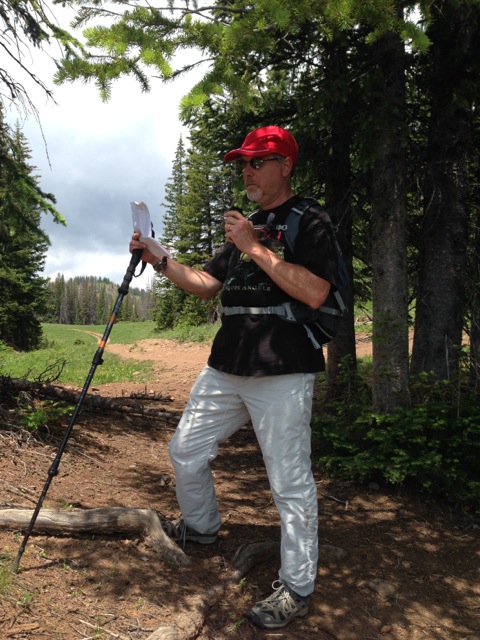 I write and publish four or more novels a year, and my creative office doesn’t have either a computer or a desk. It also doesn’t have the distraction of a constantly ringing phone, an endless succession of emails that need to be responded to (or marked as spam), doorbells to be answered with the latest UPS package of cat food from amazon prime (and the related distraction of cats who want me to feed them that food), or employees or family members who lie by assuring me “this will only take a minute.”
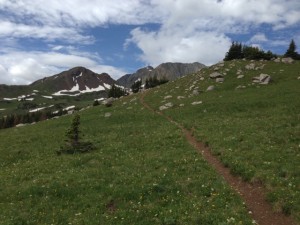 I have so programmed myself to write this way that now I find it very frustrating to sit my butt in a chair and stare at a screen for hours on end. When I’m walking, I am inspired by the landscapes in my beautiful Colorado. It may not be a genuine alien world, but I can imagine that—and all without the constant real-world distractions that harass a writer cooped up in a home office.
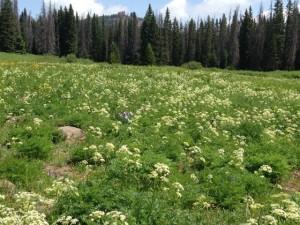 The scenery itself is often inspirational, and when possible I try to be in a place that reminds me of what I’m writing. I’ve spent a lot of time in the Great Sand Dunes National Park in Colorado or Death Valley in California as I write my Dune novels with Brian Herbert; I’ve been in a snowstorm in the Sierra Nevada mountains while writing about Han Solo and Princess Leia on the polar icecap of a planet, and I spent time hiking around the Anasazi cliff ruins of Mesa Verde while writing about derelict alien cliff ruins in my Saga of Seven Suns.
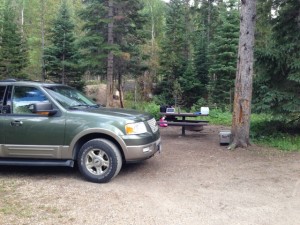 But sometimes I extend the getaway into a camping trip, so that I can really move my working office onto a picnic table out in a beautiful National Forest site. That’s where I’m writing this, sitting at a table under a lodgepole pine tree at a perfect campsite next to a river 85 miles up the Cache la Poudre canyon in northern Colorado. An extra battery for the laptop, and no internet connection, a growler of my favorite microbrew beer: It’s the perfect office, alone in the forest (except for a moose visitor who just walked through the campground), away from it all where I can concentrate on being in the worlds inside my head. It’s like taking a vacation in an exotic place with my imaginary friends.