
The Fictorian Era

Archive for the ‘Brandon M. Lindsay’ Category

The Fictorians Have Been Busy!

4 April 2013 | Comments Off | Evan Braun

Contributing to the Fictorian Era represents a very small portion of my continued efforts to further my writing career, albeit it’s an effort I can get pretty passionate about. Like the rest of our regular bloggers, I am committed to growing that career and getting my work out into the world—and of course, the market.

Some of us have been serious about this pursuit for many years, while others have begun the endeavor more recently, but we’ve all made tremendous progress. Today’s post is dedicated to showcasing the work we have collectively sold or published in the last two years.

 *          *          *

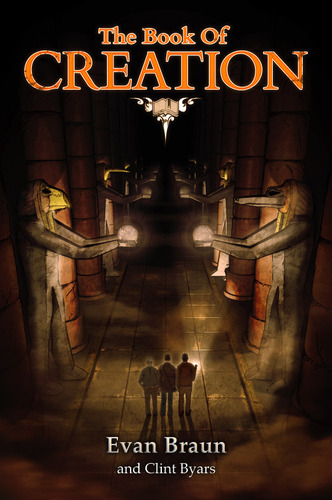
Evan Braun. I’ll BookofCreationstart with me. In May 2012, my debut novel was published through a small press in Canada. Called The Book of Creation, it is the first in a three-volume adventure series in the vein of Indiana Jones, with a bit of Da Vinci Code mysticism thrown in for good measure. I wrote a piece about the release of the book last year.

The Book of Creation can be purchased here. The Kindle version is currently on sale for just 99 cents! It is also available on the Nook as well as the book’s official website. The second volume in the series, The City of Darkness, is coming out later this year. Details will be announced right here at the Fictorian Era, so stayed tuned.

David Carrico. In the last few years, David has sold four short stories and one non-fiction piece to The Grantville Gazette, an online magazine featuring stories and articles about the inhabitants of the world of 1632, the first novel in a long-running series by bestselling author Eric Flint. The first of the stories is “Evening of the Day,” followed by three stories co-written with Enrico Toro—“Euterpe, Part 5,” “Cadence,” and “The Duelist.” He also wrote the non-fiction “After the Ring.”

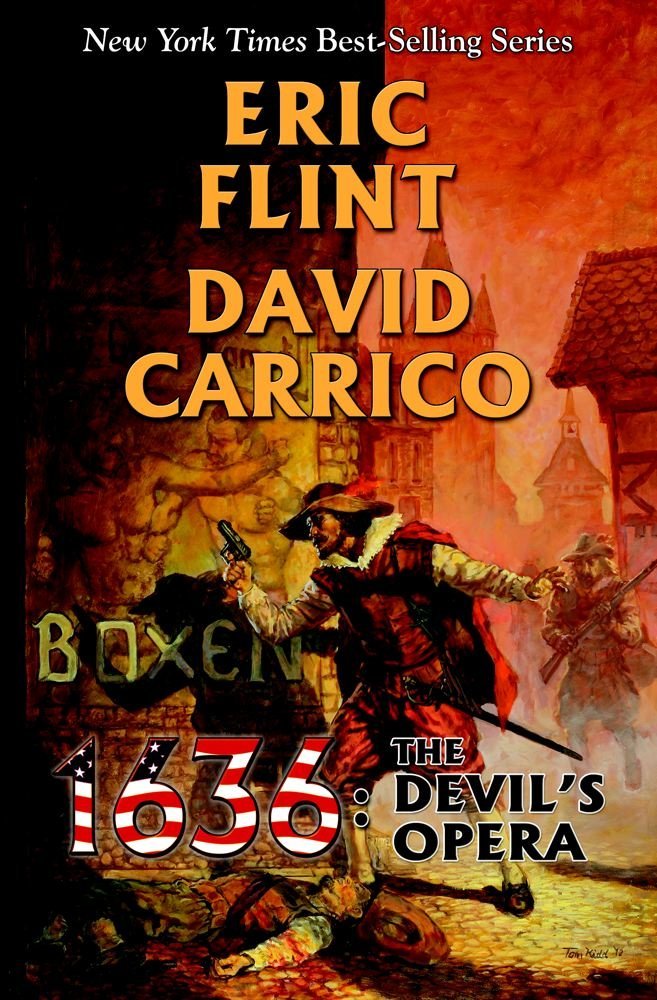
In addition, anotherTheDevilsOpera of his stories, “Suite for Four Hands,” appeared in Grantville Gazette VI, an anthology published by Eric Flint and published by Baen Books.

Most importantly, David has recently teamed up with Eric Flint to co-write one of the official entries in the 1632 series. This new novel, coming out in October 2013, is entitled 1636: The Devil’s Opera. In case you missed it, David recently wrote a post about his opportunity to work directly with one of the most talented writers in the industry. Another post on this collaboration is coming later this month.

1632: The Devil’s Opera can he preordered here.

Colette Black. Colette specializes in young adult fantasy, and has also made several sales. Credited as C.M. Vernon, her short story “Beneath the Skin” appeared in Women Writing the Weird. More recently, she received an honorable mention in the prestigious Writers of the Future contest for her 4th Quarter 2012 entry. She also won the CopperCon 32 short story contest with “Kairo’s Opportunity.”

Finally, Colette’s short story “Demon River” is forthcoming this month in White Cat Publishing’s biannual anthology magazine, Denizens of Darkness. It will be available to purchase here.

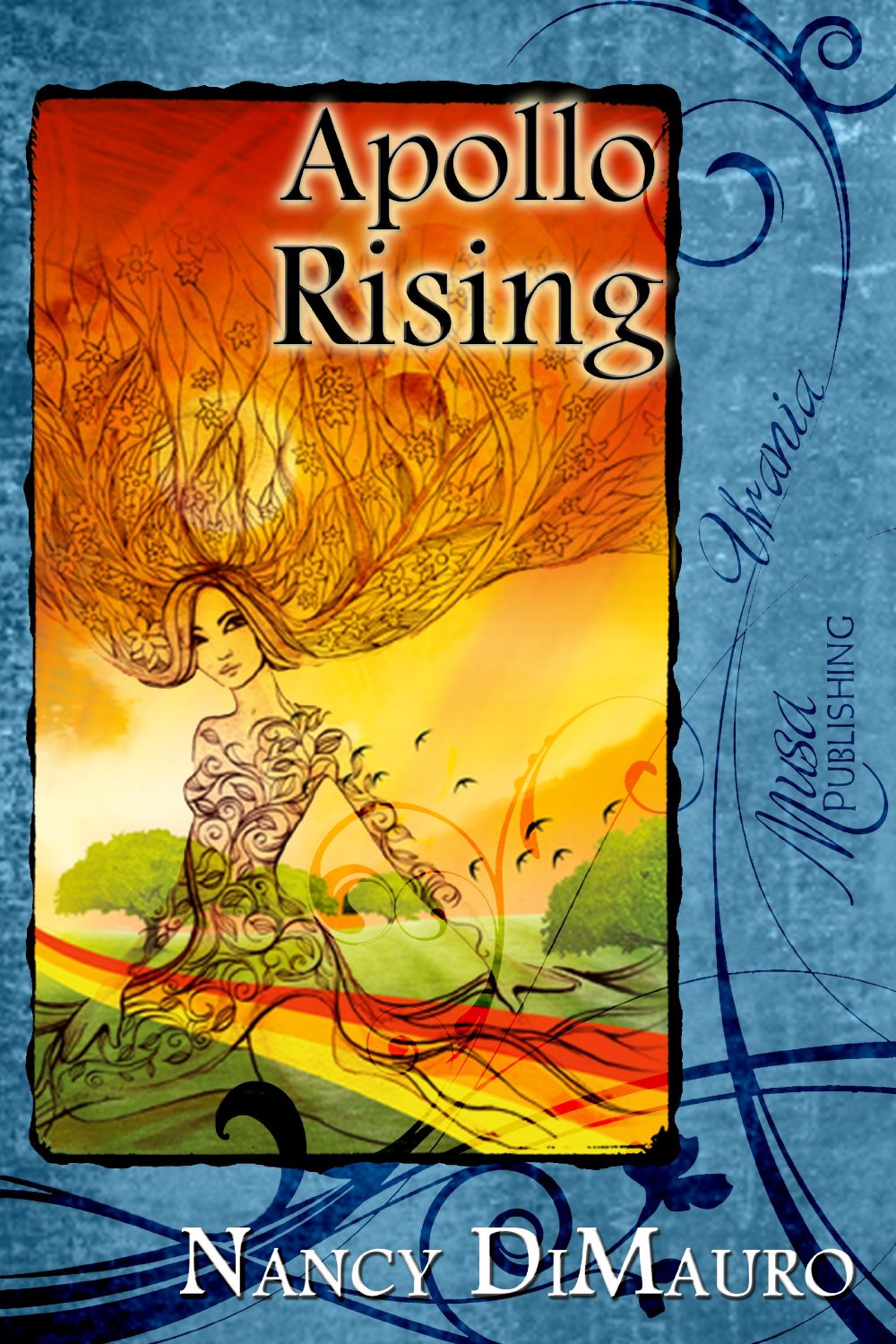
Nancy DiMauroApolloRising. Nancy’s debut novella, Apollo Rising, was released by Musa Publishing last September. The story combines romance with Greek mythology. It can be purchased here. She has also released a couple of short story collections, including Paths Less Traveled and Shots at Redemption, both of which are available as $2.99 ebooks. She also contributed to an anthology called Jack Gorman Got Cut by a Girl. These are Amazon links, but note that the books are also available through Musa Publishing’s online store and Barnes & Noble’s Nook Book Store.

Nancy also contributed to Doghorn Publishing’s Women Writing the Weird, along with fellow Fictorian Colette Black.

Mary Pletsch. Mary is still just getting started, but she recently sold her first short story to a forthcoming anthology. Unfortunately, the details of the anthology haven’t yet been released from the publisher. Rest assured, Mary will be writing a post later this year with all the info. Stay tuned!

Joshua Essoe. Joshua’s foray into publishing began a few years ago when he began working with acclaimed fantasy author David Farland on his award-winning novel, Nightingale. For more information about his successful editing business, check out his website. You’ll find an impressive gallery there of all his edited works which have gone on to be published.

In addition to his editing, Joshua has pulled in two honorable mentions for stories submitted to the Writers of the Future contest. His writing has also appeared on Grammar Girl’s Quick and Dirty Tips for Better Writing.

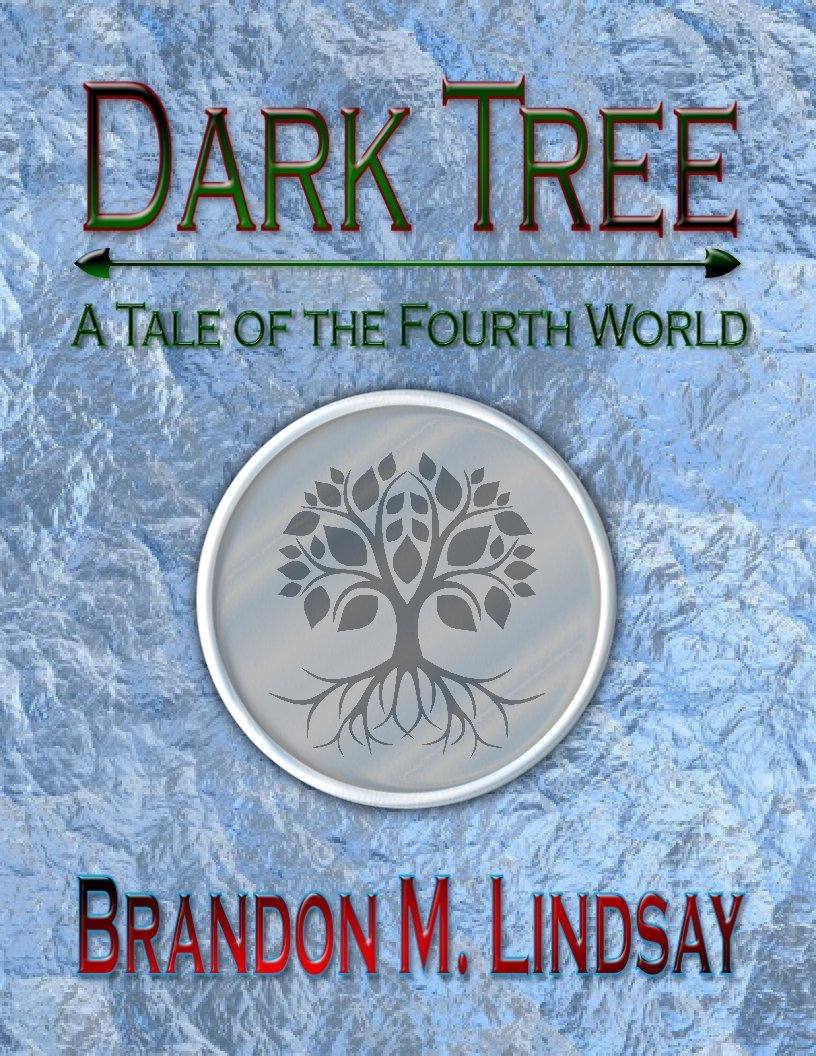
Brandon MDarkTree. Lindsay. Brandon has been actively self-publishing short stories leading up the released of his forthcoming debut novel, The Born Sword. So far the stories include Dark Tree and an anthology entitled The Clans. The provided links take you to the Kindle Store, but Brandon’s works are available across multiple platforms, including Barnes and Noble, Sony, and Kobo. Links can be found at his website.

 *          *          *

This is not an exhaustive list. There are many other books that are coming out soon, as a number of our contributors are working closely with well-respected agents. We are coming out with new material all the time, so make sure to check back here often, as you will see publishing announcements and articles about our writing processes.

Well, readers, now that you know what we are up to, do you have any exciting projects of your own you’d like to share with us? Feel free to discuss them in the comments section.

Tune in tomorrow, when we kick off our third year with a month of posts from true professionals. Throughout April, we’ll be getting people from different fields, from editors to illustrators, to talk about the process of collaborating with authors on manuscripts.

Dreams vs. Day Jobs

17 October 2012 | 4 Comments » | Brandon M Lindsay

I love money. I love being able to do the things I want to do without worrying if doing them will prevent me from paying my bills. I love that feeling of clarity that comes with the bank statement telling me that those setbacks that life sometimes throws at me are hardly setbacks at all.

I also love the satisfaction of a job well-done. I love raises, and promotions, and the praise of coworkers and bosses. I love having some structure to my day. In short, I love having a day job.

It’s easy to make the case that we can’t live without our day jobs. It’s even easier in such tough economic times, when it becomes clear to so many of us what not having one is like.

But I sometimes wonder: what if that was all I had? What if, on my deathbed, I realized that the greatest thing I achieved in life was middle management?

What if I had to make a choice between the comfort that a steady paycheck brought and the dreams that defined who I am?

Of course, one of the nice things about our modern society, even in its current state, is that we don’t have to make that choice. I am a writer with a day job. I am able to both pay my bills and follow my dreams. One need not be sacrificed to the other.

Yet knowing how you would answer such questions can help shape your future. Both your day job and your dreams exist in tension because they both compete for your time (what little time is left over from daily living).

It’s easy for us newer writers to frantically scramble for the top in this fast-paced new world of electronic publishing. There’s nothing wrong with that, except that it brings us the unreasonable expectation that if you’re not an immediate success, you’re an immediate failure. It’s easy to forget that there’s still the future in which we can make our mark. Writers are notoriously easy to discourage, perhaps in part because the world wants so badly to discourage us, and now we have sales rankings that can disappoint us every hour on the hour that only provide one more such opportunity.

As writers, our work doesn’t have an expiration date, especially now that the term “out-of-print” has gone the way of the dodo. But even before that was true, many writers had to wait years – decades even – before seeing an inkling of success. Yet still they persevered because they knew that without following their dreams, every other little success they achieved was but part of a greater failure. And fail, they could not. Writing was their lives. Without it, breathing was merely a countdown to death.

In taking the long view, we don’t have to answer the dilemma between day job and dream. It may be hard working two jobs, but no one said this would be easy. Patience and perseverance are job requirements; if you don’t have them, you may want to start thinking about middle management. It may make you happier.

So how would I answer this dilemma? Would I take comfort and security, a life with few surprises and few adventures? Or would I risk it all for the ultimate prize?

If you’ve read any of my fiction, you already know.

*

Help me quit my day job!

Read a ripping good yarn while you’re at it!

Today only, my epic fantasy, The Clans: Tales of the Fourth World, is free on Kindle! Click here for more details.

*

The Fourth World is ending. Brother Willfonde, the man destined to save it, is dead. Yet he left behind six clues—one historical text from each clan—in the hope that someone could finish what he started. Or so it is believed.

Led by a novice named Kularro, a group of young geniuses is tasked to find what the Magisters of the Church of the Overarch could not: an answer to the riddle of Willfonde’s six texts. Will they be able to find a way to save their world? Or is Willfonde’s final message one of despair?


Metaphors

21 September 2012 | 2 Comments » | Brandon M Lindsay

I remember from a non-fiction writing class I took in college that the three most important things to consider when writing any non-fiction piece are: clarity, clarity, and clarity. While the purposes of non-fiction and fiction are different—non-fiction is primarily informative, and fiction is primarily artistic—I think we as fiction writers can take a note from our non-fiction comrades.

I recently read a fantasy novel from a few decades ago—a classic by many standards—and although I enjoyed it, I found that the author’s use of metaphor and simile to be ridiculous. His books are almost universally lauded, and whenever anyone finds fault with his books, they don’t mention this aspect of them.

He isn’t the only author like this that I’ve read. There have been a few. Not a lot, but what disturbs me is how writing like this is oftentimes (most often by the literary fiction crowd; sorry, literary fiction crowd) considered to be profound. Worse is when a new author sees it and wants to emulate it with no idea what it is or what effect it will have. Perhaps in capable hands this profundity is achieved sometimes, but I think that more often it achieves the opposite of what a metaphor is designed to do, which is to clarify a concept.

A demonstration is in order. Instead of using an example from the book I read and risking the alienation of this author’s legion of fans, I’m going to create a somewhat hyperbolic example of what I mean: Tears scrambled down his face like alligators. There is very little in common with the concept of tears and those of scrambling and alligators. The image that comes to my mind when I read this is not that of someone crying, but someone whose face is being ravaged by tiny reptiles. Perhaps there is some very distant parallel that can be drawn between these two images, but more likely is that in the mind of the reader they are going to exist in conflict.

Hopefully your experience was different, but all the formal writing education I had encouraged this sort of free-association tomfoolery. I think the reason for this is that the denotative (cognitive) aspects of metaphor and simile are often actively ignored while the connotative (aesthetic) aspects are given full sovereignty. Which is fine if you only plan on writing the literary equivalent of inkblots, but for those of us writing about characters taking actions in places, such a limited approach will not suffice.

Consider another example, that of a bloody sunset. Although maybe a bit trite, it can be effective from both a denotative and a connotative perspective, depending, of course, on the context in which it’s used. Sunsets can be red like blood, and the colors seem to ooze as if bleeding from a wound, so it paints a mental picture that actually describes this particular sunset as against other sunsets. By calling it bloody, the concept of this sunset is concretized and thus clarified, as opposed to a vague abstraction, or, as in the case above, a mishmash of conflicting concretes that no rational mind can grasp.

Also, it did so without sacrificing the connotative aspect of the metaphor; indeed, the metaphor imbued the image of the sunset with a sense of violent finality, and would serve well as a setting element for, say, the aftermath of a battle. I think the reason this particular metaphor is so commonly used is because it is effective at capturing both the connotative and denotative elements of an image that resonates with so many of us.

Yes, we fiction writers are artists. But we are also communicators. Even if all we are communicating is the products of our imagination, I think it is important that we never lose sight of that.

Honoring the Giants

15 August 2012 | Comments Off | Brandon M Lindsay

A while ago, I was at a book reading by an intriguing new fantasy author at one of my local bookstores. I’m naturally curious about how ideas originate and evolve, so during the Q & A period I asked him what other authors in the genre influenced him. I had expected a laundry list of the classics of old—Tolkien, LeGuin, Eddison—or at least some mention of today’s bestsellers. But the stammered and confused response I received was along the lines of, “I don’t have any influences, I don’t want to talk about it.” I left the reading feeling a little perplexed and disappointed, yet not fully understanding why.

This wasn’t the first time that I had this kind of response. I’ve heard similar questions fielded at conventions with similar answers given. It’s not something that’s made sense to me—I’m always quick to spout off my favorite authors and the things they do that I think are amazing—and given my inclination for seeking the origins of ideas, I wanted to know why people were refusing to admit that they have been influenced.

Of course, there is the fear that of being called derivative. Many, if not most, authors fear this, myself included. In any genre, but especially in speculative fiction, originality is of paramount importance. After all, isn’t that what writing is? The creation of something new? This is a real, and I think legitimate, fear, but I don’t think it adequately described what I had been seeing with these authors’ reactions, since many authors who fear being labeled as derivative have no problem discussing their influences. Deeper digging was required.

I believe the answer lies with how many people view creativity.

On a superficial level, creativity is the process by which something new comes about. That’s not controversial, but there is dispute about where this new thing comes from.

The common view of creativity is that it is intuitive, that an idea is not truly new unless it plucked from the ether, and not at all associated with anything else in existence. This follows suit with how many of us actually experience a new idea: sometimes it just pops into your head, and you don’t know where it came from.

But if that were true, every new idea would be completely incomprehensible since it would be divorced from any context we could comprehend (which is much the state of nonrepresentational modern visual art, and why it turns so many people off). In order for this new creation to be meaningful to us, it has to have some place in the world as we understand it, and thus it has to relate in some way to the things we have experienced before.

I think that creativity works the same way, but in reverse: the creator takes elements of their experiences and combines them in new ways.

Einstein’s development of the theory of relativity is often considered to be a work of staggering genius and the pinnacle of scientific creativity, and rightly so. Most people have difficulty understanding relativity, and can’t imagine how anyone else could conceive of it. But Einstein certainly didn’t pluck it out of the ether (especially since relativity helped destroy the very concept of the ether); he developed it as an answer to the problems that had been found in Newtonian physics. He combined his knowledge of physics with observed measurements in a way that resulted in a completely new theory. Far from being divorced from reality, his achievement attempted to describe it totally.

Other forms of creativity are no different. The unicorn, for example, is a mythical creature that has permeated cultures throughout the world for hundreds if not thousands of years, and is often a symbol of the fantastic. Yet ultimately, the unicorn is just a horse with a horn on its head and magical powers. It is nothing more than the combination of these attributes, but that doesn’t mean that it wasn’t a completely original creation.

Imagine asking the creator of the unicorn to describe it. “Well,” he would say, “it has a horn, and magical powers, four legs, hooves, a mane and a tail… but it is definitely not a horse or related to horses in any fashion.”

This is akin to what many of these authors are saying about their own works in their frantic scramble to distance them from those of their influences.

Some of the greatest works of literature have clear influences. Tolkien was influenced by mythology (no, he didn’t invent the idea of Elves, though his Elves were nonetheless a remarkable creation), The Wheel of Time by Robert Jordan can in many ways be seen as a fusion of Dune and Arthurian legend (the Aviendha/Chani connection), and Steven Erikson proudly declares that he was shaped by Glen Cook’s writing, and a side-by-side read of Gardens of the Moon and The Black Company supports this (can you tell I’m biased toward fantasy?). Despite the fact that their works were influenced by many things, they still stand at the high-water mark of creativity in fantasy fiction.

Now, I’m not at all suggesting that you should become a complete hack. Tolkien already wrote The Lord of the Rings; we don’t need you to write it again. But that doesn’t mean that you can’t let him or anyone else inform your own stories, so long as your stories and the elements that comprise them are your own.

Nor am I trying to diminish your creativity as being unoriginal. Utilizing what exists in the world and combining it in new and fresh ways is really hard work. Just ask Einstein.

So if you find yourself famous someday and asked who influenced you, feel no guilt as you give us your laundry list, and honor those giants upon whose shoulders you stand.

*

If I have seen further, it is by standing on the shoulders of giants.” – Isaac Newton

P.S. My epic fantasy novelette, Dark Tree: A Tale of the Fourth World, is now available for free on Smashwords! I hope you’ll check it out!

Never Surrender!

2 July 2012 | 5 Comments » | Brandon M Lindsay

With so many people officially on the self-publishing bandwagon, there have been a lot of proclamations going around to the effect that grand success as a self-published author is no longer possible. Even our own guest, David Dalglish, a paragon of self-pubbing success if ever there was one, has admitted that a significant factor of his triumph was timing. And now, it seems, the moment has passed.

The secret is out. The vast sales a few authors achieved in the early days of ebook self-pubbing led to an avalanche of me-too-ers. The market is flooded, and now the chance to have your book become a blockbuster requires you to compete with horde upon horde of writers who had the same idea as you. The picture painted by the self-publishing statistics floating around on the interwebs seems a bleak one indeed. Having seen it, some people may even decide that it is not worth the struggle.

But when taken in context, nothing has really changed on that front, at least not in a negative way. According to a recent survey, the average yearly take of a self-published author was $10,000, with a majority making less than $500 a year. How is that a bad thing? Before self-publishing was a viable option, failure was much harsher. Failure meant no money and no readers. I would gladly take $500 a year and a paltry following over nothing at all.

I should also point out that I hate statistics as a guide to personal action. The reason is that it’s easy to look at a given pie chart and think, “Oh, I have a 78% chance of failing to achieve my goals, so I’m not going to bother.” But no graph can ever tell you who you are. You are you, and there is a 0% chance that you are anyone else. Always keep that in mind when looking at statistics that attempt to tell you what kind of life you will have and thus how to live it.

Besides, there are exceptional writers out there. Imagine if your favorite author had looked at the odds of getting published and said, “Meh. Not worth the risk.” They would have never taken the plunge; they would have filed their TPS reports, always wondering, “Could I have been a success?” And the world, deprived of their creations, would have been a dimmer place. Perhaps you are one of those outliers. Perhaps you are really as good as your mom says you are.

And if you are that good, if you are the next Patrick Rothfuss, Stephen King, or [insert favorite author here], and you quit now, I am going to be very, very pissed off at you.

Hopefully, none of this means anything to you, because deep down, you are a writer. And writers write, no matter what anybody else says.

Never surrender.

Plumbing the Depths of Emotion

27 April 2012 | 1 Comment » | Brandon M Lindsay

No matter if you write political thrillers, historical dramas, or speculative fiction, a certain amount of research is required for the reader to buy into your creation. Oftentimes we focus on researching hard facts, bits of information to inform the details that lend an air of credibility to our stories. There is one area of study I think is critical for anyone who writes fiction, but it isn’t something that you can read about in a textbook (at least not in any meaningful way), and that is emotion. More specifically, our own emotions.

Recently I canceled my cable TV subscription and opted to use just Netflix instead. One of the shows it recommended was an anime show called Elfen Lied. It was pretty highly rated and I was in the mood for something different, so I gave it a shot.

I was not prepared. Few artistic works have affected me as much as that show. It’s an uncompromisingly brutal and oftentimes disturbing story of a girl on a quest for redemption and the reclamation of childhood’s lost innocence (warning: I said brutal and I meant it. It’s not for the squeamish or faint of heart). But more important than the darkness of the story is its contrast to the moment it all leads up to, when redemption and forgiveness are achieved, when the veil of suffering is lifted to reveal love and hope. Never was such a destination so hard won, by the main character or by myself. It was devastating yet beautiful. It broke my heart.

Would that my own writing had that effect on people, which got me thinking: how was this able to affect me so? I realized that by introspecting my own emotional reaction to the show, I would able to determine what about it caused that reaction, and thus be able to use what I learned about myself as a tool in my own writing. I’ve done similar things in the past, but that’s been more looking at things that I thought could affect people emotionally, rather than looking at the raw emotions as they occur in myself. It’s always been a roundabout or subconscious approach, never direct.

In a book on fiction writing, I remember the author at multiple points recounting how he couldn’t finish watching a movie or reading a book (or some such) because it was too emotionally intense. I have never understood that. One thing art does well is convey emotion—so wouldn’t we, as writers, want to learn what we can of it? Experience and know the full spectrum of emotion, so that we can then imbue our works with emotional impact? After all, shouldn’t we be willing to suffer for our art?

Emotions are incredibly powerful, perhaps one of the more powerful forces in our lives; they can make our writing powerful, too. Being intimately familiar with them can allow us to implement them. From now on, I’m going to make an effort to embrace each emotional experience as it comes my way so as to better understand it. Hopefully I won’t become a neurotic in the process.

I’m always on the lookout for things that stir the emotions, so if you’ve got something that has done so for you, let us know in the comments! (And don’t mention Disney/Pixar’s Up. I’m already aware of its soul-crushing sadness-making ability)

Self-consistency and Maintaining the Fourth Wall

2 March 2012 | 1 Comment » | Brandon M Lindsay

When many, if not most, readers enter a fictional world, they want to stay there until they’re ready to leave. For us writers, that means having to avoid doing anything that pulls the reader out of our world. Failing in this task may make it difficult for a given reader to buy into our creation. They may set it down and move onto something else. If this happens, we’ve lost them.

Any aspect of storytelling is vulnerable to this. Someone breaking out of character, the introduction of a deus ex machina, and even poor handling of point-of-view are all good ways of infuriating readers, and rightly so: they are violations of an unspoken trust with our readers that the stories we are telling them are self-consistent.

Setting is an aspect of storytelling which is particularly vulnerable to this kind of violation, especially in genres where setting is important, such as in fantasy, sci-fi, and historical fiction (by setting, I mean all things related to world-building, such as culture, dress, geography, the laws of physics or magic, etc.). Read enough reviews in any of those genres and you will see that one of the widest criticisms is that the author described some event that could not or would not have happened in that context, and thus the reader was pulled out of the story. There’s a good reason for why this can be such a problem for a writer: setting, by its very nature, consists of a vast number of interrelated concretes. Consider the difference between a character arc and a city, full of people, buildings, roads, belief systems, cultures, and so on, and you should see what I mean. It’s very possible (and necessary) to track the shape of a particular character’s arc, but far more complicated to track the goings-on of every person and thing in a city. There are many ways we can forget a detail that affects the story later on, and thus cause one of those reader-losing violations.

Of course, simply not knowing how an aspect of your world works can also do this. Many of our readers are smart enough to know that you can’t ride a horse at a gallop while swinging a fifty-pound sword for five hours straight. As most writers should by now know, doing some research solves most of these problems.

But there’s another related issue that can be a little subtler, and it relates purely to a world’s self-consistency. Unless you’re writing an alternate history or time travel yarn, your Imperial Roman soldier isn’t going to call his wife on his cell phone, since cell phones didn’t exist back then. An obvious example, but things get a little trickier when you’re writing in a purely secondary (or, purely imagined) world.

I once wrote an epic fantasy story in which one of my characters was exhausted, and was described as feeling as if he had just run a marathon. While it seemed pretty innocuous to me at the time, someone in my writing group couldn’t buy into it, because the word “marathon” is named for the run of Greek soldier Pheidippides during the Battle of Marathon. And since such an event never occurred in my world, he argued, how would the concept of a marathon in the normal sense even arise?

Hearing his criticism was a bit of a wake-up call for me, and now I sometimes find myself watching out for the same thing with books that I read (as much as I’d rather just sit back and enjoy them). Of course, in my hierarchy of priorities, I’m going to put a satisfying plot over catching myself using the word “marathon,” but I still keep an eye out for something like that slipping in. Whether or not you’re that meticulous about your world’s etymology, rest assured that some of your readers will be.

* For another interesting post on the topic of word choice, check out the earlier post by Mignon Fogarty, a.k.a. Grammar Girl, if you haven’t already.

Controversy and Consensus

18 January 2012 | 3 Comments » | Brandon M Lindsay

Writing is a solitary business for a number of reasons, but there may be times when you want to collaborate. This blog is one such instance of writerly collaboration. The reasons for coming together to create it are numerous: we all have different things to say and different experiences to share, we can distribute the workload of maintaining such a site so that no one person has to do it all, etc. Doing so has allowed us to create a product that helps each of us individually and (we hope) provides a value to the writing community at large.

However, such a joint venture has some limitations. Our more astute readers will have noticed that a couple of recent posts were taken down from our site. They weren’t taken down for issues of quality or anything like that, but were taken down due to the controversial nature of the posts. They were, in essence, declaring a stance that not all of the blog’s contributors shared on a very sensitive topic.

Now, I’m all for taking a stand on hot-button issues. I have no problem with taking an unpopular position so long as it’s one I happen to believe in. In fact, I have a short political satire that I am purposefully not promoting on the Fictorian Era simply because I don’t want to suggest that any of the other contributors want to be even tangentially associated with it.

Which brings us to the heart of the issue. Each of us is an individual with individual views on a variety of topics. A shared project like our website cannot let each of its contributors express himself fully without potentially alienating some other member. That can be a severe limitation for a group of artists, whose main drive in their work is self-expression. This is something that anyone is going to have to consider before joining a group where the task of creation is shared.

However, while it may limit the scope of what the group can do, it certainly doesn’t limit the individuals comprising the group in any significant way. As I mentioned, I’m still writing my outrageous and inflammatory satire, but I’m just not making any of my fellow Fictorians inadvertently promote something with which they may violently disagree simply by promoting our blog. And at least one of the posts taken down has found a home on the author’s personal website.

Shared projects like this one can certainly have value. They may not be able to stir the pot as much as some people (like me) would like, but that’s not generally their purpose—and if it is, it must be understood by everyone involved from the very beginning. Though it may seem like such projects limit you in some way, keep in mind that you are not losing anything by doing it, but actually giving yourself an additional means of self-expression, narrow though it may seem at times. And if it ever seems to confining, you can always just take your own path and focus on the things that truly matter to you.

What Art Can Do for Us

2 December 2011 | 10 Comments » | Brandon M Lindsay

Oath of the Horatii, by Jacques-Louis David

It happens to everyone; sometimes, life disappoints us. We can do our best to mitigate disappointment, and we can even achieve a great amount of success in that regard, but at some point, something’s going to come up that wrecks our day.

Indeed, it appears to be a rather prevalent issue these days (the reasons for which are beyond the scope of this post, though I assure you, I do have an opinion on the topic), so much that people unquestioningly equate cynicism with realism. If you have any doubts about this, listen to a politician.

But this phenomenon extends beyond our day-to-day lives to the field of art, and in particular, of literature. In fantasy (the genre with which I am the most familiar), there has even sprung a new sub-genre dedicated to cynicism called “gritty fantasy,” comprised of anti-heroes and more anti-heroes. Those who have helped popularize this sub-genre have done so by acclaiming its supposed authenticity of character motivation and general realism amidst a fantasy backdrop.

Some of the authors in this sub-genre are quite good and a few I buy the day their books come out. More often, though, especially on those wrecked days, I’ll have to take a break from this kind of book and read something that I know will end happily ever after. Why? Because I have enough problems of my own, thank you very much, and it just isn’t worth it to wallow in some character’s misery. In a way, I think it’s (somewhat unsurprisingly, given the nature of these books) tragic that this grittier type of story has come to prominence because it probably contributes to the general malaise that people feel.

So what happened to the stories peopled with characters you can cheer for and want to emulate, stories led by heroes who save the day and vanquish evil in the final act? Many of its critics (who currently outnumber its champions) think this type of story is unbelievable and unsophisticated, that its characters aren’t “flawed” enough. It seems this type of story has fallen out of vogue in recent years, though there are still its practitioners and fans, and I doubt that either will go away. At the end of the day, these are always the stories I gravitate toward. These are the stories that remind me that today can be a good day, so long as I do my best.

Some stories show us how the world is. Some show is how it can be, whether good or bad. Still others show us how it ought to be, and give us the inspiration and the emotional fuel we need to make it that way, to become the heroes of our own stories and live the lives that we want to live.

As artists we have a choice. We can either fall in line with the trends of today, and I’m sure many of you will disagree with me and argue that this is the better path (if you do, please comment. I enjoy a good discussion). Or we can show our readers characters who do not yet exist, but can, doing things considered impossible, yet succeeding.

And who knows? We might just end up saving the world by the time the final page is turned.

Do You Aspire to Write?

14 September 2011 | 8 Comments » | Brandon M Lindsay

Let me state upfront how I feel about the term “aspiring writer”: I like it not.

In other professions, it makes sense to refer to someone new to the field as “aspiring.” When you’re in med school, you’re aspiring to a career in the healthcare industry. When you’re studying for your bar exam, you’re an aspiring lawyer. When you’ve landed your first gig on a TV show, you’re no longer an aspiring actor. You’ve become a full-fledged actor.

Can the same be said of a writer?

There are several terms to delineate newer writers from those who have been around: novice vs. experienced, published vs. unpublished, etc. These are obviously important distinctions to make when determining the stage of a writer’s career. The term aspiring writer is often meant to provide a similar distinction, but from what exactly are we distinguishing it?

The examples I gave above (aspiring doctor, aspiring lawyer) refer to someone who is on the path to their chosen career, but are not there yet. The aspiring doctor is not yet practicing medicine. The aspiring lawyer is not yet lawyering.

But almost all aspiring writers do write.

Before, it might have made sense to say that an aspiring writer was one who has never been professionally published. Such a distinction these days is murky at best. For where do we draw the line? Would we say that bestseller John Locke is “aspiring” to be a real writer simply because he’s never been traditionally published (distribution deals aside)?

More fundamentally, to say that a person is aspiring to be a writer is to imply that they are not really a writer. Someone who has written a dozen books is a writer, even if he’s a lousy one and none of those books was fit to print. Say what you will of the quality of his writing, but he has written; do not take that away from him by saying he is aspiring to be, and thus is not truly, a writer.

You might argue that it’s just a word, and that it doesn’t really matter in the big picture. But the Declaration of Independence, too, is just words, but it is a collection of words that has shaped the course of history. As writers, we well know the power of words, as well we know that the wrong word can ruin the meaning of what we’re trying to say.

I think the term “aspiring writer” really only should be applied to the people who want to write a story someday, but have not yet managed to sit in front of a blank white screen, pummel their keyboards, and give shape to the story in their minds.

I have not yet published a book. I have not yet made a dime writing. I have not yet been showered with awards or praise or royalties. These are things I do aspire to.

But I am a writer, dammit, and I bet you are one, too.

Taking Advice

29 July 2011 | 4 Comments » | Brandon M Lindsay

Everybody has an opinion. Oftentimes, a person’s opinions and ideas about a given subject will contradict those of other people. Writing is no exception.

Take any topic within writing, ask a bunch of writers what they think about it, and the answers you’ll receive will be all over the board. It doesn’t matter if the topic is agents, dialogue tags, or the best hours of the day to write–opinions on such things will vary widely. But does this mean there is no one right answer to the question you’re asking?

At first, it might be easy to think so. After all, what these authors are doing obviously works well for them. But there’s the rub: what they’re doing works well in their situation.

Now, I’m not advocating the position that there are no universal truths in the world or in writing, which I would argue is a philosophically invalid and practically worthless position. What I am advocating is the notion that these universal truths only apply within a given context.

For example, let’s say you’re trying to design a book cover for your Tolkienesque epic fantasy novel. You might think, “Well, book covers that have tramp-stamped female characters on motorcycles holding shotguns are selling like mad. I’ll think I’ll jump on that bandwagon.” Doing so would absolutely ruin your book and everyone who read it would hate it. Why? Because books with that kind of cover only sell well in the context of urban fantasy novels, not epic fantasy novels.

The reason context is so important is because our careers, our writing styles, and our stories, could potentially manifest themselves in a vast number of ways, some of which could be very unlike others who have written in our respective genre. While a particular method for getting published or selling books might have worked for one person, that same method applied by someone with very different personal qualities or writing strengths could crash and burn.

That doesn’t mean we don’t have anything to learn from those who have come before us. It does mean that we have to know ourselves, our situations, and our writing, and that we have to know how to apply the things we’ve learned in a way that benefits us. While our writing and our careers may look nothing like someone like Stephen King’s, there is still much we can learn from him (if you haven’t already, read his book On Writing).

So if I were to give you one piece of writing advice that is universal, it would be this: do what is appropriate for your story, and do what is appropriate for your career.

Why You Should Be Writing Short Stories

9 July 2011 | 8 Comments » | Brandon M Lindsay

Some of the best writing advice I have ever received was given to me by an editor at World Fantasy Convention. Simply put, he said I needed to write short stories. His reasoning was that writing short stories will teach you craft better than jumping straight into novels will. Also, it will teach you how to actually finish a story. After slogging through two novels (both still incomplete) and then successfully completing six short stories, I can tell you that his advice certainly worked for me. And each story written was better than the last.

In a recent blog post, Kristine Kathryn Rusch gave similar advice, but for different reasons. She looks at the short form from a business perspective. I’d highly recommend reading her original post, but basically she said that the current market conditions, as well as the ability to reassume complete control of the rights of your story after a short amount of time, lend great potential to making a career of short story writing.

There are other reasons as well. If you write speculative fiction, you probably have plenty of notes, or perhaps even notebooks, of worldbuilding trivia, including some semblance of a history of your world. How many interesting stories can be mined from all this material? Chances are there are a few, and if you’re writing a series, these stories will also help draw new readers to those other works, and vice versa (which is the exact tack I’m taking with my short story collection and subsequent novel). An author whom I think has done a remarkable job with this method is Peter Orullian. Before his book was released, he published a few short stories related to the novel on Tor.com. I’m sure the stories helped generate more interest in the book than there would otherwise have been. It worked for me; I bought the book on release day based on the strength of those stories. Another advantage to writing stories about those events that otherwise exist only in your notes is that it could help flesh them out in your own mind, providing more concrete detail from which to draw for your novel.

I know what some of you are thinking: “I’m a novelist, not a short story writer!” I thought the same thing before. But then I gave it a shot, and now I’m a firm believer in short stories. While not everyone will get much out of writing them, it costs very little in the way of time, and the potential benefits are too great to ignore. Who knows? You might even like it.

Economy of Character

17 June 2011 | 2 Comments » | Brandon M Lindsay

Chair, as subsumed by the concept furnitureThe human brain can only retain so much information; real estate in there is limited. One of the purposes of our minds is to condense that information to a manageable level. This is done through the formation of concepts, the most abstract of which are like skyscrapers on that limited real estate.

When using your mind to create these concepts (i.e. thinking), you are combining two or more objects or concepts (chair and table) into a higher-level concept (furniture). This new concept in effect gives you information about a potentially infinite amount of chair- or table-like objects (that they have the qualities of furniture). This applies to anything else your mind deems worthy of being called furniture.

Why bring this up in a discussion about character?

I primarily write in the fantasy genre, which is known to suffer from a malady called the cast of thousands, which is exactly what it sounds like. In order to achieve the epic scope they desire, some authors create many cultures and lands and people them accordingly. Some of the better writers attempt to alleviate this problem through masterful characterization and differentiation, but the problem remains: the human brain can only retain so much information.

It’s happened to everyone I know (myself included) who reads fantasy, especially the doorstoppers. We come across a character, and the name seems vaguely familiar, but we just cannot remember who that character is. We either figure out who the character is by the context, just ignore him, or treat him as a completely brand new character, history forgotten. None of these is ideal for a writer trying to tell a coherent story with a powerful emotional impact.

One solution to this problem is the very same process that you’ve used your whole life to make sense of the real world: combining lower-level units into higher-level abstractions.

Let’s say you have a character who is a policeman. Then, later on, you decide you also want to include a serial killer in your story. Nearly opposites, to be sure, but what if you combined these characters? A serial killer that is also a cop? Such a character already exists: Dexter, from the popular show of the same name. One of the hallmarks of both the book series and the show is how complex and interesting the main character is.

Of course, it’s easy just to smash two characters together and call it a day. But, like forming real concepts, it has to make sense (or rather, you have to make it make sense, since you are the one creating the character). You would never subsume chainsaw under the concept furniture. Also, the concept needs to have something essential about it that justifies its existence. The concept furniture tells us more about the world than just knowing about tables and chairs. The same must be true of the character. That essential attribute is that character’s identity, which in fiction usually boils down to his motivations, his personality, his beliefs, his psychology, etc.

In the example above, that identifying attribute could be Dexter’s homicidal urges as framed by his strange moral code.

Some of the immediate advantages of doing this should be obvious. First of all, your readers know who all of the characters are. But also, those two characters, who were perhaps a little flat to begin with, become three-dimensional when combined into one (if handled properly). This leads to deeper, more thoughtful fiction. Remember when I said that thought is concept formation? That’s why: the reader actually engages in that process when coming across characters like this.

Of course, this applies to other aspects of fiction as well, such as worldbuilding. So, take pity on your poor, confused readers and please, please economize your characters. Not only will they enjoy your stories more, but you’ll have made them feel smarter by the end, and that is always a good thing.

Adapting to a Changing Industry

4 May 2011 | 5 Comments » | Brandon M Lindsay

It is now widely accepted that the publishing industry is changing–or rather, has already changed. Electronic books have been gobbling up an increasing share of the market, and the brick-and-mortar bookstores that have dominated in the past are struggling to stay afloat. Of course, such a huge change also affects how new and aspiring writers must conduct their own business–getting in.

The bad news first: the traditional publishing path is getting harder to break into. Even before e-publishing, big publishers were affected by the worsening economy, just like any other industry, and have had to become pickier when taking on new talent. And as I discovered talking to agents and editors at World Fantasy Convention last year (something which I highly recommend you do, if you can), not only are they becoming pickier about the talent, but also certain aspects of the goods you are offering. Book length, which wasn’t much of an issue ten or so years ago, is becoming critical in many of the eyes of these agents or editors. Doorstoppers, they say, are no longer in vogue in the marketing and accounting departments. Of course, exceptions apply, but one must keep in mind that they are exceptions.

It gets worse. E-publishing, which has garnered tremendous success for authors such as Amanda Hocking, isn’t a sure thing either. In traditional publishing, you get a fleet of editors, artists, publicists, as well as advertising–for free (in fact, they pay you). In self-publishing, you have none of these things unless you do them or pay for them yourself. While self-publishing has become far more attractive since the advent of e-publishing, you might still sink a hundred bucks into the cover art, only to make fifty bucks selling your book online, all the while thinking that you would not only profit from your venture, but become filthy rich. While I don’t have exact figures to back up my claim, I’m sure that people who have had that experience far outnumber those who have had successful careers e-publishing, even more so than the rockstars like Hocking.

Worse are those stuck in the middle, unsure of which path to take. Some people in the know claim that it is unwise to sell your e-publishing rights to big publishers, that it will end up costing you in the end. But that assumes you will achieve success, and how does one do that all by himself? I, myself, am plagued by these doubts, and I know other authors in the same position.

But despair not. There is a silver lining to these changing times. While publishing seems to have become a dangerous frontier where anyone can get lost, in it there can be discovery, and with that, opportunity.

Solutions can be found with perseverance, as well as something we all should have in excess–creativity. While it seems that there is an either/or type of dilemma–traditional publishing or e-publishing–one need not be bound in such a way. I shall describe to you what I am planning. It is untried, for me anyway, but I think there is a lot to recommend to it. Feel free to adopt it as your own, should you find value in it.

I am writing a novel which I hope to sell to a traditional publisher. But while I’m doing that, I am also writing a collection of short stories which will serve as an introduction to the world of the novel which I plan to release in electronic format in the very near future, at a low price. While this approach may not seem, ahem, novel, consider the implications.

If and when the novel is published by a traditional publisher, my potential readers will have an opportunity to check out my writing without spending $30 on a hardcover by reading my collection online. Also, anyone who reads the novel and likes it will be able to get more of the same by purchasing the collection as well. All the while, I’m using the publisher to indirectly promote and support my short story collection without them getting a dime from it–ever. All the rights and most of the money for the collection, I retain. Success in one venture feeds into success into the other.

Good idea or not, recipe for success or not, what this should show you is that there are ways of standing above the norm in these turbulent times. All you need to do is apply your mind to the task of building a world in which you achieve success.