Happy Star Wars Day from The Fictorians
Sometimes it’s a good thing to ask your friends and/or readers what they like about your work. Then again, sometimes the answers they give will surprise you.
 While many authors think they have a good idea of what they’re good at, sometimes they’re wrong. This isn’t necessarily a bad thing — in fact, having a couple of things that make you feel comfortable enough to actually sit your butt in a chair and pound a keyboard will help to keep procrastination and “writers block” away. When you feel advanced enough, ask your audience what they think you write best. Understand that you can use this knowledge to improve your writing.
When I started writing back in the dark ages, I thought I was pretty decent at dialogue. It turns out I was, but only to half the audience. My characters tended to sound the same, using similar language and sentence structure. In fact, I had projected a version of myself into their vocal chords, and the characters sounded like me.
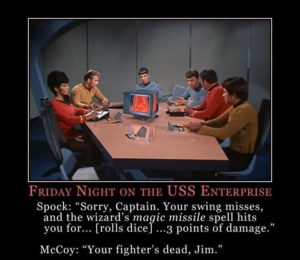
Thinking back, I now know why. When I would run Dungeons and Dragons gaming sessions, I would always have to be the voice of the various non-player characters the party met. Sometimes I would add in an accent, but the word choices were always a version of me. I had uneducated farmers using words like “obfuscate”.
Not a good thing to do when you write books and short stories.
 I started to add in things such as verbal tags. In one short story I turned in this week for a submission call, the Captain had a habit of saying “Yes, yes,” while he was thinking what to say next.
Next, I began to be mindful of the character’s history and cultural background when I scripted dialogue, doing my best not to fall into the “easy” trap of sticking in culturally insensitive or stereotypical words and styles. This helped to sculpt their vocabulary and how they physically spoke, including sentence length, speed, and even autonomous gesturing like hand movements.
Finally, I made sure that when they spoke, it was efficient and necessary to help transport the story to the reader. For example, the vast majority of people use contractions when they’re talking. Some have valid excuses not to do so, such as Data from Star Trek: The Next Generation, who doesn’t have that software installed. A select few can use that quirk as a verbal tag to flesh out the character.
Once you are comfortable with your writing and have developed a thick skin, ask your trusted, honest reviewers and readers what they like about your writing. It can be a pat on the back or a learning experience to improve your skills.
About the Author:
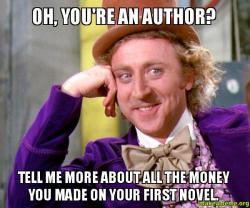 If only this was true. The best advice any professional author can give you is “don’t quit your day job.” You will need the income stability for yourself and your family, plus you may need the healthcare benefits if your day job provides them. Other benefits include life insurance and retirement contributions.
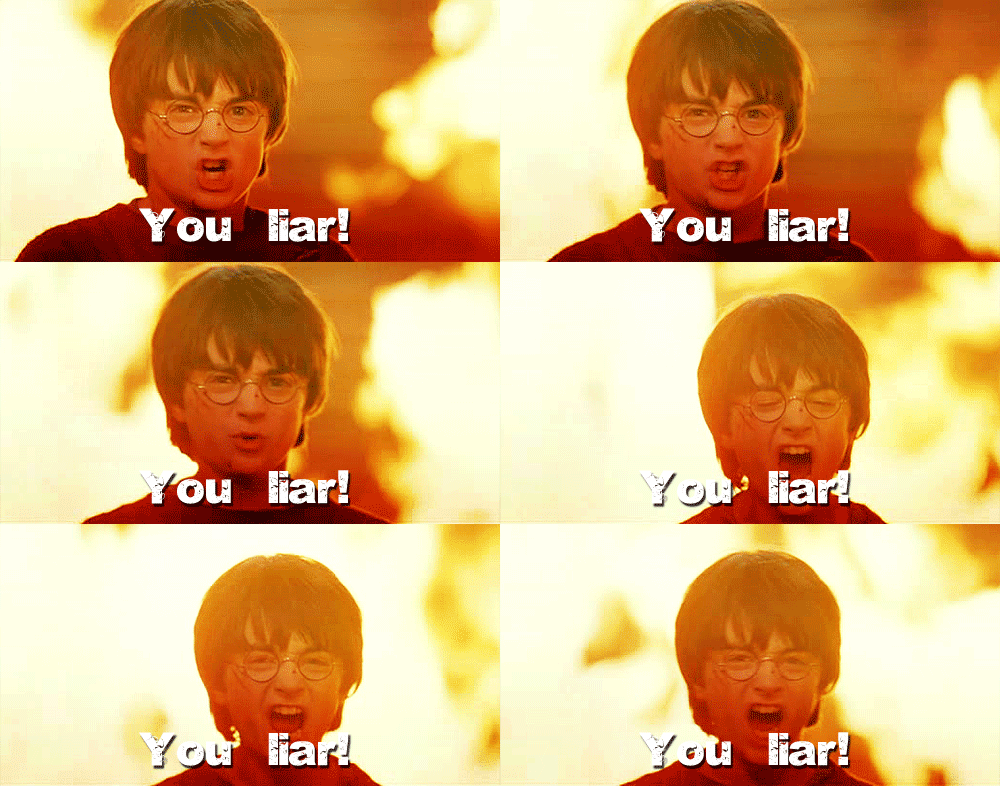 I have yet to meet one, although I would hedge and say that J.R.R. Tolkien is probably one of the closest. Every author I know makes a ton of mistakes when writing. After all, that’s why editors were invented. Editors typically have a better grasp of the mechanics of language…or at least the great ones do. The editors will comb through your work and fix all of those comma splices and split infinitives, vacuum out the extra commas, and polish the correct letters when you use to, too, or two.
 Is it hard work? Hell yes, it certainly is! It takes a lot of writing, editing, re-writing, and re-re-writing to put out a decent story. You can’t wait for your muse to inspire you if you’re gunning for the professional author title. Writers write, and that means there is no time for things like “writer’s block”. Can you imagine not selling coffee at your day job because you’re not feeling your coffee muse? Writing is just that, a job. That means you need to learn to be productive. There are a lot of suggestions and recommendations on how to do this on The Fictorians. In fact, this October and November, there will be a NaNoWriMo theme that stresses productivity.
 Agatha Christie was a genius at employing red herrings. In Murder on the Orient Express, almost everything is a red herring pushing one away from focusing on the killer until you realize everyone was the killer. In her novel And Then There Were None, there’s a list of how people are going to get bumped off. Victim number four doesn’t seem to be a red herring until you realize that she told you flat out they were in the poem.
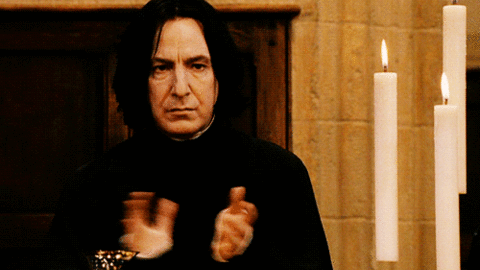 A fascinating red herring example is Professor Snape in the Harry Potter series. He’s constantly shown as a bad person throughout seven books until the last few chapters, where we finally learn that he has been trying to help Harry survive. All the red herrings are cleared up as we learn the truth, and the readers discover that the person they despised the most was the bravest person of all. That’s why Snape and, by extension, actor Alan Rickman went from evil villain to beloved savior.
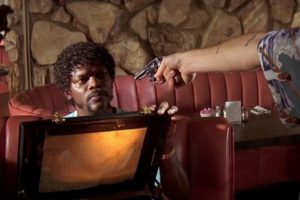 Quentin Tarantino even pokes a little fun at the audience in the ending scene, excerpted above. When Jules opens the case and shows the contents to Ringo/Pumpkin, all we (the audience) knows is that the case is valuable and, now that it’s opened, it gives off a mysterious glow that takes everyone’s breath away. Now we want to know what is in the briefcase, but Jules slams it shut and wraps up the scene and the movie. We never find out what was the impetus of over two hours of craziness. Don’t believe me? Just Google “pulp fiction briefcase” and enjoy 174,000 hits and lots of pages with different theories, including Kryptonite and Marcellus’ soul.