What do I do once the first draft is finished?
Finishing a rough draft is no easy task, and it should be celebrated. So do something fun. Have a drink. Eat some cheesecake. Go to a movie. Go for a run. Whatever makes you happy. Give yourself the satisfaction of being finished for at least five minutes. Then you can move on to the real fun.
I’m an outliner. This does not mean that my first draft resembles the outline I made before I started. In general, things start to go off the rails at the midpoint of the story, and it often goes downhill from there. So by the time I’m finished, the last half of my book is a sometimes delightful, sometimes horrifying surprise.
If I’m not on a tight deadline, I’ll let the first draft sit for at least a week. Work on something else. Preferably something different. Some short fiction, or edit a different piece. Read a book from an author I love. Cleanse my pallet.
I don’t know about anyone else, but if I write a rough draft in a hurry (which I prefer, because creating is more difficult for me than editing so I use the rip-the-Band-Aid-off fast approach) I’ll actually forget things I wrote. So it’s kind of fun to go back a week or a month later and re-discover what happened to my poor characters that I hadn’t planned the first time around.
Once I’m ready to jump back in, I put a notebook in front of me and read through my first draft. You can also do this on the computer, but I still prefer paper and pen. I write down any number of things, including:
- Things that pull me out of the story
- What I think my theme is and what sticks with it and what doesn’t
- Specifics on characters (eye color, height…because even if I have a wiki I don’t always look at it)
- Parts that work
- Parts that don’t work
- Where the story slows down
- Where the story is rushed
In the margins if the file (I use Word) I will make more specific notes. Things like:
- How to fix a slow/rushed part
- Where I might need humor
- Plot ideas I have for revisions
- Specifics on how to fix a scene
- My most often typed note is: “Either use this or take it out.”
My first drafts are often bloated with little clues that lead nowhere, so I mark them as I go through so I can, as I said above, either use them or take them out. Because for some reason readers don’t love fruitless details.
Once I’m finished with the read through, I go back to my outline and change it to match what I have. Then I figure out what sort of hybrid I need to come up with between the original and what I have, and then I start again.
I prefer to use two monitors when possible, because I start with a blank document and then copy and paste from the original to the new one as I go.
While the process is less than perfect, it works for me. Does anyone else have a process they love that hasn’t been mentioned? Let us know!

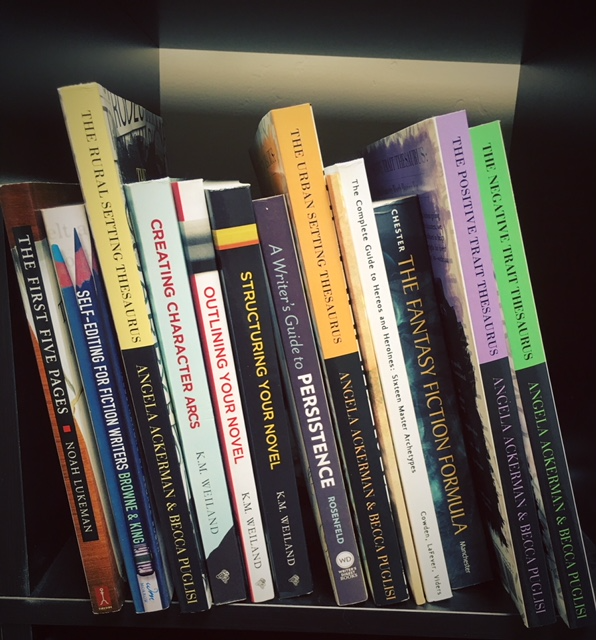 Any good writing website or book worth its salt will tell you your next step is to revise the sucker. Yes, you must do this step. Yes, everyone else hates it, too. Some books or fellow writer humans will advise you to put the book down for a set period of time to let it “rest,” like a good yeast bread needs a good rise. Unfortunately for your book, it doesn’t keep getting better in that resting period like bread does. No, no. It’s still the piece of crap you left a few weeks ago. So instead of the story rising like bread, think of it this way: YOU’RE doing the rising. You walked away for a few weeks and grew wise enough to rise above the piece of crap you made in order to come to a place where you can look past your subjective love of the story and objectively say, “Ah yes, indeed, this is a piece of crap.”