What’s In A Genre?

Guest Post by Sarah A. Hoyt
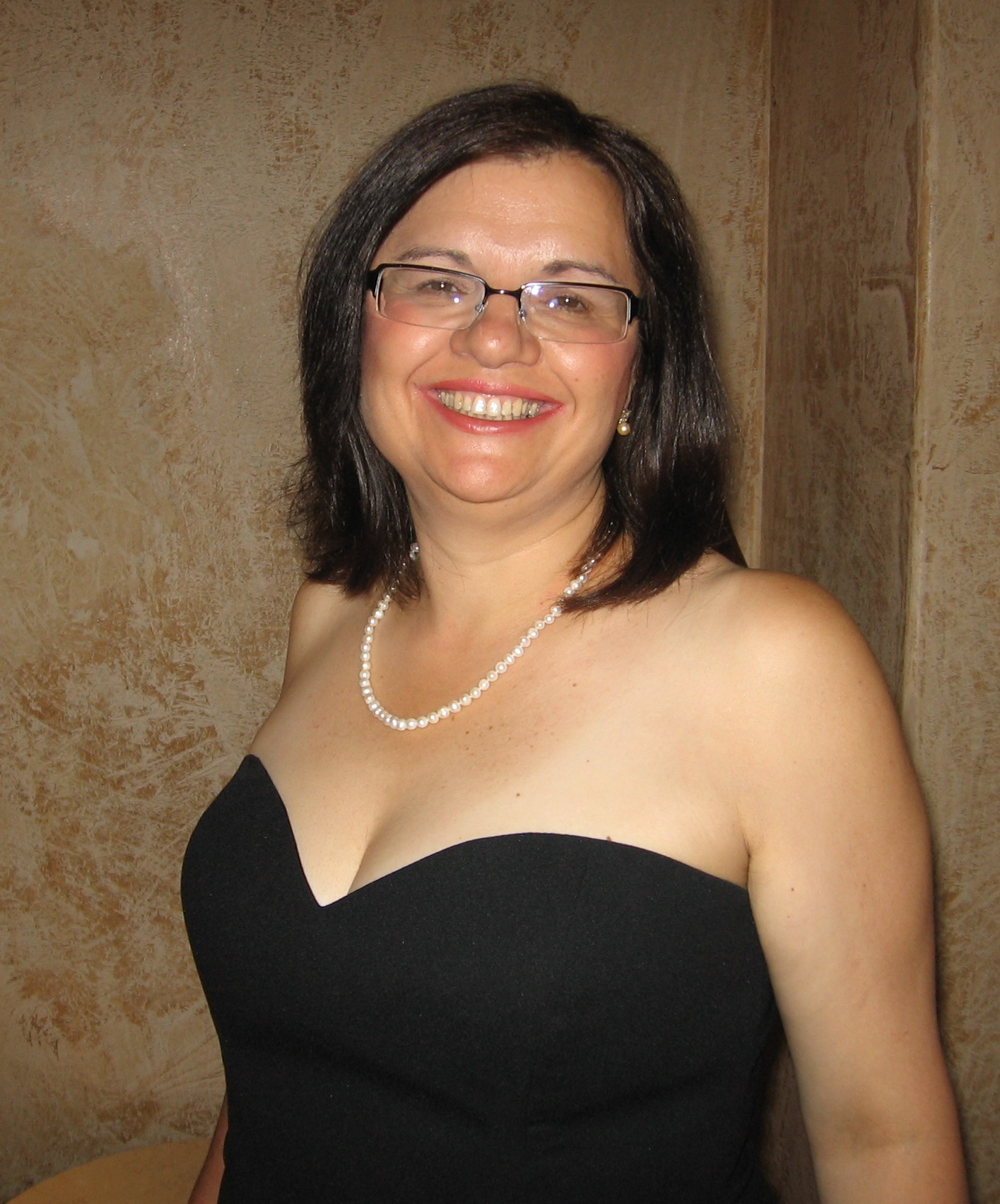
Sarah 2So you’ve written a novel – but do you know in what genre?

According to Kris Rusch and Dean Wesley Smith, whom I have no reason to doubt, you probably don’t.  The reason for this is simple.  We writers tend to work from the idea out.  If we have – say – this neat idea where you use a machine to perform magic, we go ahead and write it that way.  And then we send it out to agents or editors who are likely to run in circles, screaming.  (Well, mine did, when I did just that.)

Genre is largely a marketing category.  This means that no story fits it exactly.  Take the story idea above, and throw in a hot magical engineer and the girl who loves him.  Then have her father murdered for trying to market the machine.

Is that novel science fiction, fantasy, mystery or romance?

The answer is “yes.”

In general all novels, no matter how much they are science fiction have a hint of mystery and some romance.  (Okay, some novels from the pulp era didn’t.)  There is something that must be solved, and someone the character is attracted to.

What used to happen – in the bad old days when your only choice for publication was traditional houses mostly via agents – is that you’d take the book to your agent, and after she ran in circles, screaming, she might tell you “Look, you’re known as a fantasy writer.  Knock off with the machine stuff, and emphasize the magic more.”  Or “You’re a romance writer, just pump up the romance and wooing scenes and we’ll sell it as a quirky futuristic romance.”

Of course, sometimes they told you they just didn’t know what to do with it.  Or they’d tell you what you thought was military SF was actually YA SF, because at the time it was easier to sell as YA and your character was seventeen.

What about now?  Well, now it’s all about the tags.  One of the things I’ve noticed, when I put up my back list short stories, sarah 1is that those I can possibly tag romance (not all shorts have a romance element strong enough to mention!) sell better.  But the idea is to tag them or list them with all the genres you think you can get away with.  Oh, by all means, tag it for the main idea.  For instance, the one above I’d class as fantasy, but then in the description and the tags include the other genres.
As for writing…  Well, I tend to write stories as I read them, and I started reading long before I was aware of genres or the idea of genre.  I gravitated, mostly, to science fiction and fantasy – but I also read a good bit of mystery because my dad belonged to a mystery book club and it was my sworn duty (I thought) to read every book that came in the house.

I didn’t read Romance until I was in my thirties.  Not unless you consider my cousin’s collection of romances, which was in the house and therefore must be read.  But those were Portuguese Romances (I was born in Portugal and lived there till 22.  My family still lives there.  English is my third language, and if you heard me speak you’d believe it.  Or maybe not.  You’d probably think I was Russian.  No I don’t know why.  Stop being nosy.)  Portuguese Romances all seem to be based on Romeo and Juliet.  In the perfect Romance, both die for love, but if you’re very lucky, the girl survives and mourns her boyfriend forever.

Anyway, so by the time I read Romance, I was aware of genre conventions, and how they work, so the book didn’t go against the wall the first time.

See, the thing you have to be aware of, when writing any genre, or tagging the story as a genre, is “genre conventions.”

These are normally invisible to the fan of any given genre, but you do know when they’re violated.  They’re simply “the way things are done.”  What they do in most cases is get around the awkwardness of telling the story.  You know that new machine, in your sf story?  You might know how everything works, but you don’t describe it in detail over 40 pages.  That’s not the story.  You tell us about things it does/is that are relevant to the story.  In a Romance, you don’t spend half the book making sure the characters REALLY know one another, before they fall in love.  You show instant attraction (usually.  Or its polar opposite) and then hints that there’s more in it.  In a Mystery, you don’t have the character go “yeah, okay, he’s dead.  Big deal.  Now, this machine-“ not your main character, at least.

So before you write cross-genre, you need to be aware of what readers of each genre expect.  This is best achieved by reading both (all three?) genres you’re crossing, so you’re aware of what the readers expect from each.  And hey, once you’re aware of it, you can give the readers special “genre cookies” which will make each of them very happy.  For instance, my Darkship Thieves, winner of the Prometheus Award for 2011, has science fiction, romance, and definitely a mystery element.  It also happens to be told in the style of Urban Fantasy.  The fans of each of these will swear it belongs solely to them.  While the Urban Fantasy elements are somewhat mitigated in Darkship Renegades and A Few Good Men, the sequel and not-so-sequel (it’s complicated) it’s still there.

In fact, at this point, I have so many fans from different genres, I have to make sure to put in cookies for all genres every single time.

***

Sarah A. Hoyt has sold over 23 novels and 100 short stories in science fiction, fantasy, mystery, horror and romance. She not only couldn’t confine herself to a single genre, but trying might break her permanently. Her science fiction — the Darkship series and the Earth Revolution sister series — and her Shifter series are published by Baen books. Her mystery, historic mystery, romance, historical fantasy, or whatever she might take in her head to write tomorrow, will be available from Goldport Press or Naked Reader Press (mostly and for now).
St Patrick’s Day – A mixing of folklore with the every day

St Patricks Day

Happy St. Patrick’s Day!

May you be in
Heaven a half hour before the
Devil knows you’re dead!

May your home always be too small to hold all your friends.

God is good, but never dance in a small boat.

Dance as if no one were watching,
Sing as if no one were listening,
And live every day as if it were your last.

(For more Irish sayings/blessings, check out this site.)

I’ve always thought St. Patrick’s Day was a lot of fun, but never really knew much about it other than the need to wear green so people don’t punch you in the arm, and the constant advice to look for a rainbow with a pot of gold at the end.

So to celebrate the holiday today, here are a few facts:
– Irish have been celebrating St Patrick’s day for over 1000 years.
– St. Patrick, who lived in the fifth century, is the patron saint of Ireland.
– Chicago turns the river green on St Patrick’s day by dumping in 40 lbs of vegetable dye
– Shamrock plants can actually be used in remedies for snake venom.
– Snakes do not live in fields of Shamrocks anywhere in the world.

There’s a lot of culture and history tied in with the holiday, particularly the ‘wearing of the green’, shamrocks, parades, and feasting. The shamrock is a powerful symbol of Ireland, and there is lots of folklore surrounding it, from beliefs that it is a sacred plant, that its leaves curl upward before a storm, and the very fact that it has 3 leaves, a number always associated with power, be it religious or arcane.

Then there’s the leprechaun, usually depicted as an old, bearded man dressed in green, who loves to cause mischief, make shoes, and store pots of gold at the end of the rainbows. Leprechauns have been featured in movies, books, and other media, from comic to horror.

So what gems can we glean from this fun holiday so filled with history, folklore, and culture? How does this tie in with our genre month?

First, think about adding depth to your stories with legends or folklore. If you’re writing urban fantasy, it’s important to tie in your alternate view of the ‘real’ world to existing, recognizable legends. Readers love it, and the biggest successes do it
(think Harry Potter, and even Twilight). But even if you’re writing science fiction or epic fantasy, you can use folklore/legends to add depth to your stories. Give your characters beliefs unique to their culture. You don’t have to spend much time on them to make an impact. In just a couple of paragraphs, I’ve defined the basic concept of St Patrick’s Day. It wouldn’t take much more to include your own holidays/folklore. Think of Robert Jordan’s Bel Tine festival in the opening scenes of The Eye of The World. It helped bring Emond’s Field to life and draw the reader into the fantasy world. Without it, the town would have been far less engaging.

Second, it’s worth studying folklore like this and how it affects different demographics of society around the world, regardless of what genre you write in. Different groups react in dramatically different ways to the same events in their lives, or the history of their nation. Such diverse opinions, when applied to characters in your story, help define them and differentiate them. Think of Han Solo in Star Wars and his scoffing of the force while Luke is becoming Obi Wan’s disciple. Luke is shocked that Han Solo can possibly doubt, but Han just says, “Hokey religions and ancient weapons are no match for a good blaster at your side, kid.”  That interchange defines Han’s character at that time so perfectly.  Over time, as Han Solo sees more evidence of the power of the force, he reluctantly comes around, but that doubt reflects his own history and experiences, and helps make him memorable and real.

Third, there is so much material out there! If you’re ever feeling stuck or uninspired in your own stories, or seeking inspiration for the next story to write, delve into folklore from cultures around the world. There are ideas everywhere, and the world is full of fascinating legends.

Study it, see how it manifests in everyday culture, and then step out into the shadows and find your own inspiration. It’ll always be there.

Examples of stories I’ve enjoyed that mix the real and the unreal are Jim Butcher’s Dresden Files series, and Larry Correia’s Monster Hunter International. In movies, Van Helsing, and Stargate are a couple of favorite examples.

What are your favorites?

The Devil’s Opera

This is a combined public service announcement and post.

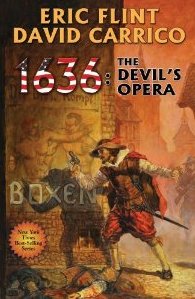
My first novel will be published in October by Baen Books.  The title is 1636: The Devil’s Opera, and it’s a collaboration with Eric Flint.

The cover-illustration by the great Tom Kidd-is here.

David CPre-order from Amazon here.

That concludes the public service announcement.  On to the post.

Several of my fellow Fictorians urged me to give some idea of the process by which the novel was written.  To do that I’ll first have to give you a bit of background on the 1632 series of which it is a part.

In 2000, Baen Books published a novel entitled 1632 by Eric Flint.  The elevator speech version of the plot is a cosmic space-time warp rips a small blue-collar town out of 2000 AD West Virginia and drops in it eastern Germany in the year 1631, which just happened to be in the middle of the Thirty Years War, possibly the bloodiest European war before WWI.  The resulting series is about how approximately 3,000 regular people from the future not only survive the event, but begin to change history.

This was the beginning of what has become one of the most successful alternate-history series in publishing history.  To date: over six million words; twelve novels (including the above) in hard copy; thirteen anthologies in hard copy; and forty-six  issues of an e-magazine called The Grantville Gazette.

I don’t have space here to give you the history of this phenomenon.  If you’re interested, go to http://1632.org/ and read.  The short version is that Eric did something very bold and potentially risky:  he opened the 1632 story universe up to fan writers, and offered to publish and pay for the best stories that were submitted.  That was the genesis of the e-magazine The Grantville Gazette.

GG, as we call it for short, will publish anything that is a well-told story that fits within the guidelines Eric has laid down for stories in the universe.  Current payment rates are 5¢/word, which is professional standard rate by SFWA guidelines.  (See http://1632.org/ again if you’re interested.)

I started writing stories in the universe in 2004.  Within a couple of years I was part of what Eric considered to be a core group that consistently turned out good stories for GG on a pretty regular basis.  (My fifteen published solo works total over 200,000 words and range from a 2,000 word short short to a 52,000 word short novel that was serialized.)  Nonetheless, I was astonished when Eric approached me via email one day and said we should do a book together.

You have to understand that Eric is always on the lookout for writers he can help develop and help get a foot in the door in the publishing industry. Of the twelve novels published to date, I believe ten of them were produced in collaboration with seven different authors, plus I know there is another one close to completion with an eighth partner.

This is not a writing factory scam where someone else does all the work and Eric slaps his name on it at the end and collects all the money.  In one partnership, I know that Eric worked with another professional writer and they divided the work.  In the rest, Eric was senior author and the other partners were junior.  I believe those all followed essentially the same model Eric used with me, so from this point on I’m just going to talk about my experience.

After the idea was broached, there was a certain amount of discussion as to what the book should be:  a combination of stories from both of us, or a novel.  Eric settled on a novel pretty quickly.  So then we talked about what the novel should be about.  I have two different series of stories going in GG with different but intersecting character groups in the same city.  Eric said we should use one or both of the character groups in the novel in order to tap into the fan base that already existed for them.  I had just finished a 27,000 word novella with one of the character sets, so I sent it to Eric.  He agreed we would use that as the center pole for the novel.

The next step was to build the outline.  That ended up taking a fair amount of time, because what worked best for me was to sit in the same room with Eric and talk everything out, ask a lot of questions, and make notes, and it took some work to get our schedules to intersect.

I wrote the first draft.  That is Eric’s standard practice with junior authors, for them to write all or most of the first draft.

Eric read the first draft, decided what changes needed to be made. He fixed some things himself, which produced the second draft.  Then he assigned some changes to me, and I produced the third draft.  Then he did the final polish, producing a fourth draft (approximately 169,000 words), which he then submitted to Toni Weisskopf, the publisher at Baen Books.  And as announced above, Baen will have it on the shelves on October 1.

Someone asked me what Eric got out of the deal.  Two things:  he got to pay forward to a friend, and he got a good novel in his series with his name on it with much less demand on his time.

What did I get out of it?  A novel in a good series with my name on it.  🙂  And by working with and under Eric, I learned things about outlining, plot development, mystery novel memes and tropes, chapter size and arrangement, proper levels of descriptive language and dialog, and on and on.

I also got to demonstrate to one of the best publishers in the business that I can write quality work and deliver a finished product without going through the slush process.  Priceless.

http://davidcarricofiction.com/

http://baen.com/

http://www.grantvillegazette.com/

http://1632.org/

What Can a Poet Say to a Fiction Writer About Writing?

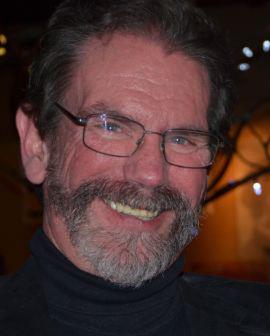
Guest Post by Bob Stallworthy

Bob stallworthyI can hear you all now, “What does a poet know about writing fiction?” At one time I might have agreed with you. However, I’ve begun to wonder whether the lines that divide fiction from poetry are more blurred than I thought they were.

Let’s start with the obvious: poets and fiction writers both use words to get their information, images, impressions, across to the reader. I have often heard fiction writers say, “Yes, a poet has to be so careful with word choice. Poetry is harder to write.”

American poet, essayist, non-fiction writer, Robert Bly, once told an audience of young writers that fiction entered the body through the ear and poetry entered through the heart. Before you stomp off in a huff, let’s think about this for a minute. How often have you read a poem or heard one read, and before you are really conscious of hearing it, you have reacted to it? As if something shadow soft had passed over and then through you. Then you begin to think about the words you heard. And, how often have you read a good piece of fiction and found yourself relishing the words and then the images and emotions they have created? My question then is, aren’t the fiction writers being just as careful about their word choices? If they aren’t they should be. Good fiction, just like good poetry, has a lot to do with using precisely the right word in the right place in the line. And, speaking of the right place in the line and in the right line, when we get this right we get the image we want that makes the reader say, “Wow! I never thought of it like that before.” Isn’t that what we, as writers, want?

Part of what will make the reader’s eyes go wide open and whisper that wished for line is an interesting use of rhythm. Oh sure, it is really important in poetry, you say. And, yes it is. I used to say that free verse poetry had no rhythm and no rhyme. I was only partially correct. It often has no rhyme. It does have rhythm – the rhythm of the language. It is there in fiction too.  As a fiction writer you can use that rhythm to your advantage.

Rhythm may be obvious in a poem and not so obvious when it comes to fiction. How do you hear the rhythm when Bob S 2writing fiction? The same way one does when writing poetry. Read the piece out loud. Get into the habit of doing this. Look for the ebb and flow. If you do, it will help to carry the reader away on your words. By the way, it will help you with your public performances.

Rhythm is just one component that goes into a poem or a piece of fiction. As a fiction writer you already know what the other elements are that must be in your fiction – plot, setting, character, crisis, resolution, etc. But, the question which comes at some point is, whether you write fiction or poetry, “Is this any good?”

First of all, I would like to suggest that the use of the terms good and bad, works or doesn’t work, get dropped from the vocabulary. These are value judgements which sidetrack the discussion into the realm of personal taste. You can spend a lot of time in that realm and get no useful information about the writing.

Years ago, I found a hierarchy created by American writer and critic, James Dickey. The hierarchy is based on his reaction as a reader to a piece of poetry. I suggest that these statements apply equally well to fiction:

Lowest level: This probably isn’t true and even if it is, I couldn’t care less.
Next level up: This is probably true, and therefore I react to it differently than I did the first level.

Third level: This is probably true, but so what –

Best level: Not only is this true, but it is with a truth I would not have reached on my own had I not read this piece of writing.

Some writers dislike the idea of a hierarchy when it comes to assessing writing. Perhaps you would prefer to consider a number of questions which are used to illicit the reaction of the reader. I encountered these questions as a member of a poetry group facilitated by poet, essayist, professor, Richard Harrison. The following questions are adapted from Writing with Power, Techniques for Mastering the Writing Process by Peter Elbow. Within our poetry group, the poet presents his/her poem and then asks the group members some or all of the following depending on what the poet wants to know:

–  what did you notice?
–  what connections did you make?
–  what questions were you left with after you finished reading?
–  were there places where you left? i.e. your mind wandered
–  where did you stop reading?
–  were there places where you agreed, disagreed, argued?

Bob S 4I can’t help wondering if these questions apply equally well to fiction. For example, “Where did you stop reading?” translates into “Where did you close the book and put it back on the shelf or in the box for the book sale?”

Whether you write fiction or poetry, there is always the pesky question of, “How do I know this is done?” I leave you with some thoughts that, again, I have learned in Harrison’s poetry group:

–  a poem is the dramatization of a single voice
–  a short story is the dramatization of a character
–  a novel is the dramatization of a world

If the above is so, then a poem is complete when the voice has said all there is to say that will add to the understanding of the reader/listener.

A short story and a novel are similarly finished when nothing is left that the reader/listener needs to know in order to understand the character or the world.

Can fiction writers and poets learn from one another? I certainly hope so. I have been doing so for most of my writing career. Thank you to Ace Jordyn for inviting me to put some of my thoughts together for this blog. I hope the ideas are of some help.

***

Bob Stallworthy has four books of poetry published and one non-fiction e-book, In Silhouette: Profiles of Alberta Writers,  which is hosted on the Frontenac House website. His latest book of poetry, Things that Matter Now, Frontenac House, 2009 is in its second printing.  Bob’s poetry has been short-listed for the W.O.Mitchell City of Calgary Book Prize twice and the Stephan G. Stephansson Award for Poetry once. He is co-recipient of the 2002 Calgary Freedom of Expression Award. He is also a Lifetime member of the Writers’ Guild of Alberta.

Link on Frontenac House website: http://frontenachouse.com/?s=Stallworthy&submit=Search+Site